Technology · Dev
Samsung Secures Pricing Leverage as 4nm Foundry Capacity Books Through 2027
AI chip demand and HBM production squeeze advanced-node availability, giving the South Korean chipmaker room to negotiate higher rates
KEY TAKEAWAYS
- ·Samsung's 4nm foundry capacity is fully booked through 2027, with some customers redirected to 5nm production as AI chip orders and HBM manufacturing constrain advanced-node availability.
- ·The extended order book gives Samsung pricing power in contract manufacturing after years of oversupply, mirroring the leverage TSMC has maintained at leading-edge nodes.
- ·Capacity tightness affects Asia's fabless chip designers, particularly smaller players in South Korea, Taiwan, and China facing longer lead times and higher costs for advanced-node access.
Capacity Crunch Reshapes Foundry Dynamics
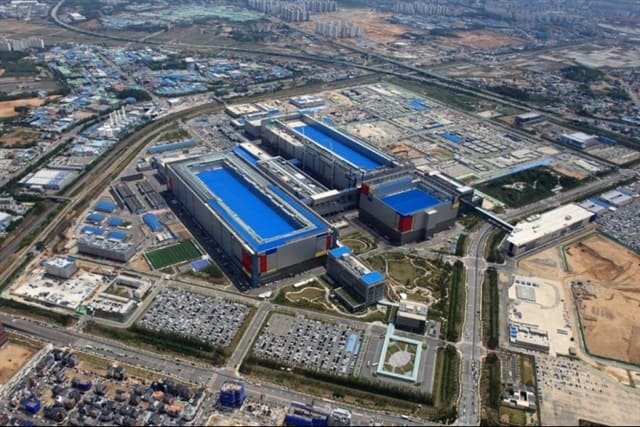
Samsung Electronics has secured its 4nm manufacturing lines through the end of 2027, according to industry data, marking a shift in bargaining power within the contract chipmaking sector. The extended booking window reflects surging orders for artificial intelligence processors and the simultaneous drain on fab capacity from high-bandwidth memory production.
The South Korean semiconductor giant is now directing some clients toward its 5nm process node as 4nm slots fill, a redirection that signals both robust demand and constrained supply at the leading edge of chip manufacturing. For Samsung, this represents a reversal from earlier years when foundry customers held pricing leverage amid excess capacity across the industry.
AI and Memory Collide at Advanced Nodes
The capacity tightness stems from two converging forces. First, AI accelerator chip orders have climbed steeply as cloud providers and enterprises expand machine learning infrastructure. These chips typically require the most advanced process nodes available to deliver the performance and power efficiency needed for training and inference workloads.
Second, high-bandwidth memory production places direct demands on the same advanced manufacturing capacity. HBM stacks require precision fabrication and testing, and Samsung's vertical integration strategy means foundry lines share resources with memory operations. As HBM shipments grow to meet AI server requirements, the competition for wafer starts intensifies internally.
Samsung announced earlier this year that it had begun mass production of 12-layer HBM3E modules, a product line that competes directly with SK hynix and Micron in supplying memory for NVIDIA's data center GPUs. That ramp has absorbed a portion of the company's clean-room capacity, tightening availability for pure foundry customers.
Pricing Power Returns to Suppliers
The full order books through 2027 give Samsung negotiating room it lacked during the oversupply cycles of recent years. Contract manufacturers typically lock in pricing and volume commitments months or quarters in advance, but extended visibility allows suppliers to push for better terms, particularly with smaller or less strategic customers.
Industry observers note that TSMC, the world's largest contract chipmaker, has maintained pricing discipline even as demand fluctuates, a stance that becomes easier when capacity is spoken for. Samsung's position now mirrors that dynamic at the 4nm node, where the company competes for orders in AI, mobile processors, and networking silicon.
The shift to 5nm production for some customers is not necessarily a technical downgrade. Many chip designs can achieve comparable performance on 5nm with modest adjustments, and the node offers higher yields and lower risk for projects with less aggressive power or area targets. But the redirection underscores that Samsung is prioritizing margin and utilization over accommodating every design win at 4nm.
Regional Implications for Asia's Chip Ecosystem
Samsung's capacity allocation decisions ripple across Asia's semiconductor supply chain. Fabless chip designers in South Korea, Taiwan, and China rely on access to leading-edge foundry capacity to compete in global markets. When that access tightens, smaller players face longer lead times, higher costs, or the need to redesign for older nodes.
For South Korea specifically, Samsung's foundry strength bolsters the country's position in the global chip race. The government in Seoul has committed billions in subsidies and tax incentives to support domestic semiconductor manufacturing, viewing the sector as critical to economic security. A healthy foundry order book validates that investment and supports employment across the electronics cluster in Gyeonggi Province.
Taiwan's TSMC remains the dominant player in contract manufacturing, but Samsung's gains at 4nm and below signal that the gap is not insurmountable at specific nodes. The competition benefits customers with leverage, particularly hyperscalers like Amazon Web Services, Google Cloud, and Microsoft Azure, which can play suppliers against each other for custom silicon deals.
What Comes After 2027
The question facing Samsung's foundry customers is what happens when current commitments expire. If AI demand continues to grow and HBM production scales further, the same capacity constraints could extend into 2028 and beyond. That would force chip designers to plan years in advance or accept less favorable contract terms.
Samsung is investing in new fab capacity, including a line in Taylor, Texas, that is expected to come online in phases through the latter half of the decade. But bringing new advanced-node capacity to volume production takes time, and the learning curve for cutting-edge processes means yield improvements lag initial ramp by quarters or years.
For now, the foundry market is tilting back toward suppliers after several years of customer-friendly conditions. Samsung's full 4nm book is both a symptom of that shift and a lever to extract better economics from a business that has struggled with profitability relative to the company's memory and consumer electronics divisions.
RELATED STORIES
Samsung Breaks Ground on $4.3 Billion HBM Packaging Plant in South Korea
Cheng Wei-Lun · 4 min
SK Hynix Opens Silicon Valley HBM Design Hub to Lock Down Next-Gen Chip Orders
Cheng Wei-Lun · 3 min

Samsung Fold8's Wider Aspect Ratio Pulls New Buyers into Foldable Market
Jun-ho Seo · 3 min
Samsung's Mobile Unit Faces 211% Memory Price Surge
Cheng Wei-Lun · 4 min
Spot something wrong? Email editor@briefasia.com. We log every correction publicly.