Asia · Business
Homeplus Pushes Break-Even Target to 2029 in Restructuring Setback
South Korea's struggling hypermarket chain now expects losses through 2028, abandoning earlier promises of a swift return to profitability
KEY TAKEAWAYS
- ·Homeplus filed a revised rehabilitation plan projecting an operating loss of 10.3 billion won for fiscal 2028, on sales of 3.38 trillion won.
- ·The company forecasts a sharp turnaround in fiscal 2029, with revenue jumping 22 percent to 4.12 trillion won and operating profit reaching 124.2 billion won.
- ·The extended timeline to profitability marks a reversal from earlier projections and underscores the difficulty of turning around traditional big-box retail in a digitally competitive market.
Revised Timeline Extends Red Ink
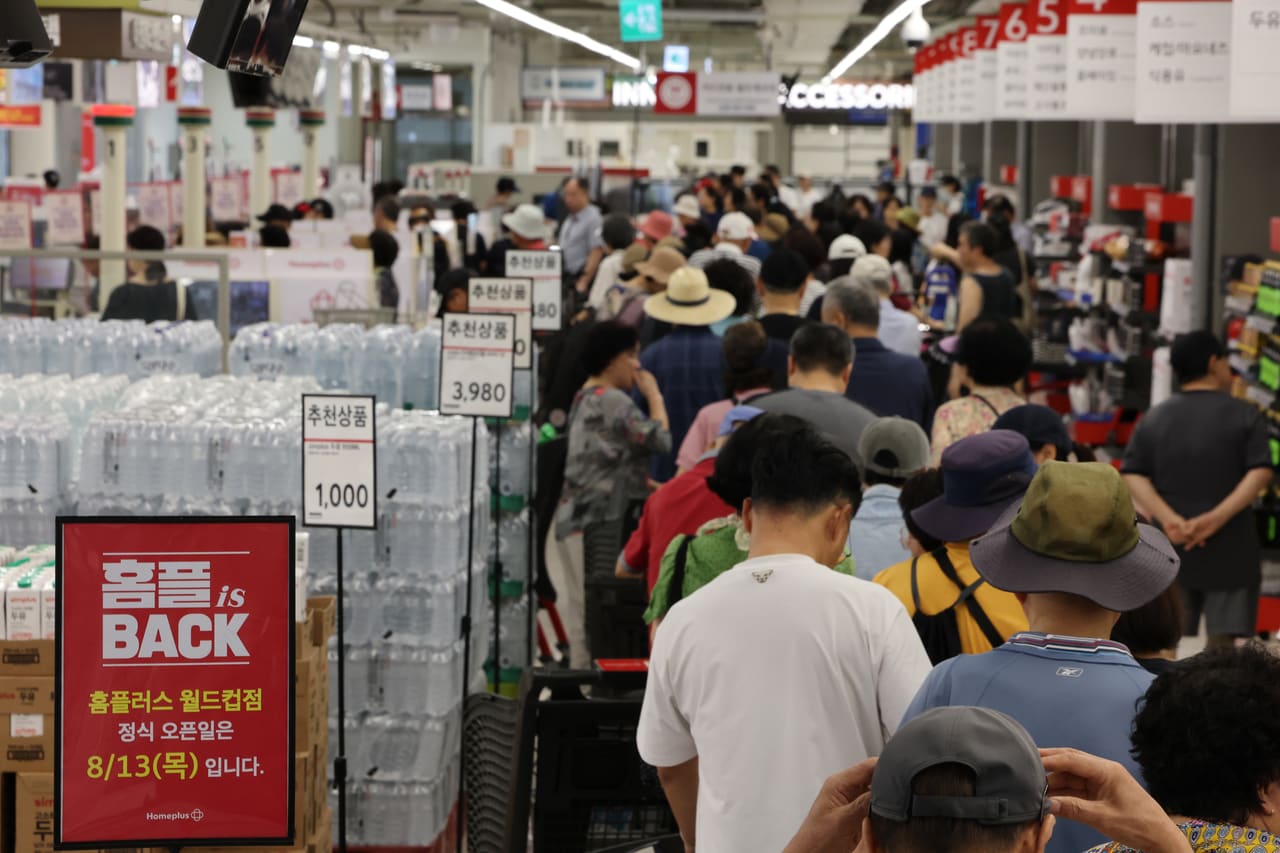
Homeplus will remain unprofitable until at least 2029, according to a revised rehabilitation plan the South Korean hypermarket operator filed this week. The updated forecast marks a sharp departure from the company's earlier projections, which had anticipated a much faster recovery.
The retailer now expects an operating loss of 10.3 billion won (approximately $7.4 million) for the fiscal year ending February 2028, on revenue of 3.38 trillion won. That represents a continued drag on a business that has struggled to adapt to shifting consumer habits and intensifying competition from e-commerce platforms and discount chains.
Sharp Turnaround Forecast for 2029
Homeplus projects a dramatic reversal in the subsequent twelve months. Sales are expected to climb 22 percent to 4.12 trillion won in the year ending February 2029, while operating profit swings to 124.2 billion won, the company said in its filing.
The abrupt shift from deep losses to substantial profit in a single year raises questions about the assumptions underpinning the turnaround strategy. Retail analysts will scrutinize whether the projected sales surge reflects realistic store traffic and basket-size improvements, or whether it leans on optimistic margin expansion that may prove difficult to achieve in a price-sensitive market.
Context of Korea's Hypermarket Decline
Homeplus is navigating headwinds that have battered South Korea's traditional big-box retail sector for years. Consumers have migrated online for groceries and household goods, while smaller-format convenience stores and specialty discounters have captured incremental trips that once flowed to hypermarkets.
The company's earlier rehabilitation plan, submitted in recent months, had signaled a quicker path to profitability. The updated timeline suggests that cost cuts, store closures, or merchandising shifts have taken longer to yield results than management initially forecast. It also reflects the reality that turning around a legacy retail footprint in a mature, digitally penetrated market is more grinding than any single restructuring cycle can resolve.
What Comes Next
Creditors and court-appointed administrators will weigh whether the revised plan offers a credible roadmap or whether further intervention is warranted. The extended timeline to break-even means Homeplus will need sustained liquidity support and patience from lenders as it executes store rationalization, supply-chain efficiency gains, and any pivot toward omnichannel fulfillment.
For competitors and suppliers, the delay signals that Homeplus will remain in restructuring mode through the end of the decade, potentially constraining its ability to invest in technology, renovate stores, or compete aggressively on price. That opens space for rivals to consolidate share in key urban and suburban markets where Homeplus still operates anchor locations.
The revised forecast also serves as a reminder that retail restructuring in Asia's advanced economies is a multi-year proposition, particularly when incumbents face both digital disruption and changing demographics. Whether Homeplus can execute the sharp inflection it has penciled in for 2029 will depend on factors ranging from consumer confidence to real-estate rationalization and the pace at which it can close the digital gap with more nimble competitors.
RELATED STORIES

South Korea Tests Low-Cost Attack Drones as North Expands Fleet
Jun-ho Seo · 3 min
South Korea Tests Arctic Shipping Route to Europe as Ice Melts
Cheng Wei-Lun · 2 min

South Korea Tests Arctic Shipping Lane to Europe as Geopolitical Tensions Rise
Cheng Wei-Lun · 3 min
South Korea's Hanwha Secures First US Army Artillery Contract
Jun-ho Seo · 4 min
Spot something wrong? Email editor@briefasia.com. We log every correction publicly.