Finance · Markets
Seoul Stocks Rebound After Sharp Tech Selloff
Korean equities climbed more than 3 percent in early trading as easing US Treasury yields lifted sentiment following the previous session's steep decline
KEY TAKEAWAYS
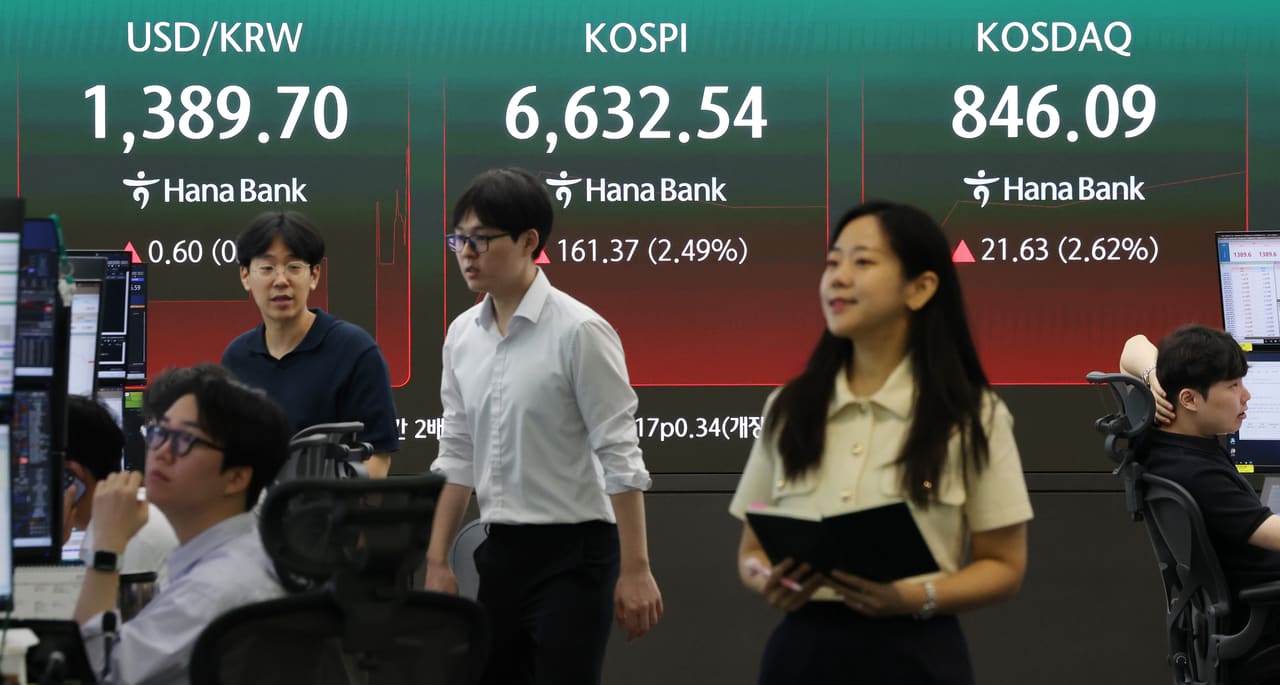
- ·South Korea's KOSPI index gained 3.05 percent to 6,668.45 in early Thursday trading after dropping nearly 6 percent the previous session.
- ·The rebound followed overnight gains on Wall Street as US Treasury yields retreated on expanded debt buyback plans.
- ·Sustained recovery depends on whether Treasury yields stabilize and fresh economic data supports current risk sentiment.
Recovery After Sharp Drop
South Korean equities opened sharply higher on Thursday morning, with the Korea Composite Stock Price Index adding 197.28 points to reach 6,668.45 by 9:15 a.m. local time. The 3.05 percent gain represented a strong recovery after the index had tumbled nearly 6 percent in the previous session.
The rebound followed overnight strength in US markets, where major indexes closed higher as Treasury yields pulled back. Investor sentiment improved after the US Treasury announced plans to expand its debt buyback program, a move that helped ease pressure on bond markets.
Previous Session Pressure
Wednesday's steep decline in Seoul had been driven by broad-based selling in technology stocks, with investors reacting to concerns about rising bond yields. Higher yields typically pressure equity valuations, particularly for growth-oriented sectors like technology, by making future earnings less attractive when discounted to present value.
The initial Thursday opening saw the index surge 3.23 percent before moderating slightly as profit-taking emerged. Still, the opening hours maintained substantial gains, suggesting that institutional and retail investors viewed the previous session's drop as overdone.
Yield Dynamics and Regional Markets
The movement in US Treasury yields has become a critical driver for Asian equity markets in recent months. When yields spike, capital tends to flow out of equities and into fixed-income instruments, particularly affecting markets with strong export exposure to developed economies.
South Korea's equity market remains sensitive to US monetary policy signals and bond market dynamics due to the economy's heavy reliance on technology exports and semiconductor manufacturing. Major Korean chipmakers and tech firms often see their valuations swing with shifts in global interest rate expectations.
The Treasury's debt buyback initiative aims to improve liquidity in the bond market and manage the government's debt profile more efficiently. For equity investors, the program signals a commitment to maintaining orderly financial conditions, which can support risk appetite.
Broader Market Context
Korean stocks have experienced heightened volatility in recent weeks as investors navigate conflicting signals from economic data, corporate earnings, and monetary policy expectations. The technology sector, which accounts for a substantial portion of the KOSPI's market capitalization, has been particularly susceptible to swings in global risk sentiment.
The Thursday morning gains suggest that market participants are distinguishing between short-term volatility driven by bond market fluctuations and the underlying fundamentals of Korean exporters. With semiconductor demand showing resilience and major Korean manufacturers maintaining production schedules, some analysts view recent selloffs as creating entry opportunities.
Regional equity markets across Asia have shown similar patterns, with benchmark indexes in Tokyo, Taipei, and Hong Kong also responding to shifts in US yields. The interconnected nature of Asian technology supply chains means that movements in one market often ripple through neighboring bourses.
What Comes Next
Market observers will be watching whether the morning gains hold through the trading session or if profit-taking intensifies. The sustainability of the rebound depends largely on whether US Treasury yields continue to stabilize and whether fresh economic data supports the current risk-on sentiment.
Korean exporters face a complex outlook, balancing strong demand for semiconductors and electronics against potential headwinds from currency fluctuations and geopolitical uncertainty. The won's recent movements against the dollar add another layer of complexity for companies with significant overseas revenue.
For now, the sharp morning recovery demonstrates that investor appetite for Korean equities remains intact despite periodic volatility. Whether this translates into sustained gains will depend on both domestic corporate performance and the trajectory of global financial conditions in the weeks ahead.
RELATED STORIES
Seoul Tech Stocks Defy Wall Street Slide as Geopolitical Risks Mount
Cheng Wei-Lun · 2 min
Korea's Valuation Premium Faces Sustainability Test After Summer Correction
Cheng Wei-Lun · 4 min

Kakao Mobility Files for $1 Billion US IPO
Cheng Wei-Lun · 3 min
Woori Financial Group Plans $39 Billion Insurance Merger in South Korea
Cheng Wei-Lun · 3 min
Spot something wrong? Email editor@briefasia.com. We log every correction publicly.