Finance · Markets
Korea's Valuation Premium Faces Sustainability Test After Summer Correction
After a governance-driven rally narrowed the Korea discount, the country's equity market confronts the challenge of maintaining higher valuations beyond semiconductor earnings momentum.
KEY TAKEAWAYS
- ·Korea's equity benchmark rallied in early 2025 on governance reforms and semiconductor earnings, but a summer correction revealed gains concentrated in Samsung Electronics and SK hynix.
- ·The rerating's sustainability depends on whether governance improvements deepen across sectors and earnings growth broadens beyond the chip industry.
- ·Investors remain cautious that the Korea discount reversal may prove cyclical rather than structural without diversification in market drivers.
Momentum Meets Fragility
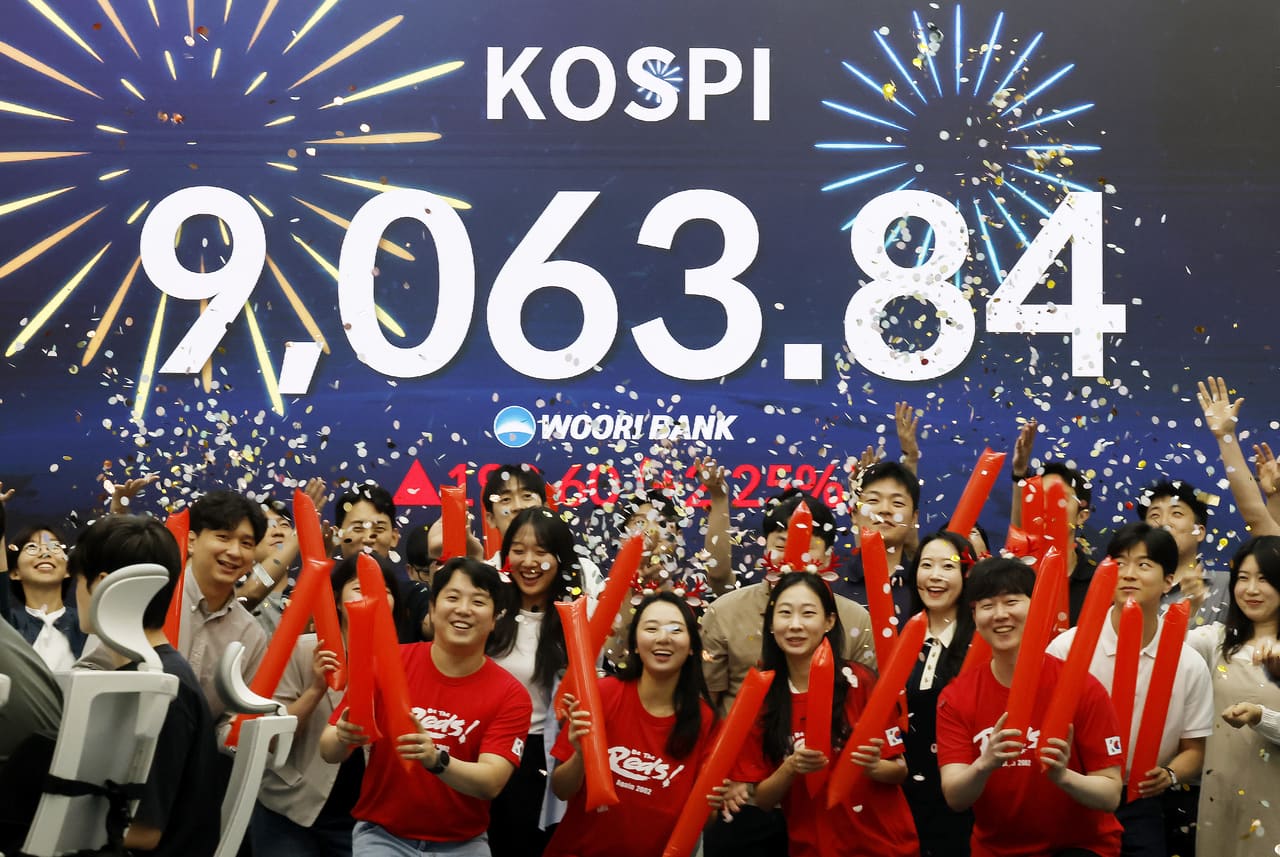
Korea's equity benchmark climbed through the first half of 2025 on the back of governance overhauls, improved shareholder returns and a historic surge in semiconductor profits. The rally brought the long-discussed "Korea discount" closer to disappearing, replaced by tentative talk of a "Korea premium." Yet the summer correction laid bare a structural weakness: the market's gains rest heavily on just two names - Samsung Electronics and SK hynix.
The question now confronting Seoul policymakers, fund managers and corporate boards is whether Korean companies can sustain higher valuations once the tailwinds from chip demand and governance headlines dissipate. The answer will determine whether this year's rerating represents a durable shift or a cyclical spike vulnerable to the next downturn in global tech spending.
Corporate Governance as Catalyst
Korea's push to narrow the valuation gap with regional peers accelerated in early 2025 when the government introduced a suite of measures designed to boost shareholder returns. Companies faced pressure to increase dividends, buy back shares and improve board independence. Chaebols, long criticized for opaque governance and minority shareholder treatment, began announcing reforms that would have been unthinkable a decade ago.
The market response was immediate. Foreign investors, who had underweighted Korean equities for years, began rotating capital back into Seoul. Domestic retail investors piled in, buoyed by narratives of structural change. The Kospi rose sharply, with price-to-book multiples expanding as investors priced in expectations of better capital allocation and higher returns on equity.
Yet the rally's composition raised concerns. Samsung Electronics and SK hynix, both riding a wave of demand for high-bandwidth memory and AI chips, accounted for a disproportionate share of index gains. Smaller-cap industrials, financials and consumer names lagged, suggesting the rerating was not broad-based. The governance story provided the narrative, but semiconductor earnings supplied the numbers.
Summer Pullback Exposes Concentration Risk
By mid-summer, the rally stalled. A combination of profit-taking, weaker-than-expected earnings guidance from chipmakers and concerns about global demand for AI infrastructure triggered a correction. The Kospi gave back a significant portion of its gains, and foreign investors turned net sellers. The speed of the reversal underscored how dependent the market had become on a narrow set of drivers.
Analysts noted that while governance reforms had improved sentiment, they had not yet translated into broad earnings upgrades or structural shifts in corporate behavior outside the top-tier names. Mid-cap companies continued to trade at discounts to regional peers, and sectors unrelated to semiconductors saw little improvement in valuations. The premium, it turned out, was less a market-wide phenomenon and more a chip-sector story with a governance overlay.
The Rerating Sustainability Challenge
For Korea's valuation gains to endure, two conditions must be met. First, governance improvements need to deepen and spread beyond headline-grabbing announcements. Investors want to see sustained increases in dividend payout ratios, clearer succession planning at family-controlled conglomerates and measurable improvements in return on equity across sectors. Second, earnings growth must broaden. A market that depends on two companies for its valuation multiple is inherently fragile.
Some progress is visible. Financial institutions have begun reporting higher net interest margins as rate cuts slow, and select industrial firms are benefiting from supply chain diversification out of China. But these gains remain modest compared to the outsized contribution of semiconductors. If memory chip prices soften or AI infrastructure spending plateaus, the index could face renewed pressure.
Policy and Market Structure
Seoul's response to the summer correction has been cautious. Regulators reiterated commitments to shareholder-friendly policies and hinted at further tax incentives for companies that meet governance thresholds. Yet there is recognition that policy can only do so much. Valuations ultimately reflect earnings expectations, and those depend on global demand cycles, competitive positioning and corporate execution.
Market structure also plays a role. Korea's equity market remains heavily weighted toward cyclical sectors and large conglomerates, making it sensitive to swings in global industrial activity. Efforts to develop a deeper pool of growth-oriented mid-caps and technology firms outside semiconductors have advanced slowly. Until that balance shifts, the market's ability to sustain a premium will remain tied to the fortunes of a handful of exporters.
What Comes Next
The rally earlier this year demonstrated that Korean equities can attract capital when the right conditions align. Governance reform provided a credible narrative, and semiconductor earnings delivered the results. The correction that followed, however, revealed the limits of a rerating built on narrow foundations. For the premium to last, Korea needs earnings momentum to spread across sectors, governance changes to deepen into corporate culture and the market's structure to diversify beyond its traditional pillars. Until then, investors will remain cautious about whether the discount has truly turned into something more durable.
RELATED STORIES
Seoul Equities Jump 2.7% as Inflation Easing Lifts US Markets
Cheng Wei-Lun · 3 min
Korean Chipmakers Surge on Temasek Investment Report
Cheng Wei-Lun · 3 min
Seoul's KOSPI Extends Rally to Fifth Day on Semiconductor Strength
Cheng Wei-Lun · 2 min
Korean Stocks Stall After First-Half Surge as Chip Cycle Concerns Mount
Cheng Wei-Lun · 3 min
Spot something wrong? Email editor@briefasia.com. We log every correction publicly.