Asia · Politics
Modi Targets 50 Indian Companies in Fortune 500 With Seven-Pillar Growth Plan
Prime minister outlines strategy spanning manufacturing, defense, and connectivity while announcing AI training for youth on Independence Day
KEY TAKEAWAYS
- ·Prime Minister Narendra Modi announced a goal of 50 Indian companies in the Fortune 500, supported by a seven-pillar growth framework covering manufacturing, defense, and connectivity.
- ·Modi unveiled free AI skills training and online exam coaching to address youth unemployment and rising education costs in India.
- ·The plan emphasizes self-reliance in defense production and expanded infrastructure, building on existing subsidy schemes and foreign investment efforts.
Ambition Meets Policy
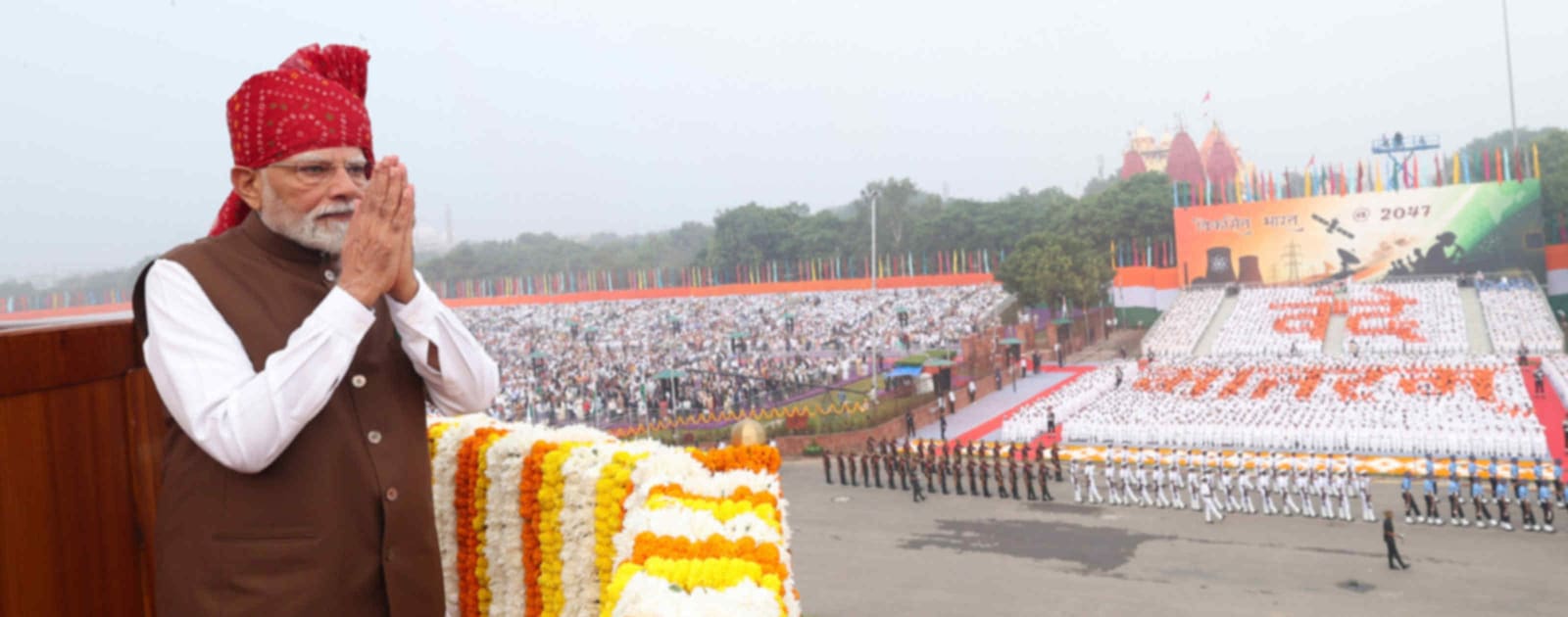
Indian Prime Minister Narendra Modi set an ambitious target for corporate India on the country's 80th Independence Day: he wants to see 50 Indian companies listed in the Fortune 500. Speaking from the Red Fort in New Delhi on August 15, Modi laid out what he called "seven streams of power" to drive the next phase of economic expansion.
The framework spans globally competitive manufacturing, technology and innovation, high-speed connectivity, and self-reliance in defense production. Modi positioned these pillars as the foundation for India's trajectory over the coming years, signaling a push to deepen industrial capacity and reduce import dependence in strategic sectors.
Currently, India has a modest presence in the Fortune 500. The new goal reflects the administration's intent to scale up domestic champions across sectors, from automobiles and pharmaceuticals to technology and heavy engineering. Achieving the target would require Indian firms to significantly expand revenue, improve operational efficiency, and compete head-to-head with multinationals in both domestic and export markets.
Youth Outreach Through Skills and Exams
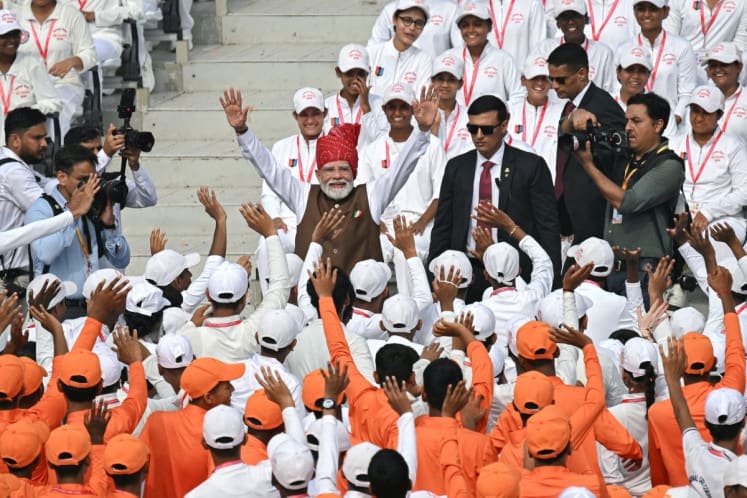
Modi also used the platform to reach younger voters, particularly Generation Z. He announced two initiatives: free AI skills training programs and complimentary online coaching for competitive exams. The moves come at a time when youth unemployment and exam-related pressures have become focal points of public debate in India.
The AI training program aims to equip young Indians with skills in machine learning, data science, and related technologies. Details on delivery mechanisms and scale remain sparse, but the announcement aligns with broader government efforts to position India as a hub for digital talent. The exam coaching initiative targets students preparing for civil service, engineering, and medical entrance tests, areas where private coaching has become prohibitively expensive for many families.
Both measures appear designed to address economic anxiety among younger citizens, a demographic that has grown increasingly vocal about job prospects and cost of living.
Defense and Connectivity in Focus
Self-reliance in defense emerged as a recurring theme in Modi's address. India has ramped up domestic production of military drones, missiles, and other hardware over the past few years, reducing reliance on imports from Russia and other traditional suppliers. The government has opened defense manufacturing to private players and incentivized joint ventures with foreign firms.
High-speed connectivity, another pillar in the seven-stream plan, likely encompasses both physical infrastructure such as expressways and rail corridors, and digital networks including 5G rollout and fiber expansion. India has been investing heavily in logistics corridors to cut freight times and lower costs for exporters, while telecom operators have begun deploying next-generation mobile networks across major cities.
Manufacturing and Innovation
The manufacturing component of Modi's plan builds on the Production-Linked Incentive (PLI) scheme, which has channeled subsidies into sectors like electronics, pharmaceuticals, and green energy equipment. The government has been courting multinational firms to shift production from China, banking on India's large domestic market and lower labor costs.
Technology and innovation, meanwhile, have been supported by increased R&D spending and startup incentives. India now hosts one of the world's largest startup ecosystems, though concerns about profitability and regulatory hurdles persist.
What Comes Next
Modi's seven-pillar framework stops short of detailed policy announcements or budget allocations. Implementation will depend on coordination across ministries, state governments, and regulators. Previous initiatives have sometimes faltered due to bureaucratic delays, land acquisition challenges, and inconsistent enforcement.
For Indian corporations, the Fortune 500 goal sets a clear benchmark. Companies will need to pursue mergers, expand internationally, and invest in R&D to close the gap with global peers. For the government, delivering on youth-focused promises will be critical to maintaining political capital, especially as election cycles approach.
The Independence Day speech sketched a vision. Execution, as always, will determine whether it translates into measurable gains.
RELATED STORIES
Modi Unveils Free Exam Prep and AI Skills Push After Education Protests
Priyanka V. Rao · 4 min

Honda-Tata Partnership Signals Shift in India Auto Strategy
Priyanka V. Rao · 3 min

Seoul and New Delhi Strengthen Customs Cooperation to Ease Trade Friction
Cheng Wei-Lun · 3 min
Gautam Adani Secures Dismissal of U.S. Securities Fraud Case
Priyanka V. Rao · 3 min
Spot something wrong? Email editor@briefasia.com. We log every correction publicly.