Asia · Politics
Prabowo Pitches Mineral Exchange With Appeal to Opposition's Core Ideology
Indonesia's president invoked Marhaenism in his budget speech, seeking PDI-P backing for a domestic commodity trading platform set to launch in January.
KEY TAKEAWAYS
- ·President Prabowo Subianto announced plans for a domestic mineral exchange launching January 2027, invoking Marhaenism to court support from the 110-seat PDI-P, the sole party outside his coalition.
- ·The exchange aims to shift price-setting power for Indonesian minerals from overseas markets to a domestic platform, requiring new legislation the House must pass on an ambitious timeline.
- ·Prabowo's ideological framing complicates PDI-P's position as a balancing force, forcing the party to reconcile opposition strategy with its own founding economic philosophy rooted in resource sovereignty.
A Strategic Ideological Gambit
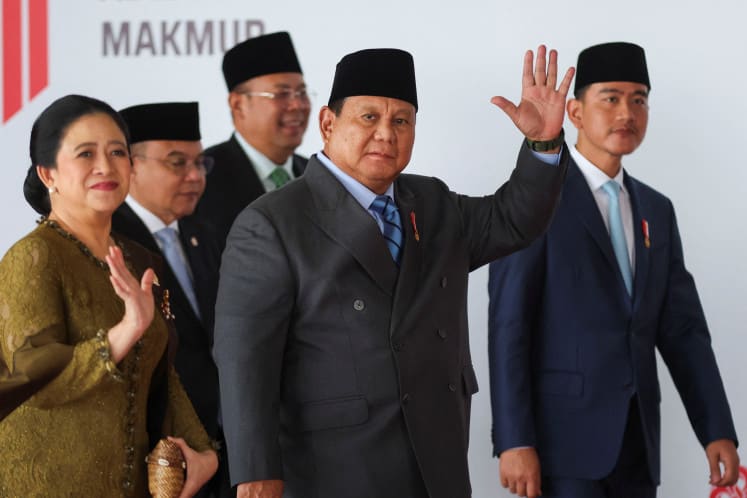
Indonesian President Prabowo Subianto reached across the political aisle on Friday with an unusual rhetorical move, invoking Marhaenism to build momentum for his administration's plan to establish a domestic mineral and commodity exchange by January 2027.
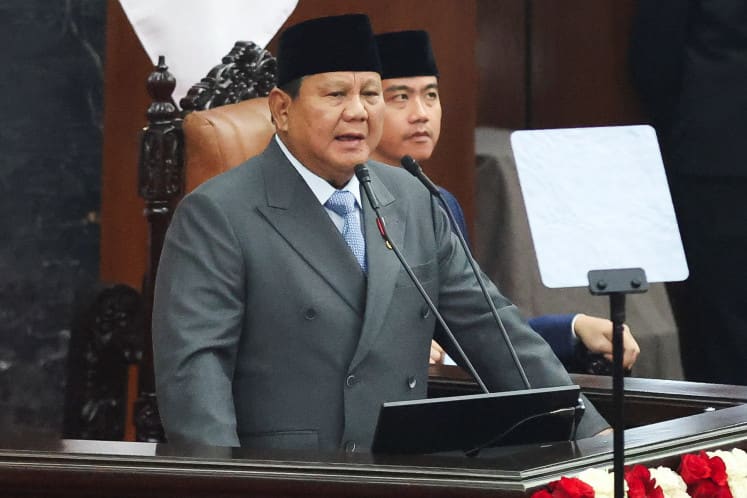
Speaking during his state budget address at the House of Representatives, Prabowo announced the government would create its own trading platform for minerals and strategic commodities. The initiative aims to wrest price-setting power from overseas markets for resources extracted on Indonesian soil.
"Actually, this is not 'Prabowonomics', this is Marhaenism," Prabowo told lawmakers, drawing laughter in the chamber. He added a pointed political message: "PDI-P would find it difficult not to support this."
The reference carries weight. Marhaenism is the economic and political philosophy developed by Indonesia's founding president Sukarno, father of current PDI-P chairwoman Megawati Soekarnoputri. The ideology emphasizes national unity, cultural identity, and collectivist economics as a counterpoint to liberal market orthodoxy. For the Indonesian Democratic Party of Struggle, it remains a foundational principle.
The Exchange Blueprint
Prabowo called on the House to expeditiously debate and approve legislation governing the new exchange's operations. He framed the initiative as a sovereignty issue, arguing that Indonesian producers should not remain subject to pricing mechanisms controlled by foreign exchanges.
The president's coalition commands overwhelming support in the legislature, holding 470 of 580 seats. Yet the PDI-P, with 110 seats, represents the only significant party outside that alliance. The party has declined to label itself as opposition, instead positioning as a "balancing force" that will back programs aligned with the Constitution and public interest while critiquing policies it views as deviations.
Resource Nationalism Meets Coalition Math
Indonesia holds substantial reserves of nickel, copper, tin, and bauxite. The country has pursued downstream processing policies in recent years, including export bans on unprocessed ore designed to force value-adding activity onshore. A domestic exchange would extend that logic, creating a price discovery mechanism within national borders.
Prabowo's ideological appeal reflects both conviction and calculation. The president has championed resource nationalism throughout his political career. Framing the exchange through Marhaenism aligns the policy with a tradition of economic self-determination that predates current partisan divides.
It also complicates the position of PDI-P legislators. Opposing a measure explicitly tied to their party's core philosophy would require articulating distinctions between principle and implementation, a more nuanced stance than outright rejection.
Political Positioning in the Legislature
The party has navigated a delicate path since Prabowo's inauguration. As the largest legislative bloc outside the ruling coalition, PDI-P holds influence disproportionate to its formal role. It has supported some administration initiatives while challenging others, maintaining space for selective cooperation.
Prabowo's Marhaenism reference tests that strategy. If the party endorses the mineral exchange, it validates a signature economic policy of a president it did not support electorally. If it resists, it risks appearing inconsistent with its own ideological heritage.
The exchange proposal arrives amid broader debate over Indonesia's commodity governance. Prabowo has criticized state-owned enterprise management and pledged stricter oversight, while also confronting illegal mining operations that undermine formal sector revenue.
Implementation Timeline and Legislative Hurdles
The January 2027 target for launching the exchange is ambitious. It requires drafting, debating, and passing enabling legislation, then building the institutional and technical infrastructure for a functioning commodity market. Price discovery mechanisms, custody arrangements, settlement systems, and regulatory frameworks must all be established.
Existing commodity exchanges in the region, including those in Singapore and Malaysia, have spent years developing liquidity and market depth. Indonesia's exchange will need to attract both domestic producers and international buyers to achieve critical mass.
The success of the initiative depends partly on regulatory design. If the exchange becomes mandatory for Indonesian mineral exports, it gains automatic volume but may face resistance from producers accustomed to existing trading relationships. If participation remains voluntary, building liquidity will take longer.
Regional Commodity Market Implications
Southeast Asia's commodity trading landscape is concentrated in Singapore, where financial infrastructure and legal certainty have drawn flows from across the region. Jakarta's exchange would compete for transactions currently routed through that hub, potentially reshaping trade patterns if it gains traction.
Other resource-rich nations have attempted similar initiatives with mixed results. Russia established specialized exchanges for metals and energy. China operates commodity futures markets that have grown into global benchmarks for some products. Success has correlated with market size, regulatory credibility, and integration with physical supply chains.
Indonesia's large domestic mining sector provides a natural base of activity. Whether that translates into a functioning exchange depends on execution details the House will debate in coming months. Prabowo's invocation of Marhaenism has set the political stage; the technical and economic challenges remain.
RELATED STORIES
Jakarta Charts Course for 8% Growth With State-Led Resource Strategy
Priyanka V. Rao · 4 min
Freeport Suspends Gresik Copper Smelter for Urgent Repairs
Siti Nuraini · 3 min
Batam's Data Center Boom Strains Water and Power Resources
Siti Nuraini · 3 min
Indonesia Plans to Slash State Enterprises to 300, Launch Probe Into Three Decades of Directors
Siti Nuraini · 4 min
Spot something wrong? Email editor@briefasia.com. We log every correction publicly.