Asia · Politics
Indonesia Plans to Slash State Enterprises to 300, Launch Probe Into Three Decades of Directors
President Prabowo Subianto targets closure of over 750 SOEs while proposing ad hoc courts to investigate executives for disguising losses as profits
KEY TAKEAWAYS
- ·Indonesia has closed 290 of 1,074 state-owned enterprises and plans to reduce the total to under 300 by year-end, saving 50 trillion rupiah or $2.8 billion in overhead costs.
- ·President Prabowo proposed ad hoc courts to investigate SOE directors over the past 30 years for allegedly disguising chronic losses as profits, alongside a conditional amnesty for executives who admit wrongdoing.
- ·The restructuring targets unproductive state companies that have operated without accountability and complicated Indonesia's credibility with foreign business partners.
Radical Overhaul Targets Bloated State Portfolio
Indonesia is pushing ahead with one of Southeast Asia's most aggressive state enterprise restructures, aiming to cut the number of government-owned companies from over 1,000 to fewer than 300 by year-end. The government has already shuttered 290 of 1,074 state-owned enterprises, including subsidiaries and affiliates, retaining only those it considers productive and value-generating.
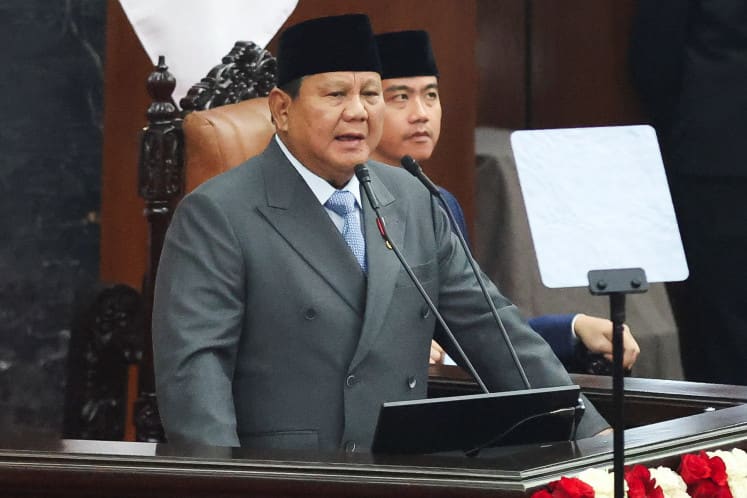
President Prabowo Subianto announced the initiative during his annual state address on Friday, framing the overhaul as essential to ending decades of financial mismanagement and fictional reporting. The closures have already trimmed around 50 trillion rupiah ($2.8 billion) in overhead expenses such as executive salaries, office leases, vehicle rentals, and official travel, with the government targeting 70 trillion rupiah in total savings by December.
Prabowo accused many state enterprises of operating without accountability, fabricating profit figures to hide chronic losses, and complicating the country's relationships with foreign partners. He questioned how such behavior had been permitted to persist and signaled that the leniency was over.
Ad Hoc Courts and Amnesty Proposal
Beyond closures, Prabowo proposed establishing ad hoc courts to investigate current and former SOE directors over the past 30 years. The move reflects his administration's belief that loss-making state companies have systematically disguised their financial condition through false reporting. The president suggested that unproductive enterprises had operated unchecked, undermining both fiscal discipline and Indonesia's credibility with international business partners.
At the same time, Prabowo floated the idea of a conditional amnesty for executives willing to admit wrongdoing. He asked lawmakers to consider a mechanism that would allow officials who acknowledge their actions and demonstrate genuine contrition to avoid prosecution. The dual-track approach pairs aggressive enforcement with an off-ramp for cooperation, a strategy designed to encourage disclosure while demonstrating resolve.
Fiscal Discipline and Foreign Confidence
The restructuring is part of a broader effort to strengthen Indonesia's fiscal position and improve the efficiency of state assets. Decades of overlapping mandates, weak oversight, and opaque governance have left the SOE sector bloated and underperforming. Many subsidiaries and affiliates were created without clear business cases, draining public funds while delivering minimal returns.
Prabowo's focus on foreign partnerships underscores the international dimension of the problem. When state enterprises misrepresent their finances, foreign investors and joint venture partners face unexpected risks, eroding trust and complicating capital flows. For a government seeking to position Indonesia as a stable destination for manufacturing and infrastructure investment, credibility in state enterprise management is non-negotiable.
The proposed judicial mechanism would mark a significant escalation in how Indonesia addresses SOE governance failures. While past administrations have attempted incremental reforms, the scale of Prabowo's initiative and the retroactive reach of the proposed investigations signal a willingness to confront entrenched interests. Whether Parliament will support ad hoc courts and conditional amnesty remains uncertain, but the announcement itself shifts the political conversation around state enterprise accountability.
Savings and Structural Questions
The 50 trillion rupiah in overhead savings highlights how much capital has been absorbed by administrative costs rather than productive investment. Executive compensation, office infrastructure, and travel budgets across hundreds of entities added up to billions of dollars annually, resources that could have funded public services or infrastructure. By consolidating the portfolio, the government aims to redirect those funds while simplifying oversight.
However, the restructuring also raises questions about employment, asset disposition, and the criteria for determining which companies survive. Closing subsidiaries may reduce overhead, but it also affects jobs and local economies, particularly in regions where state enterprises are major employers. The government has not detailed transition plans for displaced workers or how it will manage the sale or wind-down of assets from closed entities.
The promise of further cuts to reach 300 total SOEs by year-end suggests that the current wave of closures is only the beginning. If the government follows through, Indonesia's state enterprise landscape will look fundamentally different within months, with implications for sectors ranging from energy and transportation to finance and telecommunications.
Regional Context and Execution Risk
Indonesia's SOE sector has long been larger and more complex than those of regional peers such as Vietnam or the Philippines, where state enterprises play more targeted roles. The sheer number of entities, many created during different political eras with varying mandates, has made coherent management difficult. Prabowo's initiative mirrors efforts in China and Malaysia to streamline state portfolios, though the proposed retroactive investigations are more aggressive than typical regional practice.
Execution will determine whether the overhaul delivers lasting reform or triggers legal battles and political resistance. Ad hoc courts require legislative approval, and the conditional amnesty proposal could face opposition from both reformers who see it as too lenient and from those who fear it will be used selectively. The outcome will depend on Prabowo's ability to maintain momentum and navigate competing interests within Parliament and the bureaucracy.
For now, the closures continue, the overhead savings accumulate, and the prospect of investigations looms over current and former directors. Indonesia is testing whether political will alone can dismantle decades of institutional inertia.
RELATED STORIES
Indonesia Targets 2.4% Deficit in 2027 Budget as Prabowo Pushes Fiscal Restraint
Siti Nuraini · 3 min
Jakarta Charts Course for 8% Growth With State-Led Resource Strategy
Priyanka V. Rao · 4 min
Indonesia Redirects State Fund Dividends to Reduce Debt Burden
Priyanka V. Rao · 3 min
Riau Battles Wildfire Surge With Skeleton Budget
Siti Nuraini · 2 min
Spot something wrong? Email editor@briefasia.com. We log every correction publicly.