Asia · Politics
Jakarta Charts Course for 8% Growth With State-Led Resource Strategy
Prabowo's fiscal plan combines a US$230 billion budget with new commodity exchange and tighter export oversight to unlock value from minerals and energy
KEY TAKEAWAYS
- ·Indonesia proposed a US$230 billion budget for 2027 with a 2.4% deficit target and 5.8 to 6.5% GDP growth goal, up from 5.3% in Q2 2026.
- ·A new commodity exchange launching January 2027 will set domestic benchmark prices for nickel, tin, and coal to keep more revenue onshore.
- ·Analysts warn that reaching the upper growth target requires productivity gains and transparent execution, not just higher government spending.
A Fiscal Pivot Toward Self-Reliance
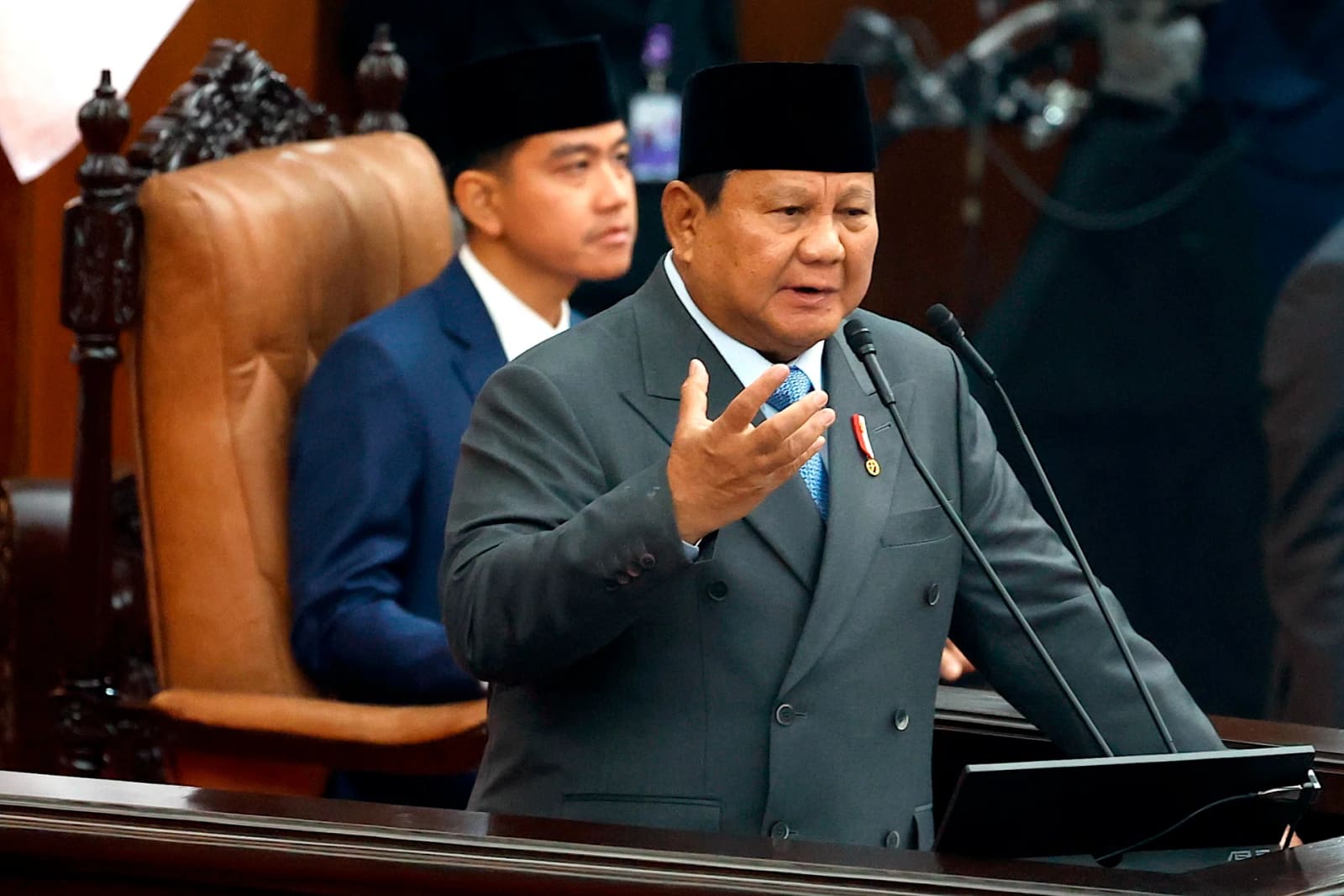
Indonesia's government is doubling down on state-directed resource management to finance a more ambitious development agenda. President Prabowo Subianto outlined a spending plan worth approximately US$230 billion for 2027 on August 14, representing a 6.62 per cent increase over current levels. The proposal aims to lift GDP expansion to between 5.8 and 6.5 per cent next year, a stretch from the 5.3 per cent recorded in the second quarter of 2026.
The fiscal architecture reflects a deliberate shift. While outlays rise, the deficit target narrows to 2.4 per cent of GDP, down from the 2.85 per cent penciled in for this year. That combination signals an administration intent on demonstrating restraint even as it funds healthcare, education, infrastructure, and food and energy independence programs. The plan now enters a six-week review period in parliament, with final approval expected in October.
Capturing Value at the Source
At the heart of Prabowo's strategy lies a bet that Indonesia can extract more economic rent from its natural wealth. The 74-year-old leader emphasized during his address that too much value from coal, palm oil, nickel, and other minerals flows offshore. To reverse that, Jakarta is preparing to launch a domestic commodity exchange on January 1, 2027. The platform will establish local benchmark prices for key exports including nickel, tin, and coal, giving the government leverage in global pricing discussions.
Separately, Prabowo has expanded the mandate of Danantara Sumberdaya Indonesia to monitor commodity shipments. The move consolidates oversight and aims to prevent underpricing or transfer-pricing schemes that erode tax revenue. The philosophy underpinning these steps is straightforward: if Indonesia sets the terms for how its resources are priced and traded, more capital stays inside the country to fund downstream processing and manufacturing.
The Execution Challenge
Whether these ambitions translate into durable expansion depends on implementation discipline. Nafan Aji Gusta, senior market analyst at Mirae Asset Sekuritas, noted that the narrower deficit target reassures markets concerned about fiscal slippage. "The pro-welfare budget proposal is sufficient to provide an initial boost to positive sentiment," he said, adding that sustained confidence hinges on transparent disbursement and revenue optimization.
Josua Pardede, chief economist at Permata Bank, described the growth target as ambitious but within reach if spending catalyzes genuine activity rather than simply inflating headline numbers. He cautioned that hitting the upper end of the range requires productivity gains and private investment, not just larger public outlays.
Harry Su, managing director of research at Samuel Sekuritas Indonesia, highlighted governance risks when national programs scale faster than oversight can keep pace. He pointed to food-safety incidents and corruption allegations in the free nutritious meals initiative as examples of what can go wrong when rollout speed exceeds administrative capacity.
Industrialization and Energy Transition
Prabowo devoted more than 90 minutes to detailing priorities that center on downstream processing, food security, and energy independence. On renewables, the administration has set a target of installing 30 gigawatts of solar capacity while retiring 13 gigawatts of diesel-fired generation. The transition is designed to reduce coal dependence and lower fuel import bills, which have climbed as fallout from conflict in Iran pushes up global energy costs.
The president also announced plans to establish an International Financial Centre spanning Jakarta and Bali. The initiative envisions both cities as regional hubs for finance, fintech, arbitration, and commercial dispute resolution. If realized, the centers could attract capital flows that currently bypass Indonesia for Singapore or Hong Kong.
Fakhrul Fulvian, chief economist at Trimegah Sekuritas, observed that investors now have a clearer picture of the administration's direction but remain focused on operational detail. "The vision is becoming clearer," he said. "But investors and businesses typically don't just ask where we are going. They also want to know how we will get there, what the priorities are, and how each policy will translate into investment, jobs and higher productivity."
Market Reaction and Regional Context
The Jakarta Composite Index climbed 1.59 per cent on August 14 as Prabowo spoke, while the rupiah slipped 0.28 per cent to 17,872 per US dollar. The currency has been under pressure as import costs rise and businesses exposed to dollar-denominated debt face higher servicing burdens.
Indonesia's trajectory will be measured against Southeast Asian peers competing for the same investment flows. Vietnam, Thailand, and the Philippines are all positioning themselves as manufacturing alternatives amid supply-chain reconfiguration. How Jakarta balances state control with openness to foreign capital will determine whether it can sustain growth momentum and move closer to Prabowo's 8 per cent target by 2029.
The test ahead is whether Indonesia can translate fiscal ambition and resource nationalism into concrete gains without sacrificing the policy credibility that keeps borrowing costs manageable and investors engaged. The answer will shape not only the country's own prospects but also the competitive dynamics of a region entering a new phase of industrial development.
RELATED STORIES
Indonesia Takes Control of Whoosh Railway Debt as B2B Model Collapses
Siti Nuraini · 4 min
Indonesia Redirects State Fund Dividends to Reduce Debt Burden
Priyanka V. Rao · 3 min
Indonesia's Free Meal Program Leaves Rural Kitchen Operators Trapped in Debt
Siti Nuraini · 3 min
Indonesia Nominates Destry Damayanti as First Female Central Bank Chief
Priyanka V. Rao · 3 min
Spot something wrong? Email editor@briefasia.com. We log every correction publicly.