Asia · Business
Indonesia Takes Control of Whoosh Railway Debt as B2B Model Collapses
Jakarta's intervention in the Jakarta-Bandung high-speed line ends a decade-long promise to keep the project off government books, even as extension plans move forward.
KEY TAKEAWAYS
- ·Indonesia's government has taken over debt restructuring for the Whoosh Jakarta-Bandung high-speed railway, abandoning a decade-old commitment to keep the project privately financed.
- ·The railway's revenue from fares has fallen short of covering construction debt and operating costs, forcing the state to absorb financial risk originally assigned to private investors.
- ·Plans to extend the line to Surabaya continue despite the existing segment's unresolved financial problems, raising questions about expanding a system that has yet to prove sustainable.
The B2B Experiment Ends
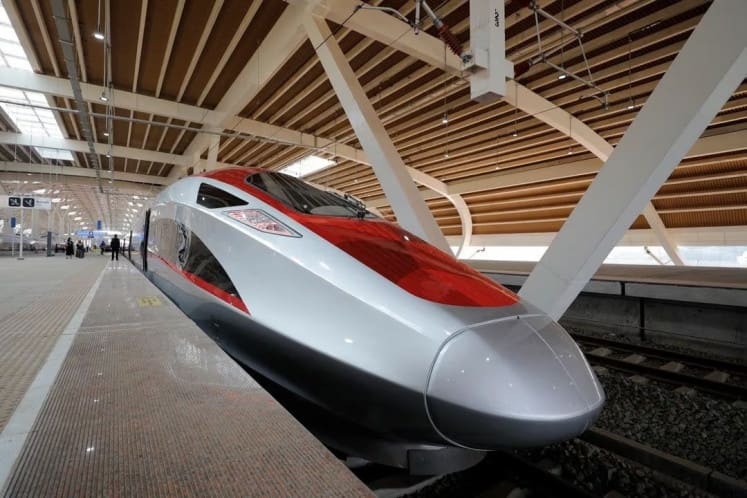
Indonesia's government has taken over debt restructuring for the Whoosh Jakarta-Bandung high-speed railway, effectively ending what officials once promoted as a purely business-driven infrastructure model. The intervention marks a reversal of commitments made a decade ago, when authorities pledged the project would proceed without drawing on state funds.
The railway, which connects Indonesia's capital to the West Java city of Bandung, was structured as a business-to-business venture meant to demonstrate that major infrastructure could be financed and operated commercially. That framework has now collapsed under financial pressure, forcing Jakarta to absorb the restructuring burden.
Financial Reality Forces Government Hand
The takeover comes as the railway's operating company faces mounting obligations it cannot service through fare revenue alone. Passenger numbers and ticket pricing have fallen short of projections needed to cover construction debt and operating costs. The gap between revenue and liabilities widened to a point where private restructuring became unviable.
Jakarta's intervention involves the government assuming responsibility for negotiating with creditors and potentially restructuring loan terms. The move shifts financial risk from the private consortium that built and operates the line onto the public balance sheet, a transfer that contradicts the original financing architecture.
Officials have not disclosed the full scale of outstanding debt or the specific terms under which the government will manage restructuring. What is clear is that the state now bears direct exposure to obligations it once insisted would remain in private hands.
The Surabaya Extension Paradox
Even as the existing line's financial model unravels, planning continues for an extension to Surabaya, Indonesia's second-largest city. The expansion would more than double the railway's length, adding several hundred kilometers and billions of dollars in additional construction costs.
The juxtaposition raises questions about the economic logic of expansion. If the Jakarta-Bandung segment has yet to demonstrate it can generate sufficient revenue to cover its own costs, extending the line multiplies both the capital outlay and the operating risk. Critics argue the government is compounding a financial problem rather than resolving it.
Proponents of the extension contend that a longer network will achieve economies of scale, spreading fixed costs across more passengers and potentially making the system viable. They point to high-speed rail systems in other countries that required years of operation and network expansion before reaching profitability.
Lessons from the Region
Indonesia is not the first Southeast Asian nation to grapple with the financial realities of high-speed rail. Thailand shelved multiple high-speed projects after cost estimates ballooned. Malaysia's Kuala Lumpur-Singapore line was canceled amid disputes over financing and route alignment.
Even in Northeast Asia, where high-speed rail is more established, profitability remains elusive for many systems. Japan's Shinkansen network took decades to move into the black, and China's vast high-speed rail grid operates at a loss, sustained by state subsidies justified on broader economic development grounds.
The difference in Indonesia's case is the explicit promise that the project would not require government support. That commitment was central to the political case for proceeding with the railway during a period when Indonesia faced competing infrastructure priorities and limited fiscal space.
What Happens Next
The government now faces a choice between two paths: restructure the debt to make the existing line sustainable, potentially through extended repayment terms or interest rate reductions, or accept that the railway will require ongoing subsidies and budget accordingly.
Neither option is straightforward. Debt restructuring may provide temporary relief but does not address the underlying revenue problem. If fares remain too low and ridership too modest, the railway will continue to lose money regardless of how debt is reorganized.
Alternatively, if Jakarta decides to subsidize operations, it must justify that allocation against other transport and infrastructure needs. Indonesia's rail network, road system, and urban transit all face funding gaps. Channeling scarce resources to a prestige project that serves a limited corridor could draw criticism.
The Surabaya extension adds another layer of complexity. Proceeding with expansion before stabilizing the existing segment's finances risks multiplying losses. Pausing the extension, however, would mean writing off planning costs and potentially souring relations with contractors and creditors already committed to the project.
A Test for Infrastructure Policy
The Whoosh railway's financial troubles offer a case study in the risks of ambitious infrastructure projects structured around optimistic revenue assumptions. When passenger demand falls short or construction costs overrun, the gap must be filled by someone. In this instance, that someone is the Indonesian taxpayer.
For other emerging markets watching Indonesia's experience, the lesson is clear: labeling a project as business-to-business does not insulate it from financial gravity. If the numbers do not work, the state often ends up holding the bill. Whether Indonesia's government can turn the Whoosh railway into a functional, financially stable system remains an open question, one with implications far beyond a single rail line.
RELATED STORIES
South Sumatra Police Uncover 1.4 Million Liters in Fuel Diversion Scheme
Siti Nuraini · 3 min
Indonesia's Free Meal Program Leaves Rural Kitchen Operators Trapped in Debt
Siti Nuraini · 3 min
Indonesia Nominates Destry Damayanti as First Female Central Bank Chief
Priyanka V. Rao · 3 min
Indonesia's Mining Sector Contracts for Second Straight Quarter
Siti Nuraini · 3 min
Spot something wrong? Email editor@briefasia.com. We log every correction publicly.