Asia · Business
Indonesia's Mining Sector Contracts for Second Straight Quarter
The sector shrank 1.64 percent in Q2 2026 while the broader economy grew 5.29 percent, dragged down by nickel oversupply, coal production caps, and the Grasberg mine shutdown.
KEY TAKEAWAYS
- ·Indonesia's mining sector contracted 1.64 percent in Q2 2026, the only major GDP contributor in the red while the economy grew 5.29 percent.
- ·Metal ore mining declined due to global nickel oversupply, high HPAL production costs, and the Grasberg mine still recovering from a September 2025 landslide.
- ·Coal output fell 1.41 percent not from weak demand but from government production quotas imposed through the RKAB system.
Another Quarter in the Red
Indonesia's mining sector contracted 1.64 percent in the second quarter of 2026, marking its second consecutive quarterly decline even as the nation's overall economy expanded 5.29 percent, according to data released by Indonesia Statistics (BPS). The sector is now the only one among the country's five largest gross domestic product contributors to post negative growth during the period.
The contraction represents a modest improvement from the first quarter, when mining output fell 2.14 percent. Yet the persistence of negative territory through the first half of the year signals deeper structural challenges across Indonesia's resource economy, from nickel smelters in Sulawesi to coal pits in Kalimantan.
Two subsectors drove the decline: metal ore mining and coal extraction. Both face distinct pressures that highlight the tension between Indonesia's resource abundance and the policy and market forces now constraining output.
Metal Ores Under Pressure
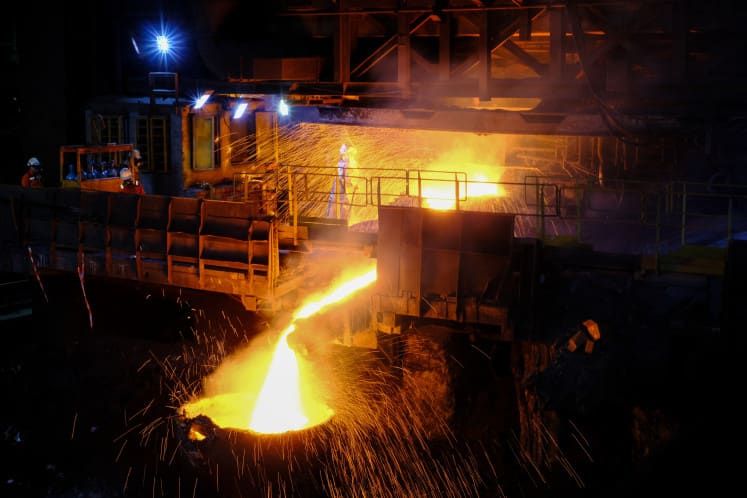
Metal ore mining bore the brunt of the contraction. Nickel, bauxite, and tin production all declined steadily through the second quarter, according to industry tracking. The slowdown stems in part from a global nickel glut that has kept prices depressed, squeezing margins for Indonesian producers who invested heavily in smelting capacity over the past five years.
High-pressure acid leach (HPAL) facilities, which process lower-grade nickel laterite ore, have been particularly exposed. Rising costs for sulfur and sulfuric acid, key inputs in the HPAL process, have pushed production expenses higher even as nickel prices remain weak. The economics of running these plants have deteriorated sharply, forcing some operators to throttle back output or idle capacity.
Gold mining also contributed to the downturn. Operations at the Grasberg Block Cave underground mine in Central Papua have yet to fully recover from a major landslide last September. Nearly a year after the incident, production remains below pre-disruption levels, illustrating how a single operational failure at a flagship site can ripple through national statistics.
Coal Quotas Bite
Coal and lignite mining contracted 1.41 percent in the second quarter, but the cause differs from the challenges facing metal ores. Indonesia's coal sector is constrained not by weak demand or operational inefficiency, but by government-imposed production limits set through the Work Plan and Expenditure Budget (RKAB) system.
These quotas cap how much coal companies can extract, regardless of market conditions or producer readiness. While policymakers cite environmental and supply management rationales for the restrictions, the effect is to artificially limit output even when global coal markets remain firm and producers have the capacity to deliver more volume.
The result is a sector boxed in by regulatory design rather than economic fundamentals, a dynamic that complicates Indonesia's broader strategy of leveraging its resource base to drive industrial upgrading and export earnings.
Regulatory Uncertainty Lingers
Beyond commodity-specific pressures, the mining sector continues to navigate regulatory uncertainty around royalty rates and mineral benchmark pricing. These policy variables directly affect project economics and investment decisions, yet clarity has been slow to emerge from Jakarta.
For companies operating on multi-decade time horizons, the lack of stable fiscal and pricing frameworks adds a layer of risk that can delay expansions, deter new capital, and dampen production planning. The interplay between global commodity cycles and domestic policy volatility leaves Indonesian mining firms caught between forces they cannot control and rules that shift underfoot.
What Comes Next
The slight narrowing of the contraction from Q1 to Q2 offers a sliver of optimism, but it is too early to declare a turnaround. Nickel markets remain oversupplied, sulfur costs are still elevated, and coal quotas show no sign of loosening. The Grasberg mine continues its slow recovery, and regulatory clarity on royalties and benchmark prices remains elusive.
Indonesia's mining sector was once a reliable engine of growth, contributing both to GDP and to the country's broader industrialization ambitions through downstream processing mandates. Today, it has become a drag on national economic performance, a reversal that underscores the difficulty of managing resource-dependent growth in a volatile global market.
Whether the sector can return to positive territory in the second half of 2026 will depend on factors largely beyond the control of Indonesian producers: nickel demand recovery in China, sulfur supply chains stabilizing, and policy signals from Jakarta that restore confidence in long-term project viability. For now, the mining sector remains in the red, a constraint rather than a catalyst.
RELATED STORIES
Indonesia Names Interim Central Bank Chief as Sole Nominee for Permanent Role
Siti Nuraini · 2 min
Freeport Suspends Gresik Copper Smelter for Urgent Repairs
Siti Nuraini · 3 min
South Sumatra Police Uncover 1.4 Million Liters in Fuel Diversion Scheme
Siti Nuraini · 3 min
Indonesia Redirects State Fund Dividends to Reduce Debt Burden
Priyanka V. Rao · 3 min
Spot something wrong? Email editor@briefasia.com. We log every correction publicly.