Asia · Business
Batam's Data Center Boom Strains Water and Power Resources
Indonesia's island city faces infrastructure crisis as 16 new facilities compete for utilities with 10,000 to 50,000 residents' worth of daily consumption
KEY TAKEAWAYS
- ·Batam has attracted 16 data centers in various stages after Singapore and Johor imposed new licensing restrictions, but the island city's utility infrastructure has not kept pace with investment inflows.
- ·A single large data center consumes approximately 18.93 million liters of water daily for cooling, equivalent to the needs of 10,000 to 50,000 residents, while Batam produces only 3,487 liters per second from six reservoirs.
- ·Economists warn that without prioritizing desalination projects and grid expansion before approving further facilities, Batam risks supply crises that will burden residents and erode the island's cost advantage over Singapore.
Singapore's Loss, Batam's Infrastructure Headache
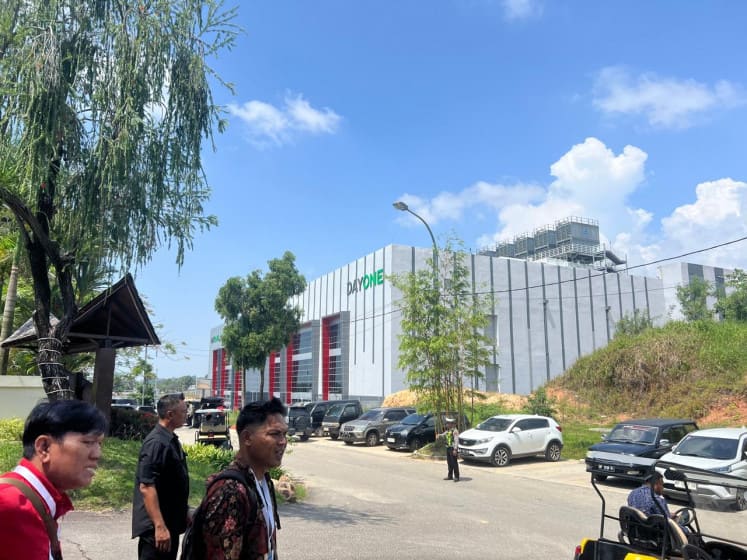
Batam has become an unintended beneficiary of Singapore and Johor's tightening data center policies, with at least 16 new facilities now in various stages of development across the Indonesian island city. But the rush of investment has outpaced the municipal capacity to supply two critical resources: clean water and reliable electricity.
Suyono Saputra, an economist at Batam International University, said the exodus from Singapore stems from new licensing restrictions in the city-state and neighboring Johor. Batam's geographic proximity and access to subsea fiber networks position it as the natural overflow destination. Yet the island's utility backbone was never designed to handle industrial-scale data operations alongside residential demand.
"In the world, data centers always leave questions about supporting infrastructure, especially water and electricity," Suyono told local media Wednesday. He warned that relying solely on Batam's existing raw water sources poses serious risk to the broader population.
Water Demand Equivalent to a Small City
A single large-scale data center requires roughly 18.93 million liters of water per day to cool server racks, a volume comparable to the daily consumption of 10,000 to 50,000 residents. Batam currently produces 3,487 liters of clean water per second from six reservoirs. With 16 facilities either planned or under construction, the arithmetic grows tight.
Suyono advocates seawater reverse osmosis or desalination as the long-term fix, but both technologies demand substantial capital and multi-year timelines. Without preemptive infrastructure expansion, he said, a supply crisis could hit residents hard once the data centers reach full operation.
Utility First, Investment Second
The economist framed the challenge around sequencing: "Utility first, investment follows" must become the guiding principle. When infrastructure lags behind capital inflows, local communities bear the cost in the form of rationing, brownouts, and higher utility tariffs.
Batam's appeal to hyperscale operators rests on lower land, labor, and energy costs relative to Singapore. But those advantages evaporate if the island cannot guarantee stable power and water at scale. The city now faces a test case for Southeast Asia's broader infrastructure readiness as digital economy investments migrate to second-tier markets.
Policy and Planning Gaps
Local authorities have yet to publish a comprehensive utility roadmap that accounts for the cumulative load of 16 data centers. Industry observers note that data center developers typically conduct site assessments for power and cooling, but municipal governments must coordinate cross-sector planning to avoid cannibalizing residential and commercial supply.
Batam's experience mirrors challenges in other emerging data center hubs across Asia, where permitting speed and tax incentives have outrun grid upgrades and water management reforms. The island's trajectory over the next two years will signal whether Indonesia can absorb spillover demand from mature markets or whether infrastructure bottlenecks will redirect investment to Thailand, Malaysia, or the Philippines.
What Comes Next
Batam officials have not announced emergency measures or fast-tracked desalination projects. Suyono's call for a utility-first framework suggests that without immediate intervention, the island risks either capping data center growth or imposing strict consumption quotas that diminish its cost advantage.
For investors eyeing Southeast Asia's digital infrastructure buildout, Batam offers a cautionary snapshot: proximity and fiber are necessary but not sufficient. Power generation, water treatment, and grid resilience remain the unglamorous prerequisites that determine whether a location can sustain hyperscale operations or simply export the problem to its own residents.
RELATED STORIES

Prabowo Pitches Mineral Exchange With Appeal to Opposition's Core Ideology
Siti Nuraini · 4 min

Indonesia Plans to Slash State Enterprises to 300, Launch Probe Into Three Decades of Directors
Siti Nuraini · 4 min

Indonesia Targets 2.4% Deficit in 2027 Budget as Prabowo Pushes Fiscal Restraint
Siti Nuraini · 3 min
Riau Battles Wildfire Surge With Skeleton Budget
Siti Nuraini · 2 min
Spot something wrong? Email editor@briefasia.com. We log every correction publicly.