Asia · Business
Honda-Tata Partnership Signals Shift in India Auto Strategy
Global automakers increasingly turn to local partnerships to navigate India's competitive market, echoing tactics that succeeded in China
KEY TAKEAWAYS
- ·Honda partnered with Tata Group on platform development, cementing a trend of global automakers forming local alliances in India to control capital expenditure.
- ·The strategy mirrors joint ventures that succeeded in China, where partnerships provided access to manufacturing, distribution, and consumer insights at lower risk.
- ·Domestic Indian brands like Tata Motors and Mahindra have gained sophistication, pressuring foreign players to collaborate rather than compete alone in the price-sensitive market.
A Familiar Playbook
Honda's recent alliance with a Tata Group entity represents more than a single partnership. The move confirms a broader pattern among international automakers operating in India: forge local partnerships to control capital expenditure and gain market traction.
The approach mirrors strategies that global manufacturers deployed in China over the past two decades, where joint ventures became the standard entry mechanism. Now, as India's automotive sector intensifies in competition, foreign players are replicating that model in South Asia's largest economy.
Capital Discipline in a Tough Market
Managing capital outlays has become critical for global automakers navigating India's price-sensitive landscape. Local partnerships allow foreign manufacturers to share platform development costs, leverage existing distribution networks, and tap into regional supplier ecosystems without shouldering the full investment burden alone.
Honda announced its collaboration with Tata Group focusing on platform development, according to Honda. The arrangement enables both parties to pool engineering resources and spread fixed costs across larger production volumes, a calculus that becomes especially important when margins remain thin and competition from domestic brands grows sharper.
India's automotive market presents distinct challenges. Consumers prioritize affordability and fuel efficiency, regulatory standards evolve rapidly, and infrastructure for electric mobility remains uneven across states. Foreign brands that attempt to replicate their home-market products without local adaptation often struggle to achieve scale.
The China Precedent
The parallels to China's automotive evolution are striking. Two decades ago, international automakers entered the Chinese market almost exclusively through joint ventures with state-owned or large private enterprises. Those partnerships provided access to manufacturing capacity, government relationships, and consumer insights that would have taken years to build independently.
In India, the logic is similar even if the regulatory framework differs. Tata Motors, Mahindra & Mahindra, and other domestic players possess deep knowledge of local preferences, established dealer networks, and supply chains optimized for cost. Partnering with these incumbents shortens the learning curve and reduces the risk of capital-intensive missteps.
Competitive Pressure Mounts
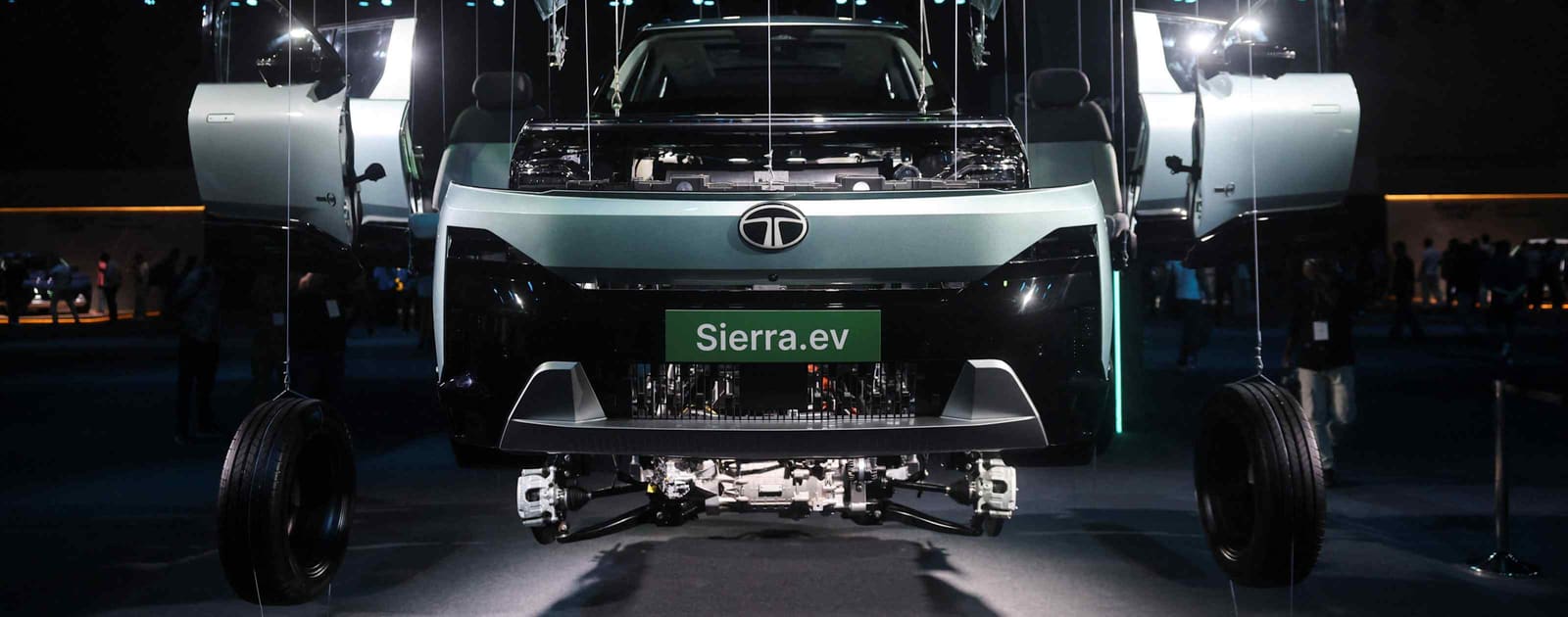
The urgency to form alliances has intensified as domestic Indian brands gain sophistication. Tata Motors, for instance, has expanded its electric vehicle lineup and invested heavily in design and technology. Mahindra has partnered with international firms on electric platforms. Maruti Suzuki, long the market leader, continues to dominate the compact segment with aggressive pricing and wide distribution.
For global automakers, going it alone increasingly means competing on multiple fronts: against entrenched local players with lower cost structures, against new electric entrants backed by venture capital, and against imports from neighboring markets. Partnerships offer a way to share risk and accelerate time to market.
Platform Sharing as the Core
Platform development lies at the heart of the Honda-Tata arrangement. Shared platforms allow automakers to produce multiple vehicle models from a common architecture, spreading engineering and tooling costs across several nameplates. In a market where every percentage point of margin matters, this approach can mean the difference between profitability and chronic losses.
Other global manufacturers are likely to follow. Volkswagen, which struggled for years to gain share in India, has explored partnerships to localize its MQB platform. Renault-Nissan has long relied on collaboration to amortize development costs. Even premium brands are reassessing their India strategies in light of the capital required to meet new emissions and safety standards.
Looking Ahead
The shift toward local partnerships in India reflects a pragmatic recognition: the days of exporting a global product and expecting automatic success are over. Automakers must localize not just their vehicles but their entire business model, and partnerships provide the fastest, lowest-risk path to achieve that.
As India's automotive market continues to grow and electrify, expect more announcements of tie-ups between global brands and domestic players. The China playbook, refined over two decades, is now being applied in Bengaluru, Mumbai, and Chennai. For investors and industry watchers, the message is clear: collaboration, not conquest, defines the new era of global automotive expansion in Asia's third-largest economy.
RELATED STORIES
Beijing's Visa Restrictions Expose India's Electronics Supply Bottleneck
Priyanka V. Rao · 3 min
Honda Turns to Tata Technologies for Vehicle Development in India Cost Push
Priyanka V. Rao · 4 min
Honda Taps Tata Technologies for Vehicle Platform Development
Priyanka V. Rao · 3 min

Ralph Lauren Surpasses Revenue Expectations on Asian and North American Demand
Priyanka V. Rao · 2 min
Spot something wrong? Email editor@briefasia.com. We log every correction publicly.