Asia · Trade
Washington Builds Domestic Critical Minerals Chain to Counter Beijing's Market Grip
New executive orders mandate US defense contractors source scandium, tungsten, and rare earths from domestic or allied suppliers, aiming to dismantle decades of Chinese dominance
KEY TAKEAWAYS
- ·President Trump signed executive orders requiring US defense contractors to source scandium, tungsten, and rare earths from domestic or allied suppliers, with compliance thresholds rising to 90 percent by early 2028.
- ·China currently controls roughly 90 percent of global rare earth refining capacity and over 80 percent of tungsten mining, creating a concentrated supply risk for US military programs.
- ·Australia, Canada, and Japan have secured initial supply agreements with US contractors, while Southeast Asian nations explore rare earth partnerships amid competing pressures from Beijing.
A Strategic Shift in Sourcing
The White House has set in motion a coordinated push to reshape how America acquires the raw materials that power its military technology. Since July, President Donald Trump has signed executive orders requiring defense contractors to procure critical minerals from US soil or from partner nations, a direct challenge to China's decades-long stranglehold on global supply.
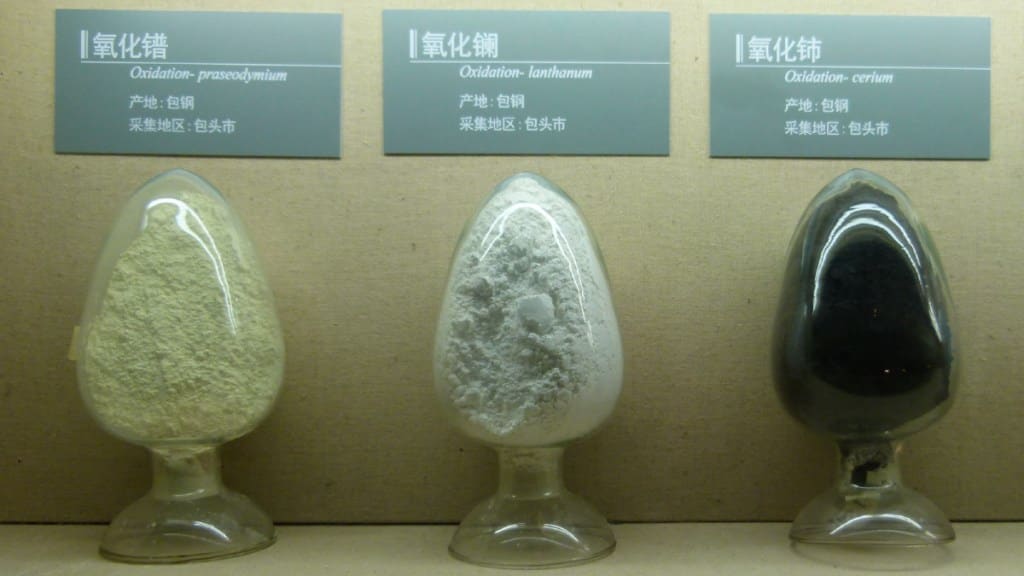
The measures target a specific set of elements that have become indispensable to modern warfare: scandium for lightweight aerospace alloys, tungsten for armor-piercing munitions, and rare earth elements that enable precision-guided systems. Pentagon procurement officials estimate that roughly 80 percent of these materials currently flow through Chinese refineries, even when mined elsewhere, creating what defense planners describe as an unacceptable single point of failure.
The executive orders establish a tiered compliance framework. Starting in the fourth quarter of 2026, prime contractors on classified programs must demonstrate that at least 30 percent of specified minerals come from qualified sources. That threshold rises to 60 percent by mid-2027 and 90 percent by early 2028. Contractors face contract termination and debarment for non-compliance, according to Department of Defense guidance issued in late July.
The Scope of Beijing's Control
China's dominance in critical minerals rests on three pillars: mining capacity, refining infrastructure, and downstream processing expertise. The country produces approximately 60 percent of the world's rare earth elements by volume and controls nearly 90 percent of refining capacity, according to US Geological Survey data. For scandium, Chinese producers account for roughly 66 percent of global output. Tungsten extraction is similarly concentrated, with China mining more than 80 percent of the world's supply.
This vertical integration has allowed Beijing to influence pricing and availability for decades. In 2010, China temporarily halted rare earth exports to Japan during a territorial dispute, demonstrating the geopolitical leverage embedded in the supply chain. More recently, Chinese export controls on gallium and germanium, announced in mid-2023, signaled a willingness to weaponize mineral access.
US defense contractors have historically accepted this dependency as a cost of doing business. Rare earth magnets in F-35 fighter jet actuators, scandium-aluminum alloys in missile casings, and tungsten carbide in bunker-buster warheads all trace back to Chinese suppliers or processors. The new executive orders force a reckoning with that legacy.
Domestic Production and Allied Partnerships
The administration's strategy pairs procurement mandates with financial incentives for domestic extraction and processing. The Department of the Interior has fast-tracked permitting for rare earth projects in Wyoming, Texas, and Alaska. MP Materials, which operates the Mountain Pass mine in California, the only US rare earth production facility, received a $45 million Defense Production Act grant in August to expand its on-site separation capacity. The facility currently ships ore to China for processing, a bottleneck the funding aims to eliminate.
Australia, Canada, and Japan have emerged as priority partners under the allied-sourcing provisions. Canberra's Lynas Rare Earths, which runs a heavy rare earth separation plant in Western Australia, secured a long-term supply agreement with Lockheed Martin in early August. The deal covers neodymium and dysprosium, two elements critical to the permanent magnets in missile guidance systems.
Canada's Critical Minerals Strategy, announced in 2022, has positioned the country as a potential tungsten supplier. The Cantung Mine in the Northwest Territories, dormant since 2015, is undergoing feasibility studies for reopening with US Department of Defense co-investment. South Korea and India have also entered preliminary talks with Washington on joint rare earth processing ventures.
The Cost and Timeline Calculus
Industry executives caution that building a non-Chinese supply chain will be neither quick nor cheap. Rare earth separation is chemically complex and environmentally intensive. It took China three decades to achieve current economies of scale. US and allied projects face permitting delays, higher labor costs, and the need to develop technical expertise that has atrophied domestically.
Defense contractors have warned that near-term compliance with the executive orders will drive up program costs. Scandium prices have already climbed 22 percent since the July announcement, according to benchmark data from Metal Bulletin. Tungsten concentrate has seen a 15 percent increase. Rare earth oxides remain volatile, with neodymium oxide up 18 percent over the same period.
The Pentagon has allocated $1.2 billion in fiscal year 2027 appropriations to offset contractor costs during the transition. That funding includes price adjustment clauses in existing contracts and grants for suppliers to build inventory buffers. Defense Department officials acknowledge that the timeline is aggressive but argue that continued reliance on Chinese sources poses a greater long-term risk to national security.
Beijing's Response and Regional Implications
China has not publicly retaliated, but state media commentary has framed the US measures as protectionist and destabilizing to global trade. The Ministry of Commerce has hinted at potential export licensing restrictions on additional materials, though no formal announcements have followed.
For Asia's manufacturing economies, the US pivot creates both opportunity and complexity. Vietnam and Indonesia, both rich in rare earth deposits, are exploring partnerships with American firms to develop domestic processing. Thailand's tungsten reserves, largely untapped, have attracted interest from US mining companies. Yet these nations must navigate Beijing's economic influence; China remains the largest trading partner for most Southeast Asian countries.
Japan's role is particularly delicate. Tokyo has quietly supported the US initiative, viewing it as alignment with its own economic security strategy. Japanese trading houses have increased rare earth stockpiling and are funding exploration in Africa and Central Asia. But Japanese manufacturers still depend on Chinese rare earth magnets for consumer electronics, and any disruption to that flow would ripple across supply chains.
The executive orders mark a turning point in how Washington thinks about resource security. Whether the domestic and allied infrastructure can scale fast enough to meet the administration's deadlines will determine if the strategy succeeds in reducing dependence or simply fragments an already fragile global supply network.
RELATED STORIES

Crude Surges Past $90 as Hormuz Talks Stall
Cheng Wei-Lun · 3 min

Honda-Tata Partnership Signals Shift in India Auto Strategy
Priyanka V. Rao · 3 min
China's Inflation Slows to Six-Month Low as Deflation Risks Return
Cheng Wei-Lun · 4 min

Laos Struggles to Monetize China Railway Despite Rising Traffic
Cheng Wei-Lun · 2 min
Spot something wrong? Email editor@briefasia.com. We log every correction publicly.