Technology · Products
Mitsubishi Electric Prepares Satellite Production Surge as Japan Accelerates Launch Cadence
Country's leading satellite maker positions aerospace as priority with government targeting six to eight annual launches
KEY TAKEAWAYS
- ·Mitsubishi Electric is preparing to increase satellite production capacity as Japan targets six to eight rocket launches per year, up from its historical pace.
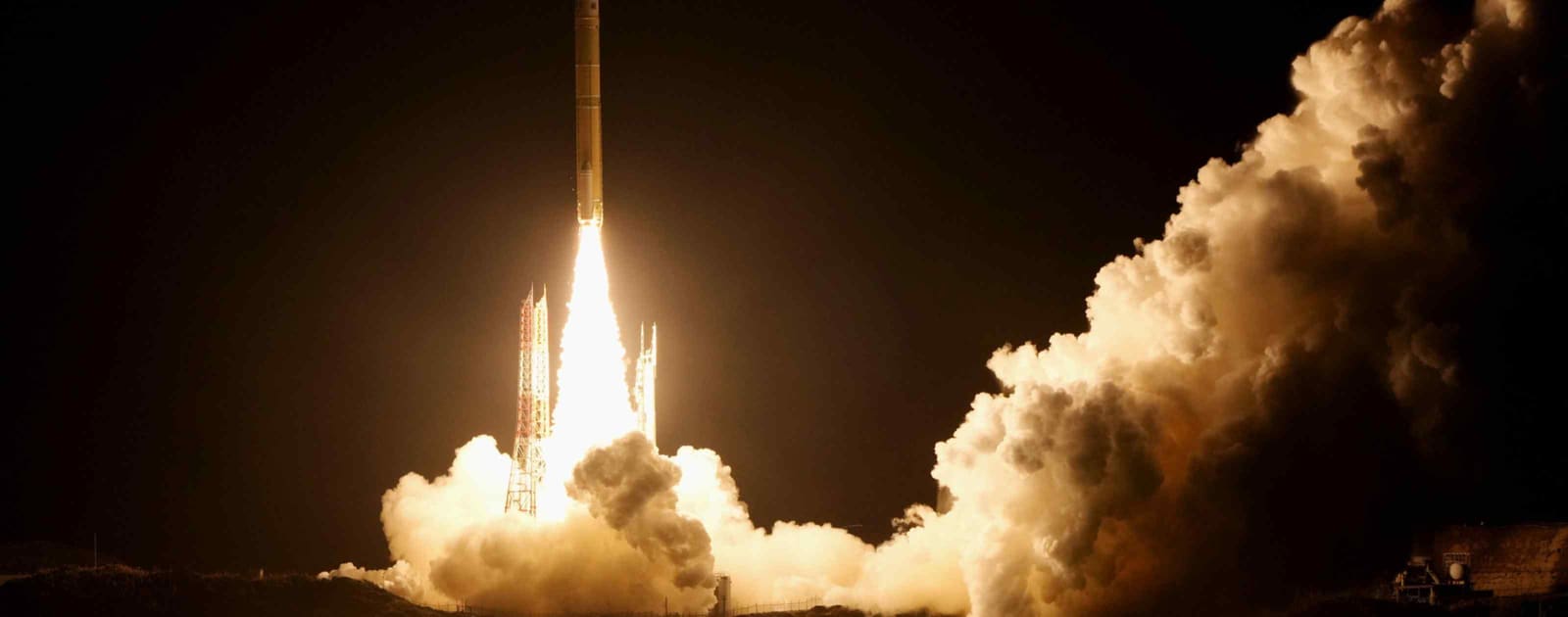
- ·The company positioned aerospace as a strategic priority following Tuesday's successful H3 rocket launch carrying a Michibiki positioning satellite from Tanegashima Space Center.
- ·Scaling production will require infrastructure upgrades, workforce expansion, and supply chain coordination to meet sustained government and potential commercial demand.
Scaling for a New Launch Era
Mitsubishi Electric is preparing to accelerate satellite production as Japan enters a more aggressive phase of orbital deployment. The move follows Tuesday's successful launch of an H3 rocket carrying a Michibiki positioning satellite from Tanegashima Space Center, a milestone that signals the country's readiness to increase its launch tempo.
Japan is targeting six to eight rocket launches per year, a significant step up from its historical cadence. For Mitsubishi Electric, the nation's largest manufacturer of large satellites, that shift creates both opportunity and operational pressure. The company has positioned aerospace as a strategic priority, reflecting broader government ambitions to deepen domestic space capabilities and reduce reliance on foreign launch providers.
The H3 rocket program represents Japan's next-generation launch vehicle, designed to offer greater payload capacity and lower costs than its predecessor, the H-IIA. Tuesday's mission marked another validation of the system's reliability, critical for attracting both government and commercial satellite contracts. Mitsubishi Electric has long been the primary supplier for Japan's satellite programs, including communications, Earth observation, and positioning systems.
Production Capacity Under Review
The company is now evaluating its manufacturing infrastructure to meet anticipated demand. Large satellite production involves complex supply chains, specialized clean rooms, and lengthy assembly cycles, typically spanning multiple years from contract to launch. Scaling output requires not just floor space but also workforce expansion and supplier coordination across components ranging from solar panels to transponders.
Mitsubishi Electric's satellite division has historically operated on a project-by-project basis, reflecting the relatively modest number of Japanese launches. A sustained increase to six to eight launches annually would necessitate a shift toward more continuous production lines, potentially including modular satellite designs that allow for faster turnaround.
The company has not disclosed specific capacity targets or capital expenditure plans, but industry observers note that Japan's space budget has been climbing. The government has made space a pillar of both national security and industrial policy, with positioning satellites like Michibiki serving dual-use roles in civilian navigation and defense applications.
Regional Context and Competition
Japan's push to increase launch frequency comes as regional rivals and partners alike expand their space programs. China maintains a far higher launch rate, exceeding 60 missions in recent years, while India's space agency has emerged as a cost-effective launch provider for international clients. South Korea has also entered the orbital launch club, successfully deploying its Nuri rocket.
For Mitsubishi Electric, the domestic market remains the anchor, but the company faces competition from international satellite manufacturers with established production scale. Airbus Defence and Space, Lockheed Martin, and Thales Alenia Space operate facilities capable of producing multiple large satellites simultaneously. Japanese policymakers have emphasized the need to foster domestic champions capable of competing on cost and delivery timelines.
The Michibiki constellation, part of Japan's Quasi-Zenith Satellite System, is designed to enhance GPS accuracy over the Asia-Pacific region. Additional satellites in the series are planned, and Mitsubishi Electric is positioned as the lead contractor. Beyond positioning systems, Japan is investing in Earth observation and communications satellites, driven by both commercial demand and government interest in monitoring maritime activity and disaster response.
Supply Chain and Workforce Implications
Ramping up satellite production will test Mitsubishi Electric's supply chain resilience. Critical components, including radiation-hardened electronics and precision optical systems, often have long lead times and limited supplier bases. The company will need to secure commitments from tier-two and tier-three suppliers to avoid bottlenecks.
Workforce development is another concern. Satellite engineering requires specialized skills in systems integration, thermal management, and orbital mechanics. Japan's aging workforce and competition for engineering talent across industries add complexity to scaling efforts. Mitsubishi Electric has historically drawn from a deep pool of technical graduates, but sustaining recruitment at higher volumes may require partnerships with universities and government-backed training programs.
The success of the H3 program also depends on cost competitiveness. While the rocket's design targets lower per-kilogram launch costs, Japan's space industry has struggled to match the pricing of commercial providers like SpaceX. For Mitsubishi Electric, keeping satellite production costs in check will be essential to winning contracts beyond Japan's borders.
What Comes Next
Japan's space ambitions extend beyond satellite launches. The government is exploring commercial partnerships, reusable rocket technology, and expanded roles for private-sector players. Mitsubishi Electric's ability to scale production will be a litmus test for whether Japan can translate policy goals into operational capacity.
The company's aerospace division is now at an inflection point. Decades of steady, low-volume satellite production gave way to a new reality where cadence and efficiency matter as much as technical excellence. How Mitsubishi Electric navigates this transition will shape not only its own competitive position but also Japan's standing in the increasingly crowded and strategically vital space sector.
RELATED STORIES
Japan Builds Lunar Launch Independence with ispace H3 Mission
Cheng Wei-Lun · 2 min

Japan Plans Lending Rule Changes to Unlock Startup Capital
Aiko Nakamura · 3 min
BYD Targets Japan's Regional Markets With Racco Mini EV
Aiko Nakamura · 4 min
Sony and TSMC Plot $6.3 Billion Image Sensor Plant in Southern Japan
Cheng Wei-Lun · 3 min
Spot something wrong? Email editor@briefasia.com. We log every correction publicly.