Technology · Products
BYD Targets Japan's Regional Markets With Racco Mini EV
Chinese automaker launches kei-class electric vehicle aimed at communities beyond Tokyo and Osaka, testing demand in mid-tier cities
KEY TAKEAWAYS
- ·BYD launched the Racco electric kei car in Japan on July 28, targeting regional cities like Kanazawa rather than major metropolitan areas.
- ·Kei cars account for roughly 40 percent of Japan's new vehicle sales, with even higher penetration outside the Tokyo-Osaka corridor.
- ·Early dealership traffic in Kanazawa suggests demand for affordable electric alternatives in a segment where domestic brands face battery supply constraints.
Targeting Regional Japan
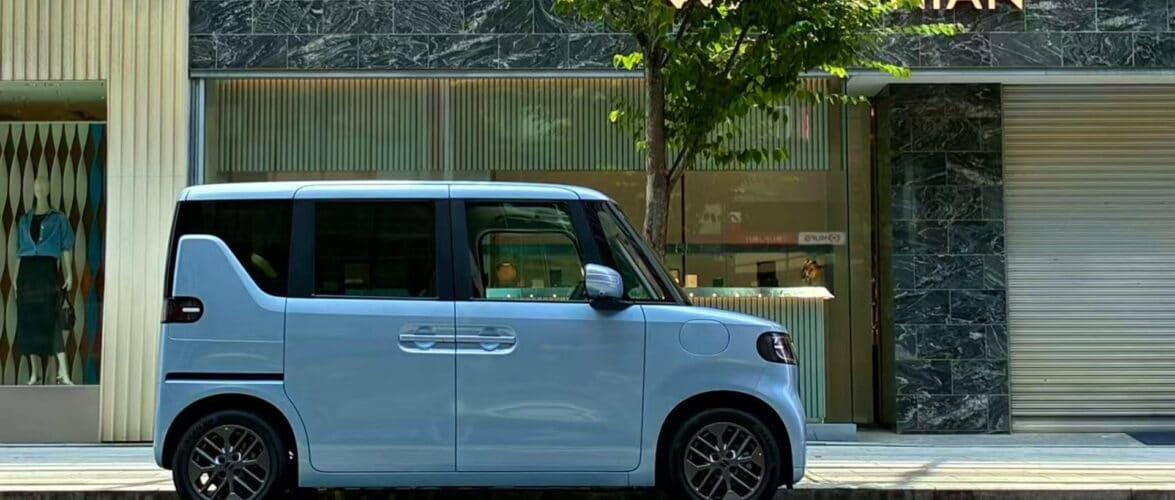
BYD has launched the Racco electric minicar in Japan, focusing on communities outside the country's largest metropolitan areas. The Chinese automaker introduced the kei-class vehicle on July 28, positioning it for mid-sized cities and regional markets where compact vehicles dominate daily transportation.
Two days after the launch, a BYD dealership in Kanazawa drew steady foot traffic on a weekday, with potential customers lining up for test drives. The response signals interest in battery-electric alternatives within Japan's tightly regulated kei car segment, which accounts for roughly 40 percent of the country's new vehicle sales.
Kanazawa, a city of approximately 460,000 residents on the Sea of Japan coast, represents the demographic BYD is targeting: urban enough to support charging infrastructure, yet outside the Tokyo-Osaka corridor where foreign automakers have concentrated their initial EV efforts.
The Kei Advantage
Japan's kei car category imposes strict dimensional and engine displacement limits in exchange for tax breaks, lower insurance premiums, and relaxed parking requirements. Vehicles must measure no more than 3.4 meters in length and 1.48 meters in width, with engine displacement capped at 660 cubic centimeters for internal combustion models.
The Racco adheres to these dimensions while offering an electric powertrain, a combination that remains rare in Japan's market. Domestic manufacturers including Nissan, Mitsubishi, and Suzuki have introduced electric kei cars, but supply has been limited and pricing remains high relative to gasoline equivalents.
BYD's entry represents the first significant push by a Chinese manufacturer into this segment. The company has not disclosed detailed specifications for the Racco's battery capacity or range, but kei EVs typically offer 150 to 200 kilometers on a full charge, suitable for local errands and short commutes.
Strategic Shift Beyond Metros
BYD's regional focus marks a departure from the playbook followed by Tesla and European brands, which have concentrated on premium sedans and SUVs in Japan's wealthiest urban markets. Those efforts have yielded modest results; foreign EVs captured less than 2 percent of Japan's passenger vehicle market in 2024, according to industry data.
The kei segment, by contrast, is deeply embedded in Japanese transportation patterns. In prefectures outside the Tokyo, Osaka, and Nagoya metropolitan zones, kei cars often represent more than half of household vehicle purchases. Buyers prioritize low operating costs, maneuverability on narrow streets, and minimal parking footprints.
BYD's ability to manufacture at scale and control battery supply chains through its subsidiary FinDreams gives it a cost advantage that could prove decisive if the company prices the Racco competitively. The automaker has not announced retail pricing for the Japanese market, but industry observers expect it to undercut domestic electric kei models, which currently start around 2.5 million yen.
Infrastructure and Policy Tailwinds
Japan's central government has extended subsidies for electric vehicle purchases through 2026, with kei EVs eligible for grants of up to 550,000 yen. Regional governments in areas such as Ishikawa Prefecture, where Kanazawa is located, layer additional incentives on top of national programs.
Charging infrastructure in secondary cities has expanded steadily, driven by partnerships between regional utilities, convenience store chains, and local governments. Kanazawa alone added more than 30 public fast-charging points in the past 18 months, part of a nationwide push to support EV adoption outside major urban centers.
BYD operates 13 dealerships across Japan as of mid-2025, with plans to double that footprint by the end of 2026. The company has prioritized locations in prefectural capitals and industrial hubs rather than competing for high-rent storefronts in Tokyo or Yokohama.
Competitive Landscape
The Racco enters a market where established players hold strong brand loyalty and dense service networks. Suzuki commands nearly 35 percent of Japan's kei car market, followed by Daihatsu and Honda. All three have announced electric kei models slated for release between late 2025 and early 2027, but production timelines have slipped repeatedly due to battery supply constraints.
Nissan and Mitsubishi jointly developed the Sakura and eK X EV, which launched in 2022 and have sold approximately 40,000 units combined. Both models have faced production bottlenecks, with waiting periods stretching beyond six months for new orders.
BYD's vertical integration and manufacturing capacity could allow it to meet demand more reliably than competitors reliant on external battery suppliers. The company produces more than 3 million vehicles annually across its global operations and has ramped up right-hand-drive production at facilities in Thailand and potentially Japan itself, though the company has not confirmed domestic assembly plans.
Early customer interest in Kanazawa and other regional markets will test whether Japanese buyers, traditionally cautious about foreign automotive brands, are willing to embrace a Chinese-made EV in a category long dominated by domestic names.
RELATED STORIES
China's Rare Earth Giants Post Strong Profits Amid Supply Chain Tensions
Cheng Wei-Lun · 3 min
Asian Tech Stocks Surge as Weak US Jobs Data Dims Rate Hike Outlook
Cheng Wei-Lun · 4 min
China Invites Science Elites to Annual Leadership Retreat as Research Push Accelerates
Cheng Wei-Lun · 3 min
Korean Chipmakers Quietly Test Chinese Equipment as US Export Controls Tighten
Cheng Wei-Lun · 4 min
Spot something wrong? Email editor@briefasia.com. We log every correction publicly.