Asia · Business
Philippine Foreign Investment Falls 65% to Lowest Since 2015
Sharp drop in intercompany borrowings drove net FDI inflows to $210 million in May, extending a broader five-month decline across Southeast Asia's manufacturing and financial hubs.
KEY TAKEAWAYS
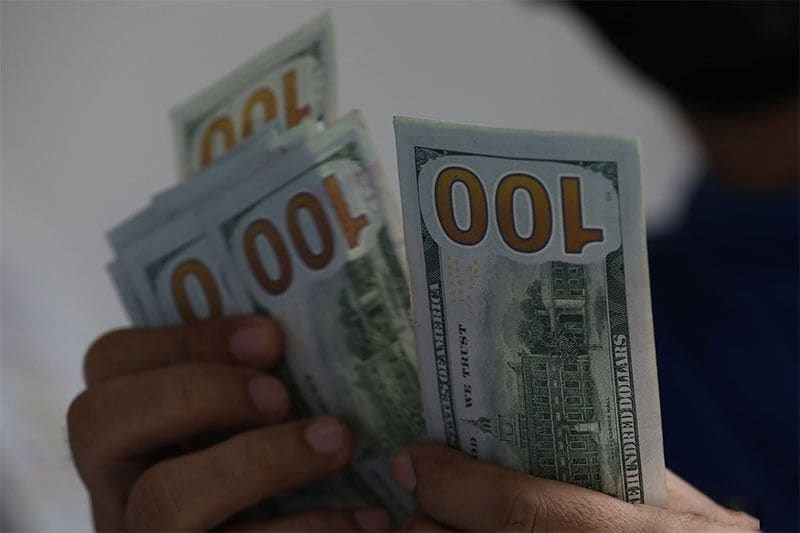
- ·Foreign direct investment into the Philippines fell 65 percent year-on-year to $210 million in May 2026, the lowest monthly inflow since March 2015.
- ·Net investments in debt instruments collapsed 92 percent to $35 million, accounting for the bulk of the decline as multinationals cut intercompany borrowings.
- ·Five-month FDI totaled $2.18 billion, down 33 percent, with Japan, the United States and Singapore remaining top equity sources for manufacturing and financial services.
Investment Flows Hit Multi-Year Low
Foreign direct investment into the Philippines contracted sharply in May, falling to $210 million and marking the weakest monthly performance since March 2015. The decline reflects broader headwinds across Southeast Asian investment corridors as cross-border capital flows face mounting uncertainty.
The May figure represented a 65 percent year-on-year drop from the $595 million recorded in the same month of 2025, according to preliminary data from the Bangko Sentral ng Pilipinas. Month-on-month, the inflow was 16 percent lower than April's $250 million, extending a pattern of softening investment appetite that has persisted through the first half of the year.
Debt Instruments Drive the Decline
The steepest deterioration came from net investments in debt instruments, which track intercompany borrowings and lending between foreign parent companies and their Philippine subsidiaries. This component plunged 92 percent to just $35 million in May, down from $440 million a year earlier.
That single category accounted for more than the entire overall decline in FDI during the month, underscoring how dependent Philippine investment flows have become on internal corporate financing rather than fresh equity placements.
Net equity capital investments rose 25 percent to $77 million, but the improvement was driven primarily by lower withdrawals rather than stronger new commitments. Gross equity placements actually declined 19 percent to $87 million, while withdrawals fell sharply to $10 million from $46 million. Reinvestment of earnings edged up six percent to $98 million.
Five-Month Picture Shows Sustained Weakness
For the January-to-May period, total FDI net inflows reached $2.18 billion, down 33 percent from $3.27 billion in the same stretch of 2025. The cumulative decline was driven by a 50 percent drop in debt instruments to $1.25 billion and a 10 percent fall in reinvestment of earnings to $383 million.
Net equity capital investments provided the only bright spot, surging 49 percent to $541 million. The central bank noted that equity placements during the five-month window came mainly from Japan, the United States and Singapore, targeting manufacturing, financial and insurance activities, and real estate.
Context and Implications
The weakness in foreign investment aligns with a broader slowdown in the Philippine economy. Second-quarter GDP growth underperformed expectations, and overall investment activity has softened as both domestic and external uncertainties weigh on corporate decision-making.
Michael Ricafort, chief economist at RCBC, pointed to a combination of geopolitical tensions and domestic policy uncertainty as factors dampening investor appetite. The decline in intercompany borrowings suggests that multinational firms operating in the Philippines are pulling back on internal financing, a sign that parent companies may be reassessing their exposure or reallocating capital to other markets.
The collapse in debt instruments is particularly notable because it reflects decisions by existing investors rather than the absence of new entrants. When multinationals reduce intercompany loans, it often signals caution about near-term operations or a shift in regional capital allocation strategies.
What the Numbers Measure
The central bank's FDI figures capture actual cross-border investment flows, distinct from the commitments reported by investment promotion agencies. Approved projects represent intentions and often take months or years to materialize, while BSP data tracks money that has already moved.
That distinction matters in the current environment. Even if the government secures new investment pledges, the lag between approval and execution means actual inflows may continue to underwhelm in the near term.
Japan, the United States and Singapore remain the top sources of equity capital, and their continued focus on manufacturing and financial services suggests that investor interest in the Philippines has not disappeared entirely. But the scale of inflows has clearly diminished, and the composition has shifted away from the debt-financed expansion that characterized earlier periods.
Regional Investment Dynamics
The Philippine decline comes as capital flows across Southeast Asia face pressure from tighter global financial conditions, supply chain recalibration and shifting trade dynamics. Investors are reassessing where to deploy capital as geopolitical tensions reshape manufacturing networks and as governments across the region compete for a shrinking pool of mobile investment.
Manufacturing remains a focal point for foreign equity placements, reflecting ongoing interest in the Philippines as a potential link in diversified supply chains. Financial services and real estate, the other two major destinations for FDI, are more sensitive to domestic economic conditions and regulatory clarity.
The central bank has not revised its full-year FDI outlook, but the 33 percent decline through May suggests that 2026 inflows could fall well short of previous years unless a sharp rebound materializes in the second half. That would require either a surge in new equity commitments or a resumption of intercompany lending, neither of which appears imminent based on current trends.
Watching the Second Half
Investors and policymakers will be monitoring whether the May trough represents a cyclical low or the start of a more prolonged retrenchment. The next few months will clarify whether the collapse in debt instruments was a one-off adjustment or a structural shift in how multinational firms finance their Philippine operations.
For now, the data underscores the fragility of foreign investment flows into the country and the challenges facing efforts to attract and retain long-term capital in a more volatile global environment.
RELATED STORIES
Philippine Economy Stalls as Investment Collapse Drags Growth to Pandemic Lows
Priyanka V. Rao · 3 min

San Miguel's Ramon Ang Takes 25.7% Stake in Lopez Group Holding Company
Priyanka V. Rao · 3 min
Ramon Ang Secures Quarter Stake in Lopez Inc. for $11.6 Billion Economic Reach
Priyanka V. Rao · 4 min
San Miguel's Ramon Ang Takes Quarter Stake in Lopez Holding Company
Priyanka V. Rao · 5 min
Spot something wrong? Email editor@briefasia.com. We log every correction publicly.