Technology · Policy
Korean Chipmakers Quietly Test Chinese Equipment as US Export Controls Tighten
Samsung and SK Hynix began qualifying AMEC etching tools two years ago, hedging against service disruptions at their China fabs while Beijing's semiconductor ecosystem advances
KEY TAKEAWAYS
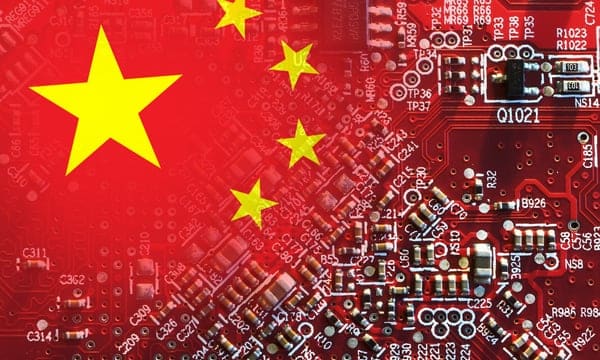
- ·Samsung Electronics and SK Hynix spent roughly two years testing etching equipment from Chinese firm AMEC, hedging against potential service disruptions as US export-control policy shifted from validated end-user status in 2023 to narrower annual licenses by 2026.
- ·A Shanghai state-backed manufacturer began mass-producing deep-ultraviolet lithography machines in late July, targeting five units this year and twenty in 2027, marking progress in a segment long dominated by Dutch firm ASML.
- ·Huawei plans to launch its Ascend 950 AI chip and Atlas 950 computing system in South Korea in Q4 2026, claiming 2.87 times the inference performance of Nvidia's H20 at one quarter of the price through distribution deals with Hansol PNS and SK Shieldus.
A Quiet Insurance Policy
Engineers at Samsung Electronics and SK Hynix began qualifying etching equipment from Advanced Micro-Fabrication Equipment Inc. roughly two years ago, a move that reflects deepening uncertainty over whether American and European suppliers will continue servicing tools inside the companies' Chinese fabrication plants. Both firms are among the world's largest memory chipmakers, operating critical production lines in China that depend on equipment calibrated to extreme tolerances.
Samsung has denied testing AMEC equipment at its China facility or considering such trials, while SK Hynix has declined to comment. Even so, the qualification work started around the time Washington's export-control regime entered a period of rapid iteration, leaving fab operators unsure whether existing installations would retain access to spare parts, software updates, and repair technicians.
Policy Swings and Supply-Chain Calculus
In 2023, the US Commerce Department granted Samsung and SK Hynix validated end-user status for their Chinese factories, allowing imports of certain controlled American equipment without case-by-case licenses. Washington revoked that designation in 2025, then issued narrower annual licenses covering equipment imports for 2026. Each shift introduced fresh risk into multi-billion-dollar production environments where a single tool falling out of calibration can idle an entire line.
Memory fabrication runs on machines that etch, deposit, and measure features at the nanometer scale. Suppliers typically bundle hardware sales with long-term service contracts, and any gap in support can cascade into yield losses and missed shipments. For fab managers, testing alternative suppliers is less about switching vendors overnight and more about preserving optionality if Western service channels close.
China's Hardware Push Gains Momentum
While Korean chipmakers hedge, China's domestic equipment sector is moving from prototype to production. A state-backed manufacturer in Shanghai, identified as Shanghai Aishengna Electronic Technology Group, began mass-producing immersion deep-ultraviolet lithography machines in late July. The company plans to deliver roughly five units this year and scale to about twenty in 2027, serving three leading Chinese chipmakers.
Lithography systems pattern the circuit layouts that define a chip's function. ASML of the Netherlands has dominated the field for decades, particularly with extreme-ultraviolet machines required for cutting-edge logic nodes. Aishengna's DUV systems use an older process and fall well short of ASML's capabilities, posing no immediate commercial threat to the Dutch incumbent. Still, the ramp signals progress in a segment where China has long relied on imports subject to export license.
The company assembled its engineering teams by consolidating talent from several Chinese lithography startups, an approach that mirrors Beijing's broader strategy of channeling state capital and human resources into technology bottlenecks.
Huawei's AI Chip Play in Korea
China's push for semiconductor self-sufficiency now extends to finished AI processors. Huawei plans to launch its Ascend 950 chip and Atlas 950 SuperPod computing system in South Korea during the fourth quarter of 2026, positioning them as a lower-cost alternative to Nvidia's export-compliant H20 accelerator. The company has signed distribution agreements with Hansol PNS and SK Shieldus, two Korean partners.
Huawei says the Ascend 950, designed for inference workloads, delivers roughly 2.87 times the performance of Nvidia's H20 at about one quarter of the price. Those figures, if borne out in customer deployments, would represent a significant value proposition for enterprises running large-scale inference tasks that do not require the absolute highest performance.
Security concerns and questions about long-term software support may still slow adoption in South Korea, even with aggressive pricing. Enterprises evaluating AI accelerators weigh not only benchmark numbers but also ecosystem maturity, driver stability, and the risk of supply disruptions tied to geopolitical friction.
Regulatory Philosophy and Technology Velocity
Observers note that Beijing's "move fast and regulate later" approach has accelerated development in artificial intelligence and renewable energy, though it raises questions about product security and quality assurance. Carl Benedikt Frey, an associate professor at the Oxford Internet Institute, recently highlighted the trade-offs inherent in that regulatory model, contrasting it with Western frameworks that front-load compliance and safety review.
The same dynamic applies to semiconductor equipment. Chinese toolmakers have compressed development cycles by drawing on state financing, talent acquisition, and a domestic customer base willing to adopt early-generation products. Whether that velocity translates into long-term competitive advantage depends on the companies' ability to close performance gaps and build service networks that match incumbent suppliers.
What Happens Next
Samsung and SK Hynix have not disclosed whether their AMEC trials will advance beyond qualification. Testing a tool and integrating it into high-volume manufacturing are separate decisions, each carrying distinct cost and risk profiles. For now, the trials function as a form of strategic insurance, a signal that even Asia's most advanced chipmakers see value in developing fallback options as US export policy remains in flux.
Aishengna's lithography output, meanwhile, is expected to grow to about twenty units in 2027. That scale remains modest compared to ASML's global install base, but it represents a foothold in a market segment where China previously had no domestic alternative. How quickly Chinese equipment firms can move up the performance curve will shape the next phase of the semiconductor trade contest.
RELATED STORIES
Seoul Court Upholds Prison Term for Ex-SK Hynix Engineer in Chip Leak Case
Cheng Wei-Lun · 3 min
SK Hynix Reviews Future of China Packaging Facility Amid $3 Billion Valuation Talk
Cheng Wei-Lun · 2 min
SK Hynix Eyes Stake Sale in $3 Billion China Packaging Facility
Cheng Wei-Lun · 2 min
Korean Startup aweXome Ray Opens First Production Line for EUV Pellicle Material
Cheng Wei-Lun · 3 min
Spot something wrong? Email editor@briefasia.com. We log every correction publicly.