Asia · Business
Laos Struggles to Monetize China Railway Despite Rising Traffic
Five years after launch, the $5.9 billion rail link has cut transport times and drawn Chinese investors, but new industries remain out of reach for the landlocked nation.
KEY TAKEAWAYS
- ·The Laos-China Railway has carried record passengers and cargo since opening in late 2021, cutting transport time to Yunnan significantly.
- ·Chinese investors have concentrated on rubber, durian, banana plantations, and mining in northern Laos, but high-value manufacturing remains absent.
- ·Vientiane aims to shift from transit corridor to industrial base, yet lacks the policy framework and complementary infrastructure to attract diversified factories.
Record Traffic, Limited Returns
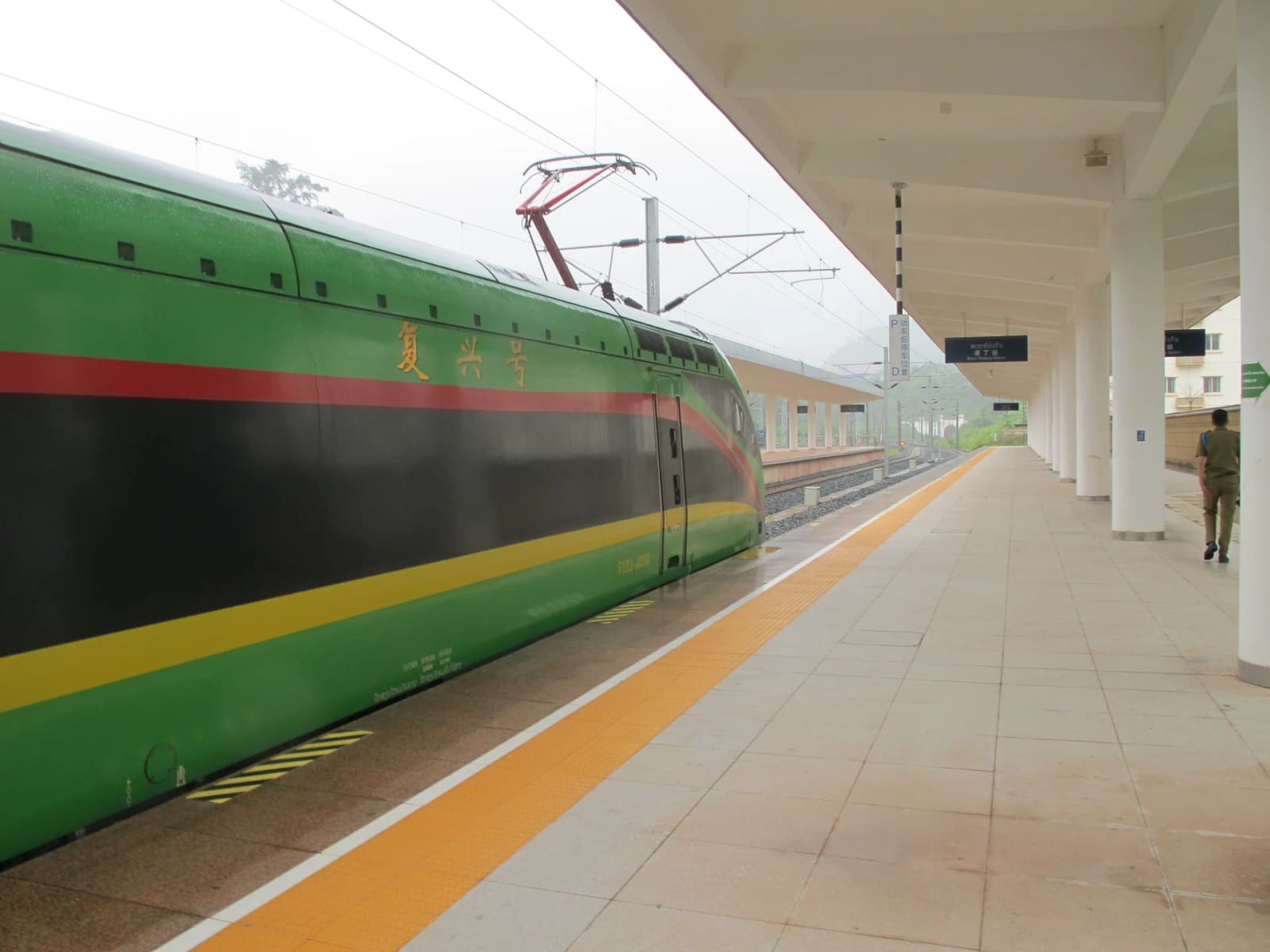
The Laos-China Railway is moving more people and freight than ever, but the landlocked nation is finding that infrastructure alone does not guarantee prosperity. Since the first train departed Vientiane for the Chinese border in late 2021, the rail corridor has slashed journey times to Yunnan and attracted a wave of investment. Yet nearly five years on, the South-east Asian country remains largely a transit route rather than a manufacturing hub, and the economic spillovers its government had hoped for remain elusive.
The 414-kilometer line, which connects Vientiane to the border town of Boten and onward to Kunming, was financed at a cost of $5.9 billion, a sum that dwarfs Laos' annual GDP. China provided the bulk of funding and construction expertise, and the railway now handles record volumes of both passengers and cargo. Transport times to China's second-largest economy have fallen dramatically, opening new possibilities for cross-border trade.
Chinese Capital Flows North
Investment has followed the tracks, but the pattern is narrow. Chinese companies have poured capital into rubber, durian, and banana plantations in northern Laos, as well as mining operations. These sectors leverage proximity to Chinese markets and logistics infrastructure, yet they do little to diversify Laos' industrial base or create the high-value manufacturing jobs Vientiane envisioned when it signed on to the project.
The railway has effectively made northern Laos an extension of Yunnan's agricultural and extractive supply chains. While that has brought employment and foreign exchange, it has not catalyzed the shift from primary commodities to value-added production. Industrial parks remain underutilized, and the hoped-for electronics assembly plants, garment factories, and logistics complexes have been slow to materialize.
The Transit Trap
Laos' predicament is a familiar one in regional infrastructure development. A rail link can move goods efficiently, but it does not automatically generate the ecosystems, skills, or institutions that underpin manufacturing competitiveness. The country competes with Vietnam, Thailand, and Cambodia for factory investment, and each of those neighbors offers deeper labor pools, more established supply chains, and better access to seaports.
Vientiane's challenge is to convert geographic position into economic advantage. The railway gives Laos a direct line to southern China, but without complementary policies, reliable power, and investment in workforce training, multinational manufacturers have little reason to relocate from coastal hubs. The government has signaled it wants to move beyond being a transit corridor, yet the policy toolkit to make that happen remains underdeveloped.
What Comes Next
The next phase will test whether Laos can leverage the railway to attract industries that add value rather than simply extract and export. That will require targeted incentives, improvements in logistics services, and coordination with Chinese provincial authorities who control much of the cross-border investment flow. It will also require addressing the debt burden the railway has imposed, which limits fiscal space for complementary infrastructure and skills programs.
Regional integration is accelerating, and the Laos-China Railway is a tangible expression of that. But infrastructure is only the first step. For Laos, the harder work of building industrial capacity, deepening trade linkages, and capturing more of the value chain is just beginning. The trains are running on time; the question is whether the country can build an economy that does more than watch them pass through.
RELATED STORIES
Beijing's Visa Restrictions Expose India's Electronics Supply Bottleneck
Priyanka V. Rao · 3 min
Crude Surges Past $90 as Hormuz Talks Stall
Cheng Wei-Lun · 3 min
China's Rare Earth Giants Post Strong Profits Amid Supply Chain Tensions
Cheng Wei-Lun · 3 min

South Korean Mineral Processors Eye US Strategic Supply Deals
Cheng Wei-Lun · 4 min
Spot something wrong? Email editor@briefasia.com. We log every correction publicly.