Asia · Business
Lufthansa Technik Breaks Ground on Clark MRO Hub as Philippines Bids for Asia Maintenance Crown
The German aerospace giant's 157,000-square-meter facility promises 1,200 jobs and positions Clark as a regional widebody repair center by 2028.
KEY TAKEAWAYS
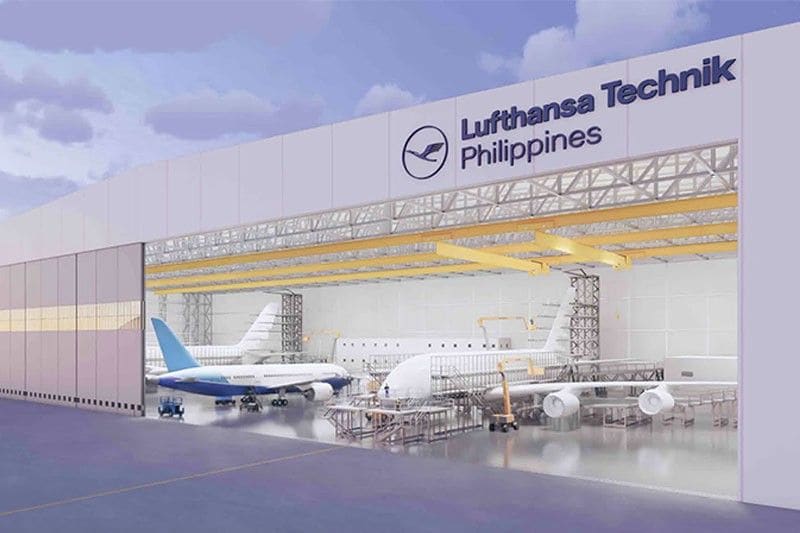
- ·Lufthansa Technik Philippines has started building a 157,000-square-meter aircraft maintenance facility at Clark International Airport, with the first phase due in 2028 and capacity for two widebody jets including the Airbus A380.
- ·The project will create at least 1,200 jobs in Central Luzon and expand to six widebody bays in a second phase, giving Philippine carriers a domestic alternative to Singapore and Hong Kong MRO hubs.
- ·The facility operates under a 25-year lease extendable to 50 years, positioning Clark to capture a larger share of the Asia-Pacific MRO market forecast to exceed 40 billion USD annually by 2030.
Breaking Ground in Central Luzon
Lufthansa Technik Philippines has begun construction on what will become one of Southeast Asia's largest aircraft maintenance facilities, a sprawling complex at Clark International Airport that underscores the Philippines' growing role in the region's aviation supply chain.
The project covers more than 157,000 square meters and will unfold in two phases, with the first segment scheduled for completion in 2028. That initial phase will accommodate up to two widebody aircraft simultaneously, including jets as large as the Airbus A380, the world's largest commercial airliner.
According to Lufthansa Technik Philippines, the facility is expected to generate at least 1,200 jobs. The company has committed to recruiting workers from Central Luzon, aiming to bolster employment in a region that has positioned itself as an alternative hub to Metro Manila's congested Ninoy Aquino International Airport.
Two Phases, Six Bays
The second phase, projected to finish three to four years after the first, will expand capacity to handle six widebody aircraft at once. That scale gives Philippine carriers Philippine Airlines and Cebu Pacific a domestic option for heavy maintenance work, reducing reliance on facilities in Singapore, Hong Kong, or mainland China.
Lufthansa Technik Philippines operates under a 51-49 joint venture between Germany's Lufthansa Technik AG and MacroAsia Corp., controlled by Philippine conglomerate Lucio Tan. The company already ranks as the country's largest aircraft maintenance, repair, and overhaul provider, and the Clark expansion cements its position as the anchor tenant in the aviation cluster taking shape north of Manila.
The lease agreement spans 25 years, with an option to extend for another quarter-century. That long horizon reflects confidence in Clark's logistics infrastructure, which already serves cargo operators FedEx and United Parcel Service. Quick access to air freight is critical in MRO operations, where delays in sourcing parts can ground aircraft and cost airlines millions in lost revenue.
Clark's Aviation Ambitions
Clark International Airport has emerged as a test case for decentralizing the Philippines' air traffic. The former U.S. military base has ample land, fewer slot constraints than Manila, and direct access to expressways linking Central and Northern Luzon. The government has been courting aerospace investments for more than a decade, offering tax incentives and streamlined customs procedures.
Lufthansa Technik's commitment signals that the pitch is gaining traction. The company's decision to expand in Clark rather than other Southeast Asian hubs reflects a calculation that the Philippines can offer competitive labor costs, a large pool of English-speaking engineers, and proximity to growth markets in North Asia and Australia.
The facility's capacity to service A380s is notable. While production of the superjumbo has ended, dozens remain in service with carriers in the Middle East and Asia-Pacific. Maintenance slots for aircraft of that size are scarce, and Clark's new hangars will give Lufthansa Technik a niche offering in a region where widebody fleets are expanding.
Employment and Skills Transfer
The 1,200 jobs promised by the project represent a mix of licensed aircraft engineers, avionics technicians, sheet metal workers, and support staff. Aerospace MRO roles typically command wages well above the Philippine median, and the skills developed in these positions can transfer to other high-value manufacturing and engineering sectors.
Lufthansa Technik has historically invested in training programs, and the Clark facility is expected to include classrooms and simulator bays for upskilling local hires. That commitment to workforce development is part of the value proposition the Philippine government uses when negotiating with foreign aerospace firms.
The timeline to 2028 for the first phase is aggressive but achievable. Lufthansa Technik has experience building greenfield MRO facilities, and Clark's existing infrastructure reduces the need for extensive site preparation. If the project stays on schedule, the first widebody aircraft could roll into the hangars within two years, just as Southeast Asian air traffic is projected to return to pre-pandemic growth rates.
Regional Competitive Landscape
The Clark facility will compete with established MRO hubs in Singapore, where ST Engineering dominates, and Hong Kong, home to major facilities operated by Haeco and Cathay Pacific. Malaysia and Vietnam have also been courting aerospace investments, but neither has matched the scale or foreign partnerships that the Philippines has secured.
Lufthansa Technik's expansion is a vote of confidence in the Philippine aviation sector's regulatory framework. The Civil Aviation Authority of the Philippines has aligned its certification standards with international norms, a prerequisite for attracting blue-chip MRO operators.
For airlines operating in the region, the new Clark facility offers a hedge against capacity constraints elsewhere. Singapore's MRO hangars are often booked months in advance, and geopolitical uncertainty has made some carriers wary of concentrating maintenance work in a single jurisdiction. Clark provides geographic diversification without sacrificing technical capability.
The project also positions the Philippines to capture a larger share of the Asia-Pacific MRO market, which aviation consultancy ICF forecasts will be worth over 40 billion USD annually by 2030. As fleets age and operators seek to extend aircraft lifecycles, demand for heavy maintenance is rising faster than new hangar capacity is coming online.
Lufthansa Technik's move into Clark is a bet that the Philippines can move up the aerospace value chain, from basic line maintenance to complex structural repairs and modifications. If the facility meets its targets, it could attract adjacent investments in parts manufacturing, logistics, and engineering services, turning Clark into a true aerospace cluster rather than a single-tenant industrial park.
RELATED STORIES
Philippine Growth Forecast Cut as Consumer Spending Stalls
Priyanka V. Rao · 3 min

Wilcon Depot Posts 3.5% Earnings Growth as Philippine Home Improvement Demand Strengthens
Mariel D. Santos · 3 min
Philippines Regulator Seeks to Drop VAT on Power System Losses
Mariel D. Santos · 2 min

Manila Projects Debt Stock to Hit P21.5 Trillion as Peso Weakness Compounds Borrowing Costs
Priyanka V. Rao · 3 min
Spot something wrong? Email editor@briefasia.com. We log every correction publicly.