Asia · Politics
Manila Projects Debt Stock to Hit P21.5 Trillion as Peso Weakness Compounds Borrowing Costs
Currency depreciation and elevated refinancing rates push the Philippines toward a sharply higher debt burden through 2027, with servicing costs set to climb 32 percent.
KEY TAKEAWAYS
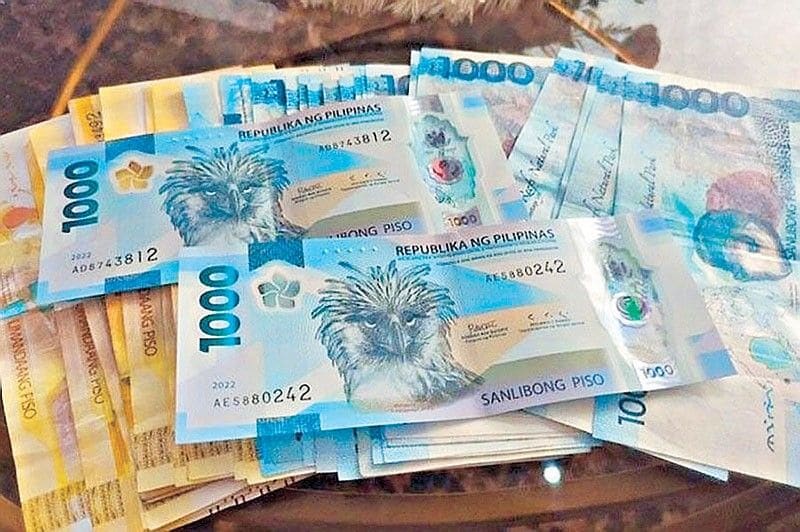
- ·The Philippine government expects its debt stock to reach P21.48 trillion by end-2027, an 8.7 percent increase from P19.77 trillion this year, with peso depreciation adding roughly 20 percent to foreign-currency costs.
- ·Gross borrowing will rise to P3.3 trillion in 2027 from a revised P2.73 trillion in 2026, while debt servicing jumps 32 percent to P2.7 trillion as pandemic-era loans mature and are refinanced at higher rates.
- ·The debt-to-GDP ratio is forecast at 64.9 percent in 2026 and 64.4 percent in 2027, remaining below the IMF's 70 percent sustainability threshold but at the highest level in two decades.
Debt Trajectory Steepens
The Philippines is bracing for its national debt stock to climb past P21 trillion by the close of 2027, propelled by a weaker peso and a recalibrated borrowing program that now stands at P3.3 trillion, according to projections released by the Department of Budget and Management. The revised figure represents an 8.7 percent increase from the current year's estimated P19.77 trillion, with domestic creditors accounting for P14.28 trillion of the total and external lenders covering P7.2 trillion.
Currency movements are central to the escalation. Budget Assistant Secretary Romeo Matthew Balanquit pointed to the pandemic-era exchange rate of roughly P49.60 per dollar, which has since deteriorated to around P60, marking a depreciation approaching 20 percent. That shift has inflated the peso-denominated cost of foreign-currency obligations contracted during the health crisis.
Refinancing at Higher Rates
Maturing pandemic-era loans, many of which carried favorable terms negotiated in a low-rate environment, must now be rolled over at significantly steeper borrowing costs. The government's gross borrowing requirement for 2027 has been lifted from an earlier P2.73 trillion estimate to P3.3 trillion, a jump of nearly 21 percent. Domestic markets will supply P2.39 trillion of that total, with foreign creditors providing P915 billion. Borrowing is projected to rise further, reaching P3.65 trillion in 2028 and P3.55 trillion the following year.
Debt servicing will consume P2.7 trillion in 2027, a 32.2 percent increase over the current year's P2.05 trillion. Of that sum, P1.6 trillion will go toward principal repayment and P1.11 trillion toward interest expense. As of June, the outstanding debt stock stood at P19.07 trillion, already equivalent to 96.5 percent of the government's full-year projection and representing 66 percent of gross domestic product, the highest such ratio in more than two decades.
Fiscal Consolidation Slows
The administration has also adjusted its deficit trajectory, tolerating a wider budget gap to accommodate infrastructure spending and pandemic recovery programs. The deficit-to-GDP ratio is forecast at 5.1 percent in 2027, moderating to 4.8 percent in 2028 and 4.2 percent in 2029. Debt-to-GDP is expected to settle at 64.9 percent this year, then ease to 64.4 percent in 2027, 64.2 percent in 2028, 64 percent in 2029, and 63 percent by 2030.
Balanquit emphasized that the ratio remains below the 70 percent threshold the International Monetary Fund uses as a benchmark for fiscal sustainability. He underscored that the bulk of borrowing finances infrastructure and official development assistance projects, not consumption or emergency aid. General government debt, which includes local government and public-sector obligations, is forecast to decline from 58.7 percent of GDP in 2026 to 58.4 percent in 2027, falling further to 56.4 percent by 2030.
Infrastructure Priorities and Fiscal Risk
The Marcos administration has maintained that elevated borrowing levels are justified by the productive use of proceeds, particularly in transport, energy, and digital infrastructure projects designed to lift long-term growth potential. Yet the combination of currency volatility, rising global interest rates, and slower fiscal consolidation introduces risks to debt sustainability if revenue collection falls short or if external shocks trigger further peso depreciation.
The Philippines joins a cohort of Southeast Asian economies navigating the twin pressures of post-pandemic fiscal repair and tighter global financial conditions. With debt servicing costs now claiming a larger share of the budget, the government will need to balance infrastructure ambitions against the imperative of keeping debt on a credible downward path relative to economic output.
RELATED STORIES
Philippines Moves to Raise Tax-Free Income Floor to ₱350,000
Priyanka V. Rao · 3 min

Jollibee Foods Cuts 2026 Store Expansion as First-Half Profit Declines
Mariel D. Santos · 3 min
Yuchengco Group Completes $38 Million Buyout of Philippine Wind Developer
Mariel D. Santos · 3 min
Philippine Foreign Investment Falls 65% to Lowest Since 2015
Priyanka V. Rao · 4 min
Spot something wrong? Email editor@briefasia.com. We log every correction publicly.