Asia · Business
Yuchengco Group Completes $38 Million Buyout of Philippine Wind Developer
PetroEnergy Resources now holds 100 percent of PetroWind Energy after acquiring Thailand's BCPG stake in the 49.56-megawatt Aklan wind projects.
KEY TAKEAWAYS
- ·PetroEnergy Resources closed a P1.9 billion acquisition of BCPG's 40 percent stake in PetroWind Energy, bringing its total ownership to 100 percent of the Aklan wind developer.
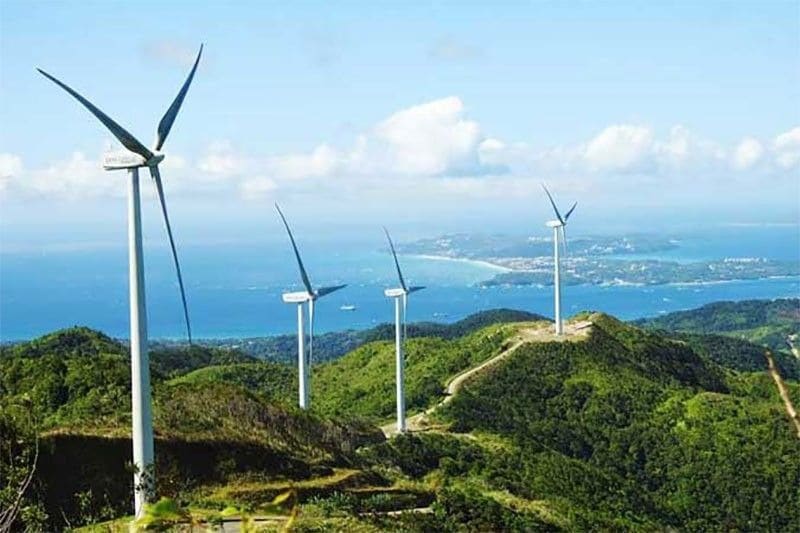
- ·PetroWind operates two wind farms in Nabas, Aklan, with a combined capacity of 49.56 megawatts, including the operational 36 MW Nabas-1 and the near-complete 13.56 MW Nabas-2.
- ·The buyout simplifies ownership and aligns with PERC's strategy to increase direct control over its renewable energy assets as the Philippines targets 35 percent renewables by 2030.
Full Ownership Secured
PetroEnergy Resources Corp. (PERC), controlled by the Yuchengco family, has closed its P1.9 billion acquisition of the 40 percent stake in PetroWind Energy Inc. (PWEI) previously held by Thailand's BCPG Public Co. Ltd. The deal gives the Philippine conglomerate complete control of two operating wind farms in Aklan province.
According to PERC, all conditions under the share purchase agreement with BCPG have been satisfied. The buyout raises PERC's direct holding in PWEI to 60 percent. When combined with the stake held through its subsidiary PetroGreen Energy Corp., PERC now owns the entire wind company.
The transaction carries strategic weight beyond simple consolidation. PERC stated the acquisition aligns with its strategy to simplify ownership structures and increase direct economic participation in its renewable energy portfolio, a move that should streamline decision-making and financial reporting as the Philippines accelerates its clean energy transition.
Regulatory Green Light
Last month, the Philippine Competition Commission cleared the proposed acquisition, removing the final regulatory hurdle. That approval fulfilled a key condition in the share purchase agreement signed by both parties in December of last year.
The clearance process, while routine for transactions of this size, was necessary given the concentrated nature of the Philippine renewable energy sector. BCPG, a subsidiary of Thai energy giant Banpu Power, has been active in Southeast Asian wind and solar projects but appears to be rationalizing its regional holdings.
Assets in Play
PWEI operates two wind farms in Nabas, Aklan, on the northwestern tip of Panay Island. The Nabas-1 project, completed in 2015, currently generates 36 megawatts of clean power and has been feeding the grid for nearly a decade. The adjacent Nabas-2 facility, with a capacity of 13.56 megawatts, is approaching commercial operations.
Together, the two projects represent 49.56 megawatts of installed wind capacity, a modest but meaningful contribution to the Philippines' renewable energy mix. The country has set ambitious targets to boost the share of renewables in its generation mix to 35 percent by 2030 and 50 percent by 2040, up from around 22 percent today.
Wind power remains a relatively small slice of that mix, constrained by geography, grid infrastructure, and the intermittency challenges that come with island power systems. But the Nabas projects benefit from strong monsoon winds and proximity to load centers in the Western Visayas region.
Ownership Simplification
The Yuchengco Group's move to consolidate full ownership reflects a broader trend among Philippine conglomerates to tighten control over energy assets as the sector undergoes regulatory and technological shifts. Joint ventures with foreign partners have been common in the country's renewable energy sector, often driven by capital and technology-sharing arrangements.
BCPG's exit, meanwhile, fits a pattern of regional energy players reassessing their footprints. The Thai firm has been active in wind, solar, and geothermal projects across Southeast Asia, but recent years have seen selective divestments as capital allocation priorities shift.
For PERC, the deal strengthens its position in a sector where scale and operational control increasingly matter. Simplified ownership structures can reduce friction in capital allocation, project expansions, and negotiations with offtakers and grid operators.
What Comes Next
With full ownership secured, PERC will likely focus on optimizing operations at both Nabas sites and exploring expansion opportunities. The completion of Nabas-2's commissioning will add incremental capacity and revenue, while the operational track record of Nabas-1 provides a foundation for potential future projects in the region.
The Philippine renewable energy market remains competitive, with both domestic conglomerates and foreign investors eyeing wind, solar, and offshore wind opportunities. PERC's streamlined ownership of PWEI positions it to move faster on future decisions, whether in operations, financing, or strategic partnerships.
The broader question for the sector is whether the country's grid infrastructure and policy frameworks can keep pace with the influx of renewable capacity. Intermittency management, transmission bottlenecks, and bankability of power purchase agreements remain persistent challenges, even as capital flows toward clean energy assets across Southeast Asia.
RELATED STORIES

Philippine Foreign Investment Falls 65% to Lowest Since 2015
Priyanka V. Rao · 4 min
Philippines Regulator Seeks to Drop VAT on Power System Losses
Mariel D. Santos · 2 min
Philippines Moves to Raise Tax-Free Income Floor to ₱350,000
Priyanka V. Rao · 3 min

Manila Projects Debt Stock to Hit P21.5 Trillion as Peso Weakness Compounds Borrowing Costs
Priyanka V. Rao · 3 min
Spot something wrong? Email editor@briefasia.com. We log every correction publicly.