Asia · Trade
Beijing's Visa Restrictions Expose India's Electronics Supply Bottleneck
Sharply reduced approval rates for business travelers reveal India's continued reliance on Chinese equipment, components, and technical expertise
KEY TAKEAWAYS
- ·China has reduced visa approval rates for Indian business travelers, disrupting access to Chinese engineers needed to install and maintain electronics manufacturing equipment in India.
- ·India imported over USD 101 billion from China in fiscal 2025, with electronics machinery and components forming the largest category despite domestic manufacturing incentives.
- ·The visa restrictions expose India's continued reliance on Chinese capital goods and technical expertise, creating a structural bottleneck for scaling production under its USD 24 billion incentive program.
The Chokepoint
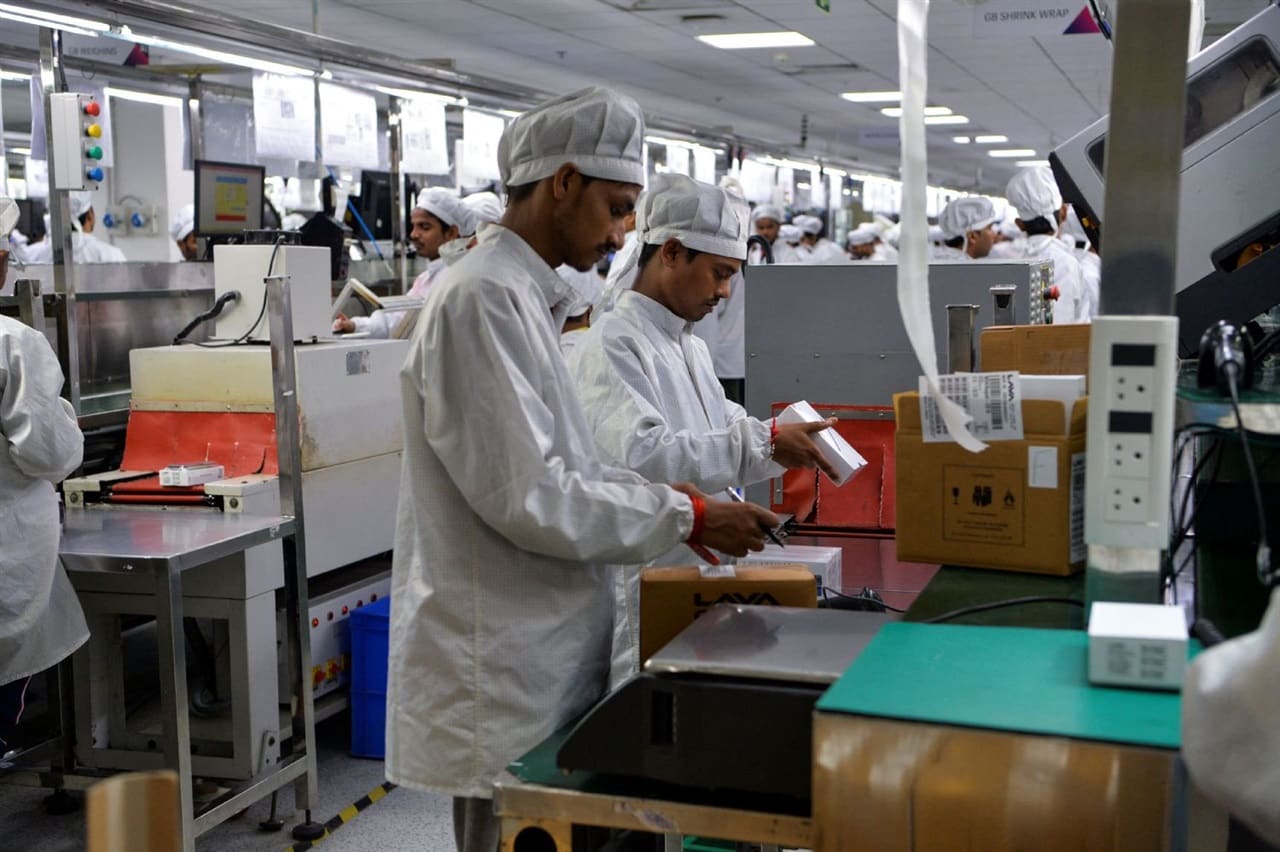
China has cut approval rates for Indian business travelers entering the country, and the policy shift is doing more than inconveniencing executives. It is revealing a fundamental constraint in India's ambition to emerge as a credible alternative to China in global electronics supply chains: despite years of policy support and billions in subsidies, Indian factories remain structurally dependent on Chinese machinery, intermediate goods, and on-site technical personnel.
The visa squeeze comes at an awkward moment. India's production-linked incentive schemes have attracted significant commitments from Apple suppliers, smartphone brands, and electronics assemblers. Foxconn, Wistron, and Pegatron have all expanded capacity in southern India. But expansion means installation, and installation means Chinese engineers flying in to set up automated assembly lines, calibrate equipment, and train local operators.
What the Numbers Show
India imported over USD 101 billion worth of goods from China in the fiscal year ending March 2025, according to data from India's Ministry of Commerce. Electronics and electrical machinery accounted for the largest share, including components such as printed circuit boards, display panels, battery cells, and semiconductor packaging materials. Capital equipment for electronics manufacturing, much of it specialized and proprietary, represented another significant slice.
The production-linked incentive program for electronics manufacturing has committed roughly USD 24 billion in subsidies through 2028. Beneficiaries are required to meet domestic value-addition thresholds, but those thresholds still allow substantial imports of components and tooling. In practice, most high-value assembly in India today involves Chinese-origin capital goods and Chinese technicians overseeing commissioning and quality control.
Why Chinese Engineers Matter
Electronics manufacturing at scale is not plug-and-play. Surface-mount technology lines, automated optical inspection systems, and battery pack assembly equipment require vendor-certified engineers to install, calibrate, and troubleshoot. Many of these systems come from Chinese equipment makers such as Shenzhen-based ASM Pacific Technology or Guangdong-based Juki Automation Systems. When a line goes down or a new production run begins, factories often need Chinese nationals on-site within days.
Visa restrictions lengthen that response time. A rejection or delay can mean weeks of idle capacity, missed shipment windows, and penalty clauses triggered with global buyers. For contract manufacturers operating on thin margins, the risk is material.
The Strategic Bind
India's electronics policy rests on two pillars: import substitution and export competitiveness. The first aims to reduce dependence on Chinese inputs over time by building domestic component ecosystems. The second seeks to integrate Indian factories into multinational supply chains as a hedge against concentration risk in China.
But both pillars assume access to Chinese capital goods and know-how during the transition. Domestic machine-tool capacity in India remains limited, especially for the precision equipment required in semiconductor packaging, display bonding, and lithium-ion cell assembly. Alternative suppliers in Japan, South Korea, and Taiwan exist, but they are often more expensive, have longer lead times, and still rely on components sourced from mainland China.
The visa curbs create a feedback loop. Slower equipment installation and commissioning means slower ramp-up of production volumes, which in turn makes India a less attractive destination for the next wave of investment. If manufacturers cannot count on predictable access to technical support, they will route capacity elsewhere, most likely to Vietnam or Mexico, both of which maintain more stable diplomatic and logistical ties with Beijing.
Regional Context
The visa measures are part of a broader recalibration of China-India economic relations following border clashes in 2020 and India's subsequent restrictions on Chinese investment in sensitive sectors. Beijing has used visa policy as a lever before, most notably in 2020 when it paused approvals for Indian information technology professionals seeking to service Chinese clients.
Other Asian economies are watching closely. Vietnam, Thailand, and Indonesia are all competing for the same pool of electronics investment. If China can selectively throttle India's supply-chain access without facing significant retaliation, it establishes a template for economic coercion that could be applied elsewhere in the region.
What Comes Next
India has few immediate options. Accelerating domestic equipment manufacturing would take years and require technology transfer agreements that Chinese firms are unlikely to sign under current political conditions. Diversifying to non-Chinese suppliers is possible but expensive and slow. In the near term, Indian officials are likely to pursue quiet diplomacy to restore visa processing, even as public rhetoric remains adversarial.
For multinational companies, the episode is a reminder that geopolitical risk now extends beyond tariffs and sanctions into the mechanics of factory operations. Supply-chain resilience increasingly means not just geographic diversification, but also reducing dependence on any single country for critical technical personnel and capital goods. That is a harder problem to solve with subsidies alone.
RELATED STORIES
Amkor Explores Options for China Operations Amid Regional Shift
Cheng Wei-Lun · 3 min
SK Hynix Reviews Future of China Packaging Facility Amid $3 Billion Valuation Talk
Cheng Wei-Lun · 2 min

Crude Surges Past $90 as Hormuz Talks Stall
Cheng Wei-Lun · 3 min
Seoul Warns Against Redistributing Chip Profits as China Investment Accelerates
Jun-ho Seo · 2 min
Spot something wrong? Email editor@briefasia.com. We log every correction publicly.