Real Estate · Land
Bali Pivots to Electric Tram After MRT Fails to Draw Investors
The island's provincial government will build a 123 million dollar autonomous rail system linking the airport to Canggu, sidestepping underground construction that stalled its predecessor project.
KEY TAKEAWAYS
- ·Bali will build a 2.2 trillion rupiah electric tram system after a 2024 MRT project failed to attract investors due to high tunneling costs.
- ·The first phase links the international airport to Canggu at an estimated cost of 1.2 trillion rupiah, with state railway operator PT Kereta Api Indonesia expected to co-finance.
- ·Construction is set to begin in 2027 and targets completion by late 2029, using street-level tracks that avoid underground excavation.
Switching Tracks
Bali will construct an electric tram network costing 2.2 trillion rupiah to address congestion across the island, abandoning an underground metro that broke ground two years ago but failed to secure funding. Governor I Wayan Koster announced the shift to what officials call an autonomous rail rapid transit system, a street-level design that avoids the tunneling expenses that deterred backers of the original plan.
The first phase will connect I Gusti Ngurah Rai International Airport with Canggu, a coastal area popular with foreign tourists and digital nomads. Construction is slated to begin in 2027, pending regulatory approval at the provincial level. State railway operator PT Kereta Api Indonesia is expected to co-finance and run the service, according to Koster.
Why the MRT Stalled
The mass rapid transit project launched in 2024 ran into financing trouble within months. Koster explained that the underground alignment required extensive tunneling through volcanic soil and densely built neighborhoods, driving up cost estimates and lengthening construction timelines. Investors balked at the risk profile, leaving the project without committed capital by mid-2025.
The new tram design integrates with existing road rights-of-way, cutting civil works and land acquisition costs. Koster described the technology as "far more efficient and easier to implement" than a subway. The system will use battery-electric vehicles that can operate autonomously or with drivers, depending on traffic conditions and regulatory clearance.
Two-Phase Rollout
Phase one carries an estimated price tag of 1.2 trillion rupiah and will establish the airport-Canggu corridor. A second phase, budgeted at 1 trillion rupiah, will extend service to other high-traffic zones on the island, though Koster did not specify routes or timelines for that segment.
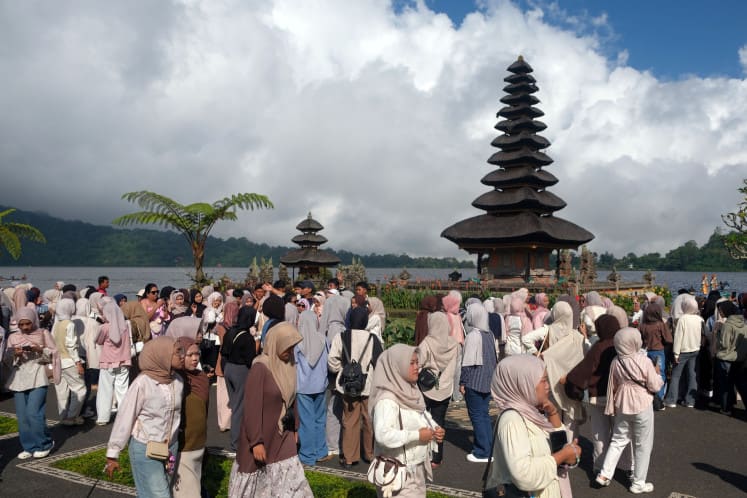
Bali recorded roughly 2,200 daily visitors to popular sites such as Ulun Danu Beratan temple during holiday periods in mid-2026, nearly triple the usual flow of 600 to 800, according to site management data. Road congestion has worsened in tandem with tourism growth, particularly along the southern corridor linking the airport, Denpasar, Seminyak, and Canggu.
Broader Infrastructure Push
Indonesia's capital, Jakarta, has pressed ahead with its own rail expansion. The city's MRT is on track to reach the National Monument precinct next year, while an elevated light rail extension to Dukuh Atas transport hub targets a 2028 opening. Both projects rely on a mix of state budget allocations and loans from multilateral lenders, a financing model Bali could not replicate for its underground plan.
The tram pivot reflects a regional trend toward lower-cost transit solutions. Cities across Southeast Asia have favored bus rapid transit and light rail over heavy metro systems in recent years, prioritizing speed of deployment and fiscal flexibility. Bali's decision aligns the island with that pattern, even as it marks a rare reversal of an infrastructure project that had already commenced site preparation.
Koster said a gubernatorial regulation formalizing the tram plan will be issued in the coming months, clearing the way for procurement and design work. The timeline positions Bali to begin revenue service by late 2029 if phase-one construction proceeds on schedule.
RELATED STORIES
Bali Weighs Financial Hub Ambitions Against Infrastructure Limits
Siti Nuraini · 3 min

Indonesia Car Sales Jump 34% as Electric Vehicles Reshape Southeast Asia's Auto Market
Siti Nuraini · 3 min
Indonesia's Finance Ministry to Take Control of Loss-Making Whoosh Railway
Siti Nuraini · 2 min
Indonesia Nominates Destry Damayanti as First Female Central Bank Chief
Priyanka V. Rao · 3 min
Spot something wrong? Email editor@briefasia.com. We log every correction publicly.