Asia · Business
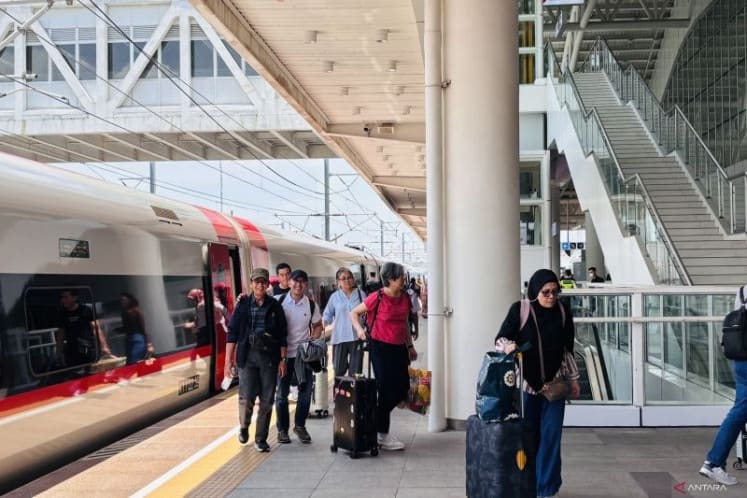
Indonesia's Finance Ministry to Take Control of Loss-Making Whoosh Railway
Transfer from state fund Danantara aims to restructure operations of high-speed rail that lost $282.5 million in first half of 2026, but economists warn move may complicate safety oversight
KEY TAKEAWAYS
- ·Indonesia's Finance Ministry will take over the Whoosh high-speed railway consortium from state fund Danantara by mid-August 2026, as the project recorded losses of Rp 5.1 trillion in the first half of the year.
- ·The ministry pledged that Whoosh's debt will not be financed through state budget allocations, while Chinese joint venture partners have been informed and responded positively to the plan.
- ·Economists warn that transferring oversight to a financial institution without railway technical expertise may complicate safety and maintenance monitoring while failing to resolve underlying cash flow problems.
Finance Ministry to Complete Transfer by Mid-August
Indonesia's Finance Ministry will take over management of the Whoosh high-speed railway consortium from state asset fund Danantara, with the transfer expected to conclude by mid-August 2026. Finance Minister Purbaya Yudhi Sadewa announced the plan following a meeting with Danantara chief operating officer Dony Oskaria on Wednesday, stating that the acquisition would shift both operations and liabilities to the ministry.
The move comes as PT Kereta Cepat Indonesia China (KCIC), the joint venture operating the railway, reported losses of Rp 5.1 trillion ($282.5 million) in the first half of 2026 alone. That figure represents a sharp acceleration from the Rp 4.9 trillion loss recorded for the entire previous year, according to the ministry.
Purbaya emphasized that the high-speed railway's debt would not be financed through state budget allocations. Coordinating Economy Minister Airlangga Hartarto told reporters Thursday that Chinese partners in the venture had been informed of the plan and responded positively.
Ownership Structure Under Scrutiny
KCIC operates under a 60-40 ownership split, with an Indonesian consortium holding the majority stake and Beijing Yawan HSR Co. Ltd controlling the remainder. The Indonesian side is represented by PT Pilar Sinergi BUMN Indonesia (PSBI), a consortium of state-owned enterprises in which railway operator PT Kereta Api Indonesia holds the largest share.
Since the establishment of Danantara in 2025, all state enterprise assets, including KAI and the Whoosh railway, have fallen under the fund's management umbrella. The planned transfer would reverse that consolidation for the high-speed rail project, placing it under direct Finance Ministry supervision instead.
Technical Expertise Gaps Raise Concerns
Economists have questioned whether the Finance Ministry possesses the operational capacity to manage a complex infrastructure asset. Oversight of safety protocols, maintenance schedules, and day-to-day technical operations typically requires specialized railway engineering knowledge, which financial institutions lack.
The concern centers on whether a ministry focused on fiscal policy and budget management can effectively monitor the technical standards required for high-speed rail systems. Critics argue that the transfer addresses organizational charts rather than the underlying cash flow crisis that has driven losses to unsustainable levels.
Whoosh operates Indonesia's first high-speed railway, connecting Jakarta and Bandung in West Java. The project has faced persistent financial headwinds since its launch, with ridership and revenue falling short of projections needed to service construction debt and cover operating expenses.
Regional Implications for Infrastructure Financing
The restructuring carries broader significance for how Southeast Asian governments manage large-scale infrastructure partnerships with Chinese state entities. Indonesia's approach of shifting a troubled joint venture into direct ministerial control represents a departure from the state holding company model that has gained traction across the region.
The outcome may influence decisions in Malaysia, Thailand, and other nations pursuing or operating Chinese-financed rail projects. If the Finance Ministry can stabilize Whoosh's finances without taxpayer bailouts, as Purbaya has promised, it could offer a template for managing distressed infrastructure assets. If losses continue to mount under the new structure, it may prompt regional partners to demand more rigorous feasibility assessments before signing future deals.
The transfer is expected to be finalized before Indonesia's Independence Day on August 17, though the ministry has not released detailed plans for how it will restructure operations or stem the widening losses.
RELATED STORIES
Destry Damayanti Emerges as Top Candidate for Bank Indonesia Governor
Priyanka V. Rao · 3 min
Brazil's JBS Commits $2.5 Billion to Indonesia Protein Venture With Danantara
Priyanka V. Rao · 5 min
Indonesia Questions Whether Foreign Investment Builds Capability or Just Serves Market Access
Priyanka V. Rao · 4 min

Indonesia's Education Bill Revision Could Reopen Funding Door for Free Meals Program
Siti Nuraini · 3 min
Spot something wrong? Email editor@briefasia.com. We log every correction publicly.