Asia · Politics
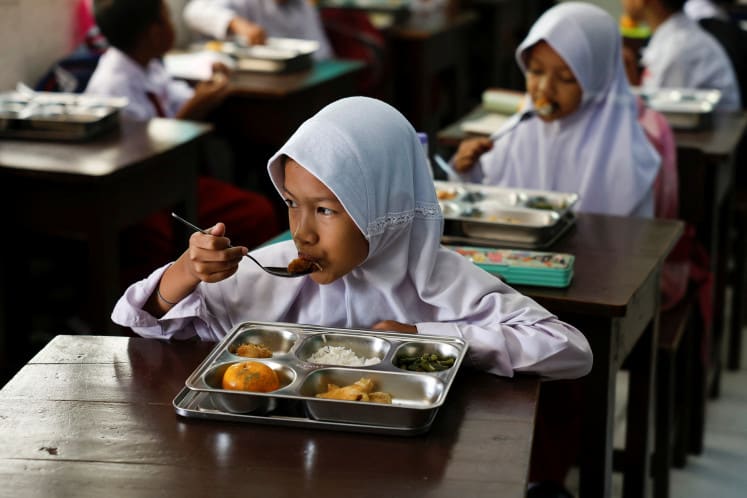
Indonesia's Education Bill Revision Could Reopen Funding Door for Free Meals Program
Teachers groups warn that proposed legislative changes may circumvent court ruling that barred nutritious meal initiative from tapping education budget
KEY TAKEAWAYS
- ·Indonesia's education law revision may allow the multitrillion-rupiah free nutritious meal program to access education budget funds, potentially circumventing a court ruling that separated meals from education expenses.
- ·Teachers groups warn the change could divert resources from salaries, infrastructure, and learning materials in a school system already facing overcrowding and urban-rural quality gaps.
- ·Parliamentary review and upcoming budget negotiations will determine whether the meal program secures alternative funding or relies on the legislative workaround to tap education allocations.
Legislative Maneuver Under Scrutiny
Indonesia's teachers associations are raising alarms over proposed changes to the national education system law that could grant the government's flagship free nutritious meal program access to education budget allocations worth trillions of rupiah. The legislative revision arrives months after judicial authorities ruled that meal provision falls outside legitimate education expenditure.
The timing of the bill has prompted questions about whether policymakers are engineering a workaround to a court decision that effectively blocked the nutrition initiative from drawing on funds earmarked for schools, teacher salaries, and classroom infrastructure. Teachers groups argue the proposed amendments would blur boundaries between social welfare spending and core educational investment at a moment when Indonesia's school system faces persistent resource constraints.
The Court Decision at the Center
Earlier judicial proceedings determined that free meal programs, while socially beneficial, do not constitute direct education expenses under existing legal frameworks. That ruling created a funding obstacle for the administration's nutrition initiative, which requires sustained financing across thousands of schools and feeding sites throughout the archipelago.
The program, designed to address childhood malnutrition and improve school attendance in underserved regions, carries a price tag measured in the trillions of rupiah annually. Without access to the education budget, program administrators would need to secure alternative appropriations through general welfare channels or dedicated nutrition line items, a more uncertain funding path in Indonesia's competitive budget environment.
What the Revision Would Change
The draft amendments under consideration would expand the legal definition of permissible education spending, potentially creating statutory room for meal programs to qualify as education-related costs. Proponents of the change argue that nutrition directly affects learning outcomes, making it a legitimate educational investment rather than a peripheral social service.
Teachers organizations counter that this rationale, however well-intentioned, risks diverting scarce resources from salaries, training, facilities, and learning materials. Indonesia's education sector already contends with overcrowded classrooms, outdated textbooks, and significant disparities between urban and rural school quality. Redirecting budget allocation toward meal provision, they warn, could deepen those gaps rather than close them.
Budget Competition in a Resource-Constrained System
The broader context involves Indonesia's struggle to allocate sufficient public funds across competing priorities. Education represents one of the largest budget categories, but demands continually outpace available financing. Teacher salaries, building maintenance, digital infrastructure, and curriculum development all compete for the same pool of money.
Inserting a multitrillion-rupiah meal program into that equation would force trade-offs. If the education budget envelope remains fixed, funding meals means reducing allocations elsewhere. If the envelope expands to accommodate meals, it raises questions about fiscal sustainability and whether other ministries will demand similar budget increases for their own cross-cutting initiatives.
The Asia Angle on School Feeding Programs
Across Southeast Asia, governments grapple with similar tensions between nutrition interventions and education financing. Thailand, Vietnam, and the Philippines all operate school meal programs, but funding mechanisms vary. Some countries treat meals as health or agriculture expenditures; others integrate them into education budgets with explicit safeguards to prevent displacement of teaching resources.
Indonesia's approach will be closely watched by regional policymakers navigating the same dilemma. If the legislative revision succeeds in reclassifying meals as education spending without triggering resource conflicts, it could offer a template. If it sparks budget crises or teacher strikes, neighboring countries may opt for segregated funding streams instead.
What Comes Next
The education bill revision will move through parliamentary committee review in the coming months. Teachers unions have signaled they will lobby heavily against provisions that open education budgets to meal program financing, setting up a confrontation with government officials who view the nutrition initiative as a policy priority.
Budget negotiations for the next fiscal year will likely determine whether the meal program secures alternative funding or whether the legislative revision becomes the administration's primary strategy. The outcome will shape not only how Indonesia feeds its schoolchildren but also how it defines the scope and limits of education spending in an era of expanding social mandates and finite public resources.
RELATED STORIES

Indonesia Car Sales Jump 34% as Electric Vehicles Reshape Southeast Asia's Auto Market
Siti Nuraini · 3 min

Indonesia's Growth Numbers Hide Shrinking Savings and Rising Household Debt
Priyanka V. Rao · 4 min
Brazil's JBS Commits $2.5 Billion to Indonesia Protein Venture With Danantara
Priyanka V. Rao · 5 min
Indonesia Begins Domestic Construction of Scorpene Submarines in Regional First
Siti Nuraini · 3 min
Spot something wrong? Email editor@briefasia.com. We log every correction publicly.