Asia · Business
Indonesia Begins Domestic Construction of Scorpene Submarines in Regional First
Navy and PT PAL cut steel on first of two French-designed attack submarines in Surabaya, marking ASEAN's inaugural domestic sub build
KEY TAKEAWAYS
- ·Indonesia began construction of two Scorpene Evolved submarines at PT PAL's Surabaya facility, making it the first ASEAN country to build modern attack submarines domestically.
- ·The project involves technology transfer from French designer Naval Group and aims to establish a sustainable defense industrial base with local supply chains.
- ·The submarines feature air-independent propulsion and will replace aging German and South Korean boats, with delivery expected in five to seven years.
Surabaya Shipyard Marks Strategic Milestone
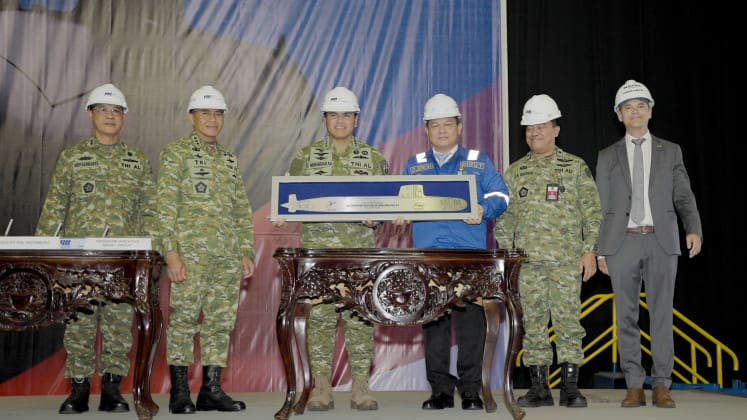
Indonesia commenced fabrication of its first domestically constructed submarine on Friday, a milestone that positions the archipelago nation ahead of its Southeast Asian neighbors in naval manufacturing capability. The steel cutting ceremony at state-owned PT PAL's facility in Surabaya signals the start of work on two Scorpene Evolved-class vessels designed by Naval Group.
Navy chief of staff Adm. Muhammad Ali presided over the ceremony, joined by PT PAL president director Kaharuddin Djenod. The event marks the Republic of Indonesia's entry into an exclusive group of nations capable of building modern diesel-electric attack submarines within their own borders.
Technology Transfer at Core of SRI Project
The Scorpene for the Republic of Indonesia initiative represents more than a procurement program. Djenod framed the project as infrastructure for long-term defense industrial development, with Naval Group transferring design data and construction techniques to Indonesian engineers throughout the build process.
PT PAL will fabricate hull sections, integrate combat systems, and assemble the pressure hull under French technical supervision. The company has invested in specialized welding equipment and trained personnel in submarine-grade steel handling, skills absent from Indonesia's shipbuilding sector until this contract.
The two submarines are part of a broader naval modernization effort. Indonesia operates a small fleet of aging German-built Type 209 boats and South Korean Chang Bogo-class vessels, most of which require replacement within the decade. Domestic construction reduces reliance on foreign shipyards and shortens refit timelines.
Industrial Ecosystem Takes Shape
Djenod emphasized that the project extends beyond the vessels themselves. Local suppliers are being integrated into the supply chain for components ranging from electrical systems to interior fittings, building a network that can support future submarine programs.
The Scorpene Evolved variant features air-independent propulsion, extended range, and updated sonar arrays compared to earlier models operated by Malaysia, Chile, and India. Indonesia's version will be optimized for operations in shallow tropical waters and long-duration patrols across the sprawling archipelago.
Ali noted that no other ASEAN member state has attempted submarine construction at this scale. Malaysia operates Scorpene-class boats built in Spain, while Vietnam fields Russian Kilo-class submarines constructed in St. Petersburg. Singapore's submarines were assembled in Sweden.
Defense Autonomy and Regional Signaling
The timing carries strategic weight. Indonesia has steadily expanded its defense budget and pursued technology partnerships that reduce dependence on any single supplier. The Scorpene project follows domestic production of medium tanks, frigates, and CN-235 transport aircraft.
Naval analysts view the move as a signal to regional competitors and a hedge against supply chain disruptions. Domestic construction allows Indonesia to control maintenance schedules, upgrade pathways, and operational security without exposing sensitive data to foreign contractors.
The project is classified as a national strategic initiative, granting it priority funding and streamlined regulatory approvals. PT PAL has not disclosed the contract value or delivery timeline, though similar Scorpene builds have required five to seven years from steel cutting to commissioning.
Workforce Development and Next Steps
Hundreds of Indonesian engineers are embedded in the program, working alongside Naval Group specialists. PT PAL has established a dedicated submarine division and is recruiting additional technical staff as fabrication accelerates.
The first submarine will undergo sea trials in Indonesian waters before entering service. The second vessel will begin construction once initial hull modules for the first boat are complete, allowing PT PAL to apply lessons learned and refine production workflows.
Indonesia's ability to sustain this capability beyond the initial two-boat order will depend on follow-on contracts and export opportunities. PT PAL has expressed interest in offering submarine construction services to other nations, though competition from established yards in Europe and Asia remains intense.
For now, the steel cutting in Surabaya represents a tangible shift in Southeast Asia's naval industrial landscape, with Indonesia positioning itself as the region's sole builder of advanced underwater platforms.
RELATED STORIES
Indonesia's Education Bill Revision Could Reopen Funding Door for Free Meals Program
Siti Nuraini · 3 min

Indonesia Car Sales Jump 34% as Electric Vehicles Reshape Southeast Asia's Auto Market
Siti Nuraini · 3 min

Indonesia's Growth Numbers Hide Shrinking Savings and Rising Household Debt
Priyanka V. Rao · 4 min
Destry Damayanti Emerges as Top Candidate for Bank Indonesia Governor
Priyanka V. Rao · 3 min
Spot something wrong? Email editor@briefasia.com. We log every correction publicly.