Asia · Trending
Indonesia's Growth Numbers Hide Shrinking Savings and Rising Household Debt
GDP expansion in the first half of 2026 masks widening inequality and weakening purchasing power among middle-class households, Jakarta think tank warns
KEY TAKEAWAYS
- ·Indonesia's GDP grew 5.29 percent year-on-year in Q2 2026, but CSIS data shows deposit accounts below 100 million rupiah are shrinking while balances above 50 billion rupiah rose roughly 40 percent.
- ·Middle-class consumption is slowing and household debt is rising as employment shifts toward lower-wage informal sector jobs, eroding purchasing power despite headline growth.
- ·The two-tier spending pattern suggests aggregate GDP figures mask income polarization, with policy implications for fiscal and monetary strategy heading into 2027.
The Divergence Beneath the Headline
Indonesia posted GDP growth of 5.29 percent year-on-year in the second quarter of 2026, a figure that sits comfortably above many regional peers and suggests economic resilience. Yet the Centre for Strategic and International Studies in Jakarta argues the aggregate number conceals a sharp divide: wealthy households are spending freely, while middle-income families are burning through savings and borrowing to stay afloat.
Deni Friawan, a researcher at CSIS, presented the findings at a media briefing in Jakarta on Thursday. He noted that consumption, government expenditure, and investment propped up the headline number even as export performance lagged. The problem, he said, is that the expansion is narrow rather than broad-based.
A Tale of Two Balance Sheets
The clearest signal comes from deposit data. Accounts holding less than 100 million rupiah, roughly 5,595 US dollars, have been shrinking. At the same time, balances above 50 billion rupiah have grown by approximately 40 percent. The pattern points to a bifurcation in household finances: the top tier is accumulating wealth, while the middle and lower segments are drawing down buffers.
"Spending among upper-income consumers is increasing while spending among the middle class is slowing down, indicating that people's spending power is not keeping up with GDP growth," Friawan said.
The divergence extends beyond bank accounts. Household debt has climbed alongside consumption, a sign that many families are borrowing to maintain living standards rather than spending from income gains. When savings fall and credit rises in tandem, purchasing power becomes fragile.
The Informal Shift
Part of the explanation lies in labor markets. Employment is migrating toward the informal sector, where wages are lower and income streams less predictable. Informal workers typically lack benefits, job security, and access to affordable credit, which amplifies vulnerability when prices rise or hours are cut.
The shift has been gradual but persistent. As formal job creation slows, more workers are absorbed into street vending, gig platforms, and small-scale services. These roles provide immediate cash flow but little foundation for saving or building wealth over time.
For policymakers, the challenge is that informal employment still counts as employment in official statistics. The unemployment rate may look stable, but the quality of work is deteriorating. That erosion feeds directly into weakening household balance sheets.
What the Numbers Miss
GDP growth is an aggregate measure. It captures total output but says nothing about distribution. A 5.29 percent expansion can coexist with stagnant or falling incomes for large segments of the population if gains are concentrated at the top.
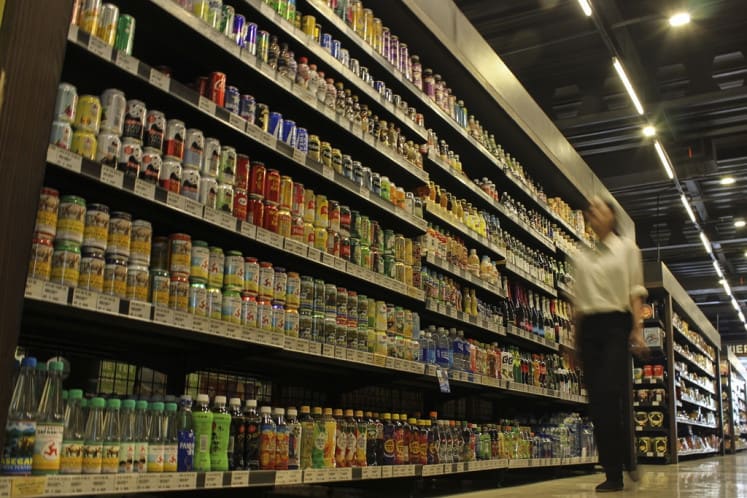
Indonesia's consumption data reflects this. Luxury goods, high-end dining, and premium services have held up well. Sales of mass-market products, from packaged foods to household essentials, have softened. Retailers in Jakarta and other major cities report a two-tier market: affluent shoppers are upgrading, while budget-conscious buyers are trading down or deferring purchases.
The deposit figures underscore the same pattern. Small savers are liquidating accounts to cover expenses. Wealthy depositors are parking surplus cash, some of it likely derived from asset appreciation or business profits that do not trickle down.
Policy Implications
The CSIS findings arrive as the government prepares its 2027 budget and considers infrastructure and social spending priorities. If middle-class consumption continues to lose steam, aggregate demand will eventually soften, dragging down the GDP growth that has so far held firm.
Fiscal policy has leaned on infrastructure investment to drive activity, but that approach has limits if household incomes stagnate. Public works create jobs, yet many of those jobs are temporary or low-wage. Without parallel efforts to raise earnings and stabilize employment, consumption will remain vulnerable.
Monetary policy faces a similar bind. Bank Indonesia has room to adjust rates, but lower borrowing costs will not help households already stretched thin. Credit growth may pick up, but if it finances consumption rather than productive investment, it adds to debt loads without lifting incomes.
The Regional Context
Indonesia is not alone in facing uneven recoveries. Across Southeast Asia, headline growth has returned while inequality has widened. Thailand, the Philippines, and Vietnam have all reported strong GDP prints alongside weak household sentiment and rising delinquencies on consumer loans.
The pattern reflects post-pandemic dynamics. Stimulus measures and pent-up demand drove initial rebounds, but the benefits flowed disproportionately to asset owners and high earners. Workers in services, retail, and manufacturing saw wages stagnate or fall in real terms as inflation outpaced pay increases.
For Indonesia, the risk is that a two-speed economy becomes entrenched. If policy does not address income distribution and job quality, the current divergence could harden into a structural feature, with political and social consequences that extend well beyond quarterly growth figures.
What Comes Next
CSIS has called for a closer look at employment quality and income distribution in official economic assessments. Friawan argues that aggregate indicators alone provide an incomplete and potentially misleading picture of economic health.
The think tank is not advocating for a slowdown in growth targets. Instead, it wants policymakers to pair GDP goals with measures that ensure gains reach a broader share of the population. That could mean targeted wage support, expanded social safety nets, or incentives for formal job creation.
For now, Indonesia's fundamentals remain solid by conventional metrics. Inflation is contained, the rupiah is stable, and foreign reserves are adequate. But if household finances continue to deteriorate beneath the surface, those fundamentals may prove less durable than they appear.
RELATED STORIES
Indonesia's Education Bill Revision Could Reopen Funding Door for Free Meals Program
Siti Nuraini · 3 min

Indonesia Car Sales Jump 34% as Electric Vehicles Reshape Southeast Asia's Auto Market
Siti Nuraini · 3 min
Brazil's JBS Commits $2.5 Billion to Indonesia Protein Venture With Danantara
Priyanka V. Rao · 5 min

Indonesia's Poverty Rate Drops to 8.07 Percent, Yet Living Cost Reality Tells a Different Story
Priyanka V. Rao · 4 min
Spot something wrong? Email editor@briefasia.com. We log every correction publicly.