Asia · Politics
Destry Damayanti Emerges as Top Candidate for Bank Indonesia Governor
Interim chief expected to secure nomination as Prabowo moves to fill leadership vacuum following Warjiyo's abrupt exit
KEY TAKEAWAYS
- ·Destry Damayanti, Bank Indonesia's interim governor and senior deputy since 2019, is the leading candidate to permanently lead the central bank after Perry Warjiyo resigned in July 2026.
- ·The nomination process will begin August 14 when parliament reconvenes, with Prabowo's administration aiming for swift approval to restore investor confidence amid rupiah weakness and capital outflows.
- ·No major policy shifts are expected, but the government hopes the new leadership will improve coordination between the central bank and finance ministry after months of tension over liquidity management.
Front-Runner Status
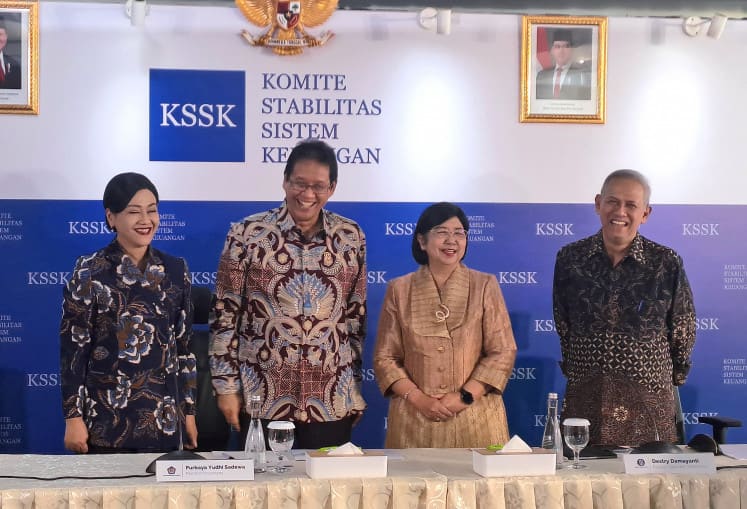
Destry Damayanti, who stepped into the interim governor role at Bank Indonesia after Perry Warjiyo's unexpected departure in late July, has emerged as the leading candidate for the permanent position. Sources familiar with the selection process indicate President Prabowo Subianto will move swiftly to formalize the nomination once parliament reconvenes on August 14, 2026.
The 62-year-old senior deputy governor has held the central bank's second-highest position since 2019, giving her both institutional knowledge and continuity at a moment when Indonesia's financial markets face pressure from a weakening rupiah and concerns about policy independence. Prabowo's administration views a rapid nomination as essential to providing certainty for investors who have been watching the leadership transition closely.
Damayanti's candidacy carries weight with key stakeholders. She maintains strong working relationships with Finance Minister Purbaya Yudhi Sadewa and the president himself, while markets regard her as a familiar and steady hand. Her name appears on the candidate list submitted to parliament, though the executive branch is permitted to nominate up to three individuals for the role.
Credentials and Career Path
Damayanti brings a blend of private-sector experience and regulatory expertise to the position. She began her career as an economist and worked at Citibank and state-owned Bank Mandiri before moving into financial oversight roles. She holds a master's degree from Cornell University and served on the board of commissioners for Indonesia's Deposit Insurance Corporation from 2015 to 2019.
Deputy Governor Aida Budiman is expected to be nominated as senior deputy governor, filling the number-two slot that Damayanti would vacate. The formal parliamentary review process, including fit-and-proper tests for candidates, will begin when lawmakers return from their August recess.
Since 2010, Indonesian presidents have nominated only one candidate for the BI governor position, and all have secured parliamentary approval. Prabowo's coalition commands a comfortable majority in the legislature, making rejection unlikely. What remains unclear is whether the new governor will serve a full five-year term or complete the remainder of Warjiyo's tenure, which runs through 2028.
Market Turbulence and Policy Tensions
The leadership change arrives during a challenging period for Indonesia's central bank. Bank Indonesia raised its benchmark rate by 100 basis points across three moves in May and June 2026, responding to a rupiah that hit a record low of 18,190 per dollar on June 8. Capital outflows have accelerated amid investor concerns about fiscal discipline, central bank autonomy, transparency in equity markets, and broader risk aversion tied to Middle East tensions.
Warjiyo's resignation for personal reasons reignited questions about the institution's independence, particularly as Prabowo pursues an ambitious target of 8 percent annual growth from the current 5 percent. The central bank has walked a tightrope, tightening monetary policy to defend the currency while simultaneously deploying liquidity measures to support domestic lending for the administration's flagship programs.
Tensions between Bank Indonesia and the finance ministry had simmered for months before Warjiyo's exit. The two institutions disagreed over liquidity management, including the central bank's use of high-yielding securities to attract foreign capital and the ministry's decision to place government cash reserves with commercial banks rather than the central bank.
Policy Continuity Expected
Government officials do not anticipate major shifts in monetary policy under new leadership. The administration's priority is improving coordination between the central bank and finance ministry, smoothing over the friction that marked recent months. Damayanti's established relationships with both institutions position her to navigate that dynamic.
The nomination process reflects Prabowo's broader approach to economic management, balancing growth ambitions with the need to maintain credibility with international investors. Indonesia's credit rating, currency stability, and access to capital markets depend partly on perceptions of central bank professionalism and independence from political pressure.
Parliament has one month to approve or reject any candidates submitted by the president. Given the timeline and coalition arithmetic, Damayanti could assume the permanent role by mid-September, ending weeks of uncertainty that have weighed on rupiah-denominated assets and foreign investor sentiment.
The transition will test whether Indonesia can sustain policy credibility while pursuing accelerated growth, a challenge that has tripped up emerging-market central banks across Asia in recent years.
RELATED STORIES
Indonesia's Rupiah Defense Drains Reserves as Central Bank Rethinks Strategy
Siti Nuraini · 2 min
Indonesia Questions Whether Foreign Investment Builds Capability or Just Serves Market Access
Priyanka V. Rao · 4 min

Indonesia's Finance Ministry to Take Control of Loss-Making Whoosh Railway
Siti Nuraini · 2 min
Brazil's JBS Commits $2.5 Billion to Indonesia Protein Venture With Danantara
Priyanka V. Rao · 5 min
Spot something wrong? Email editor@briefasia.com. We log every correction publicly.