Asia · Business
Indonesia Questions Whether Foreign Investment Builds Capability or Just Serves Market Access
Growing debate in Jakarta centers on distinguishing strategic FDI that transfers technology and networks from capital flows focused solely on domestic consumption
KEY TAKEAWAYS
- ·Indonesia attracted hundreds of trillions of rupiah in FDI in 2025, but policymakers now question whether capital builds capabilities or just serves the domestic consumer market.
- ·Strategic foreign investors provide offshore financing access, governance frameworks, technology transfer and global network integration beyond balance sheet capital.
- ·Indonesia's current investment framework treats all foreign capital uniformly, lacking differentiated incentives that reward capability-building over market access.
The Value Distinction
Indonesia attracted hundreds of trillions of rupiah in foreign direct investment last year, yet a fundamental question is gaining traction among policy circles: whether this capital genuinely strengthens the nation's industrial base or merely targets its 280 million consumers.
The Investment Coordinating Board announced factory openings and industrial estate launches throughout 2025, presenting these figures as markers of economic momentum. But a closer examination reveals significant variation in what different investors contribute beyond capital itself.
Some foreign entrants establish operations primarily to serve Indonesia's domestic market. Others bring financing networks, governance structures, technical knowledge and connections to global supply chains. That distinction, according to capital market practitioners in Jakarta, rarely shapes investment policy despite its importance to long-term competitiveness.
Capital That Opens Doors
Indonesian companies pursuing international financing face barriers beyond balance sheets. Credibility in markets such as Japan's Samurai Bond platform requires reputation, track records and institutional relationships that domestic firms often lack independently.
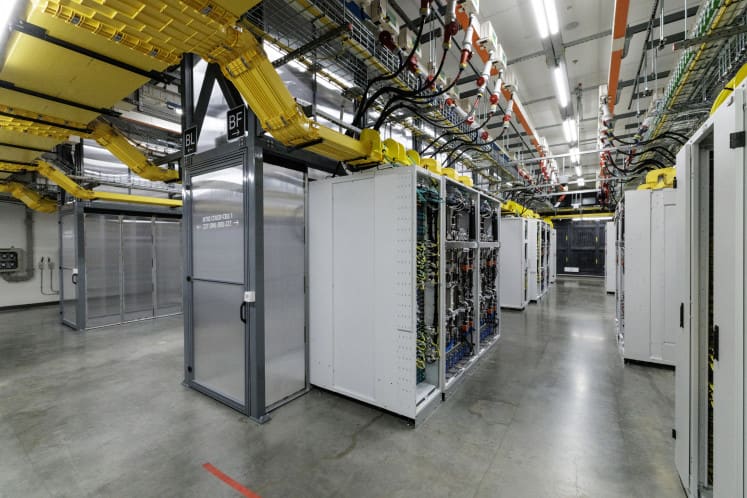
A Jakarta-based digital infrastructure company recently completed fundraising in Tokyo with support from a Japanese partner. The arrangement extended beyond equity stakes. The foreign investor facilitated introductions to institutions, reinforced credibility with rating agencies and provided talent development programs for Indonesian management teams.
Similar patterns appear in property development and financial services. A real estate project in the capital secured construction financing directly from a partner's headquarters in Tokyo rather than borrowing from Indonesian banks. A finance company acquired by a Japanese investor later expanded using credit lines from the buyer's Singapore regional center, avoiding domestic loan markets entirely.
What Strategic Partners Deliver
These arrangements demonstrate that high-value foreign investment delivers more than balance sheet capital. Strategic partners provide access to offshore funding sources, operational expertise, corporate governance frameworks and integration into regional business networks.
Technology transfer remains another differentiator. Investors focused solely on market access typically import finished products or establish assembly operations with minimal local content requirements. Strategic partners, by contrast, invest in training programs, localize engineering functions and develop supplier ecosystems.
The distinction matters for Indonesia's position in regional production networks. Vietnam and Thailand have attracted manufacturing investment that integrates their economies into export supply chains serving global markets. Indonesia, despite its scale advantages, continues to draw a higher proportion of market-seeking investment concentrated in consumer sectors.
Policy Implications
Investment authorities in Jakarta have historically measured success through aggregate FDI inflows, inaugurations and job creation figures. That approach treats all foreign capital as equivalent, overlooking differences in strategic value.
A revised framework would assess investors on criteria beyond capital commitments. Metrics might include technology licensing agreements, training expenditures, local R&D investment, export intensity and participation in global value chains.
Singapore and South Korea apply differentiated incentive structures that reward investors meeting strategic objectives. Indonesia's current regulations offer uniform treatment regardless of an investor's contribution to capability building.
Market Dynamics
Indonesia's consumer market scale gives policymakers leverage. Foreign companies seeking access to Southeast Asia's largest economy can be required to meet higher standards for knowledge transfer and local development.
The semiconductor sector illustrates these dynamics. Several chip manufacturers have announced Indonesian investments, but most involve backend assembly rather than advanced fabrication or design centers. Taiwan and South Korea, by contrast, secured technology transfer commitments when opening their markets decades ago.
Battery and electric vehicle investments present similar choices. Chinese manufacturers are establishing production capacity in Indonesia to access nickel reserves and serve the domestic market. Whether these plants incorporate research functions, develop local engineering talent and export finished products will determine their long-term strategic value.
The Credibility Factor
Access to international capital markets depends heavily on institutional credibility. Indonesian companies without foreign partners often struggle to secure competitive financing terms offshore, limiting their ability to compete regionally.
Strategic investors enhance this credibility through their own reputations. A Japanese partner's endorsement carries weight with Tokyo institutional investors. A European partner's governance standards satisfy rating agencies in Frankfurt and London.
This credibility premium reduces capital costs, extends financing tenors and diversifies funding sources. For infrastructure projects with decades-long payback periods, these advantages prove decisive.
Looking Forward
Indonesia's investment promotion strategy has delivered growth, but the composition of that growth deserves scrutiny. As the country pursues economic upgrading and higher value-added production, the quality of foreign investment matters as much as quantity.
Policymakers face a choice between maximizing short-term FDI inflows and building long-term industrial capabilities. The former approach accepts all capital willing to enter. The latter requires selectivity, conditioning market access on strategic contributions.
Regional competitors have already made this shift. Indonesia's continued reliance on undifferentiated investment attraction risks locking the economy into lower value-added activities while neighbors capture technology-intensive sectors.
The hundreds of trillions in annual FDI will continue arriving. Whether that capital builds lasting capabilities or simply extracts value from Indonesia's consumer market depends on policy choices Jakarta makes now.
RELATED STORIES
Destry Damayanti Emerges as Top Candidate for Bank Indonesia Governor
Priyanka V. Rao · 3 min
Indonesia's Rupiah Defense Drains Reserves as Central Bank Rethinks Strategy
Siti Nuraini · 2 min

Indonesia's Finance Ministry to Take Control of Loss-Making Whoosh Railway
Siti Nuraini · 2 min
Brazil's JBS Commits $2.5 Billion to Indonesia Protein Venture With Danantara
Priyanka V. Rao · 5 min
Spot something wrong? Email editor@briefasia.com. We log every correction publicly.