Technology · Policy
Amkor Explores Options for China Operations Amid Regional Shift
The chip packaging giant is considering a stake sale in its China business as multinationals recalibrate their Asia manufacturing footprint.
KEY TAKEAWAYS
- ·Amkor Technology is evaluating strategic options for its China operations, including a potential stake sale, as part of a broader industry recalibration.
- ·The move reflects growing compliance complexity from export controls and competing government incentives in Southeast Asia, India, and the United States.
- ·A stake sale could allow Amkor to maintain commercial presence in China while reducing direct exposure to cross-border technology transfer restrictions.
A Strategic Review Unfolds
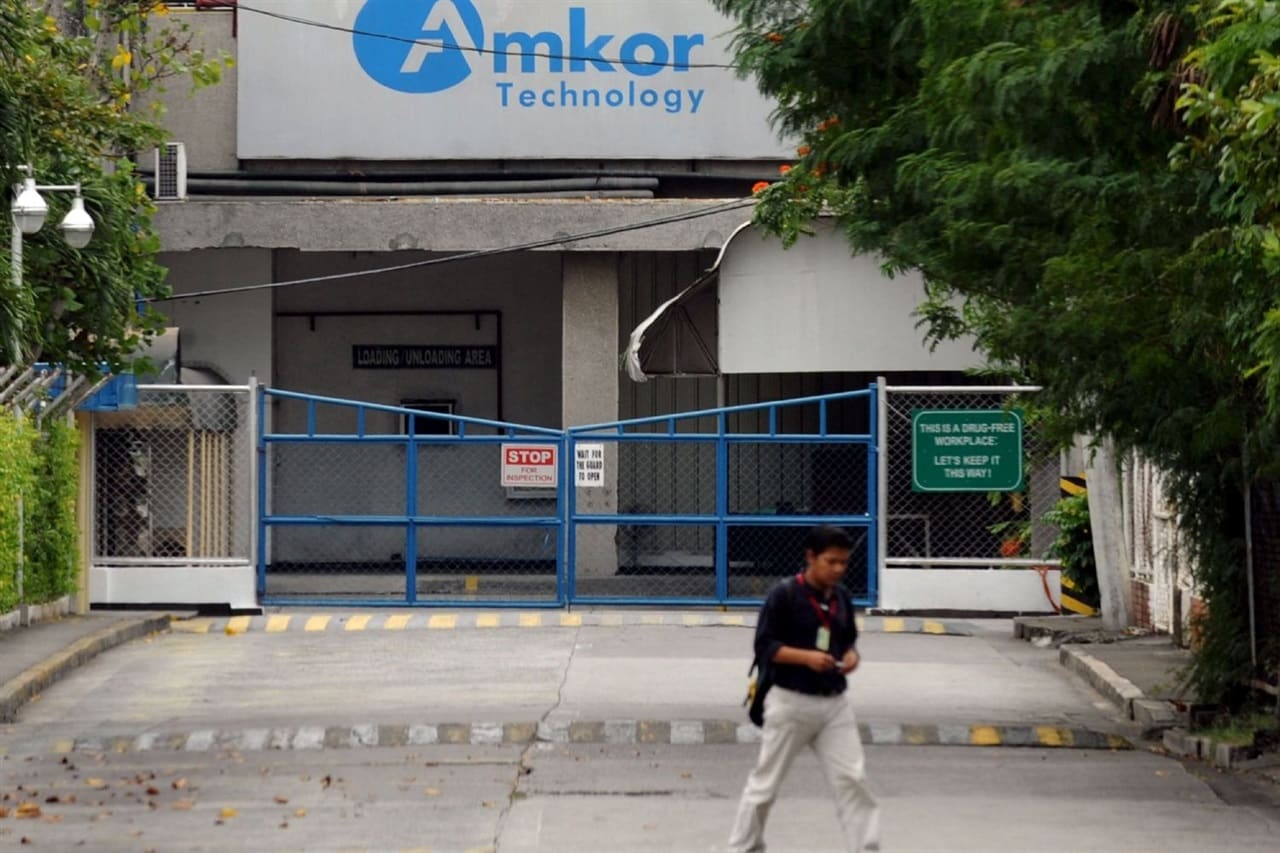
Amkor Technology has begun evaluating strategic alternatives for its China operations, with a potential stake sale among the options under consideration, according to people familiar with the discussions. The move positions the Arizona-headquartered chip packaging and testing company within a broader wave of semiconductor firms rethinking their manufacturing presence across the region.
The company operates multiple facilities in China that provide assembly and test services for integrated circuits. These sites form part of Amkor's global network spanning Asia, the United States, and Europe, serving customers in computing, mobile, automotive, and communications markets.
Industry Context
Semiconductor packaging and testing sits at the critical junction between wafer fabrication and final product assembly. Companies in this segment provide services including wire bonding, flip-chip assembly, wafer-level packaging, and system-in-package solutions. China has historically offered cost advantages and proximity to electronics manufacturing hubs in the Pearl River and Yangtze River deltas.
Yet the calculation has shifted. Export controls introduced over the past three years have created compliance complexity for firms moving advanced packaging technology across borders. Simultaneously, government incentives in Southeast Asia, India, and the United States have opened alternative investment pathways. Vietnam, Malaysia, and Thailand have all announced semiconductor-focused industrial parks with tax holidays and infrastructure commitments.
Amkor itself broke ground on a $2 billion advanced packaging facility in Peoria, Arizona, in 2023, supported by funding under the CHIPS and Science Act. That plant is scheduled to begin volume production in late 2027, focusing on high-performance computing and artificial intelligence applications. The company also maintains substantial operations in South Korea, the Philippines, Taiwan, and Japan.
The Multinational Calculus
Amkor's review mirrors decisions by peers across the electronics supply chain. Over the past eighteen months, several contract manufacturers and component suppliers have announced capacity expansions outside China or restructured their mainland operations into separate legal entities to manage regulatory and geopolitical risk.
The packaging and test segment faces particular scrutiny. Advanced packaging technologies such as chiplet integration and 3D stacking are increasingly viewed by policymakers as strategic capabilities. Washington has signaled interest in onshoring these services, while Beijing has prioritized self-sufficiency. That dual pressure creates friction for companies operating in both markets.
For Amkor, a stake sale rather than an outright exit could preserve operational continuity while bringing in a local partner better positioned to navigate China's regulatory environment. Such arrangements have become more common in the semiconductor equipment and materials sectors, where joint ventures allow multinationals to maintain a commercial presence without direct exposure to cross-border technology transfer restrictions.
What Comes Next
No final decision has been made, and Amkor could ultimately choose to retain its current structure. The company has not publicly commented on its strategic review. Any transaction would require clearance from Chinese regulators under the country's foreign investment and antitrust frameworks, a process that has grown more complex as Beijing tightens oversight of deals involving critical industries.
The outcome will offer clues to how other mid-tier suppliers approach the same question: whether to double down on localization within China, pursue a managed separation, or consolidate operations in jurisdictions with clearer alignment to their home-market regulatory requirements.
For now, Amkor's exploration underscores a reality across the semiconductor ecosystem. Geography is no longer just about cost or logistics. It is about navigating overlapping industrial policies, export controls, and subsidy regimes that increasingly pull in opposite directions. The companies that adapt fastest to that new map will define the next phase of the industry's structure.
RELATED STORIES
SK Hynix Reviews Future of China Packaging Facility Amid $3 Billion Valuation Talk
Cheng Wei-Lun · 2 min

Samsung Doubles BOE Panel Orders as Chinese Suppliers Tighten Grip on TV Display Market
Cheng Wei-Lun · 3 min
Seoul Warns Against Redistributing Chip Profits as China Investment Accelerates
Jun-ho Seo · 2 min

Korean Chipmakers Quietly Test Chinese Equipment as US Export Controls Tighten
Cheng Wei-Lun · 4 min
Spot something wrong? Email editor@briefasia.com. We log every correction publicly.