Asia · Business
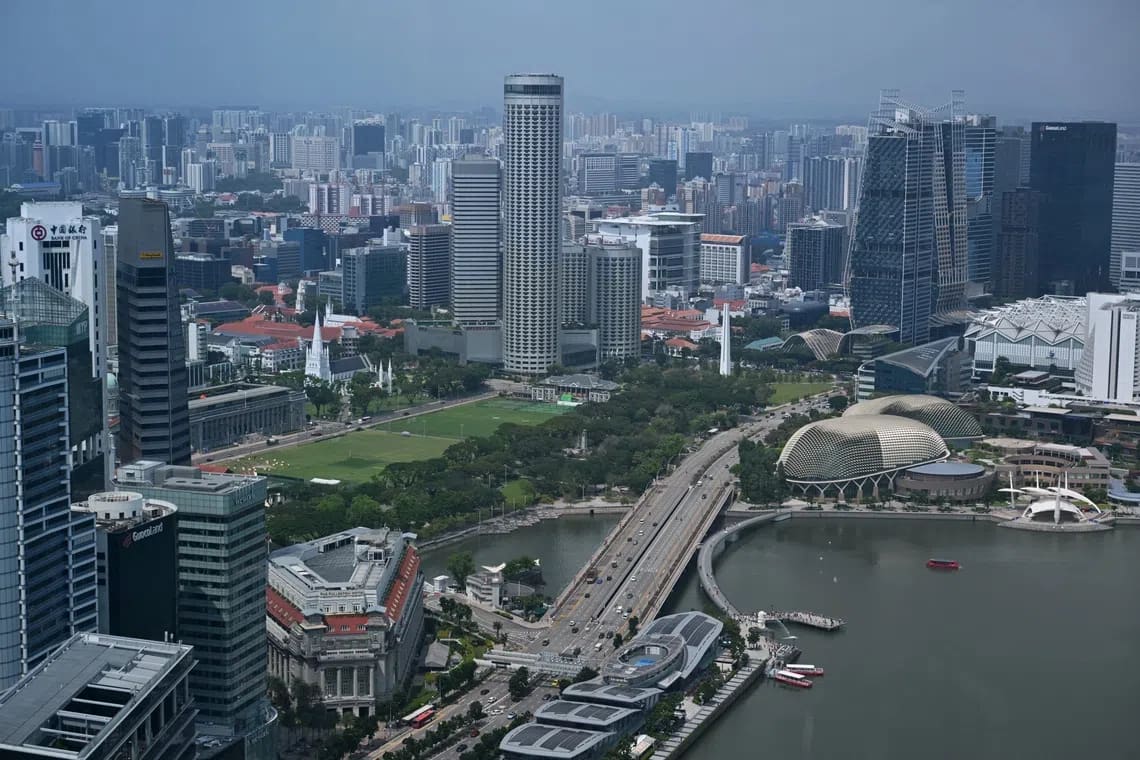
Singapore Economists Lift 2026 Growth Outlook to 5% as Chip Exports Surge
Private forecasters cite AI-driven electronics demand and record semiconductor shipments as key drivers, while flagging bubble risks and geopolitical vulnerabilities
KEY TAKEAWAYS
- ·Singapore's 2026 GDP growth forecast rose to 5 percent from 3.5 percent, driven by a 17 percent surge in non-oil domestic exports and manufacturing expansion of 8.4 percent.
- ·All surveyed economists cited sustained AI-related demand for semiconductors and fabrication equipment as the primary driver, with finance, construction, and trade sectors also seeing upgraded projections.
- ·Forty-five percent of forecasters expect the Monetary Authority of Singapore to tighten monetary policy in October, while risks include potential AI bubble correction and Middle East conflict escalation.
Forecasters Revise Expectations Upward
Private-sector economists have raised Singapore's 2026 GDP growth forecast to 5 percent, a substantial increase from the 3.5 percent predicted just three months earlier. The revision follows stronger-than-anticipated export performance and manufacturing output in the first half of the year, according to the Monetary Authority of Singapore's September quarterly survey of professional forecasters.
The upgrade aligns with the Ministry of Trade and Industry's August adjustment of its official growth band to between 4.5 percent and 5.5 percent, up from 2 percent to 4 percent. Singapore's economy expanded 6.3 percent year-on-year in the first quarter and 5.9 percent in the second quarter of 2026.
Electronics Drive Manufacturing Boom
Manufacturing now carries a growth forecast of 8.4 percent for 2026, significantly higher than the 5 percent projection made in June. The sector's performance has been propelled by a 17 percent surge in non-oil domestic exports, with demand concentrated in AI-related electronic hardware including semiconductors and fabrication equipment.
Enterprise Singapore revised its NODX forecast to a range of 14 percent to 16 percent in August, up sharply from an earlier 3 percent to 5 percent projection. Economists in the survey adjusted their NODX expectations to 6.1 percent, reflecting the exceptional first-half results.
Every economist surveyed identified sustained AI-driven demand in the technology cycle as central to Singapore's economic outlook. The consensus view suggests semiconductor orders and related manufacturing activity could push growth beyond current forecasts if the current trajectory holds.
Sectoral Performance Diverges
Finance and insurance sector growth expectations rose to 5.4 percent from 4.5 percent, while construction forecasts climbed to 7.1 percent from 6.5 percent. Wholesale and retail trade projections jumped to 7.4 percent from 4.9 percent.
The accommodation and food services sector presents a contrasting picture. Economists lowered their forecast for this segment to 1 percent from 1.8 percent, suggesting uneven recovery across consumer-facing industries.
Inflation Pressure Eases Slightly
The survey's median inflation forecast for 2026 came in at 2.1 percent for all items, down from 2.3 percent in June. Core inflation, which strips out private transport and accommodation costs, is now expected at 1.9 percent versus the prior 2 percent estimate.
Unemployment is projected to remain at 2.1 percent through year-end, unchanged from the June survey.
Monetary Policy Tightening Expected
Forty-five percent of respondents anticipate the Monetary Authority of Singapore will tighten policy in October by increasing the slope of the Singapore dollar nominal effective exchange rate band. This would strengthen the trade-weighted Singapore dollar. The proportion expecting tightening has risen from 30 percent in the previous survey.
Risks on Both Sides
Economists flagged potential upside scenarios including de-escalation of the Middle East conflict and stronger global growth. However, the survey highlighted significant downside risks tied to the six-month Iran conflict potentially escalating or becoming prolonged.
A more fundamental concern centers on the sustainability of AI-related investment. Respondents cited Singapore's vulnerability to a potential correction in AI valuations and the resulting spillover effects into financial markets. The concentration of growth in electronics and related sectors amplifies exposure to any sharp reversal in technology spending or sentiment shifts around artificial intelligence capabilities and returns.
The city-state's open economy and role as a regional manufacturing hub for high-end electronics mean external shocks transmit quickly through trade channels. With manufacturing now carrying much heavier weight in the 2026 growth story, any disruption to semiconductor supply chains or softening in data center infrastructure orders would materially affect the full-year outcome.
Singapore's ability to maintain its upgraded growth path will depend on whether AI infrastructure investment sustains through the second half and into 2027, and whether geopolitical tensions remain contained enough to preserve trade flows across Asia-Pacific technology networks.
RELATED STORIES
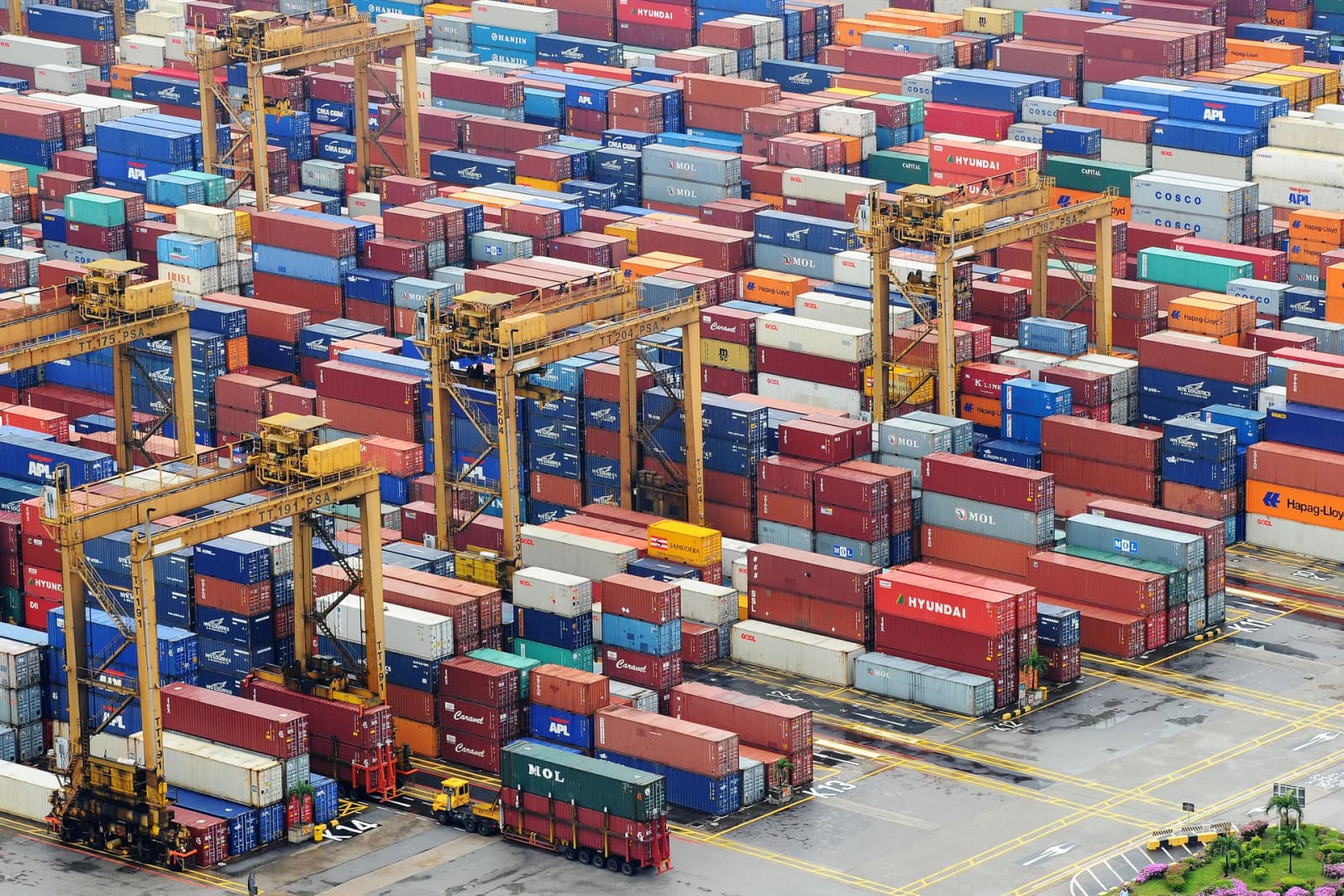
Singapore Economists Lift 2026 Export Forecasts as Electronics Demand Holds
Priyanka V. Rao · 3 min
Singapore Inflation Climbs on Power Tariffs, Stays Below Forecasts
Lim Hui Ying · 5 min
Vietnam Draws $7.5 Billion From Singapore in Seven Months
Priyanka V. Rao · 3 min

Singapore Eyes Global Investment Court as UN Talks Near Final Stage
Priyanka V. Rao · 3 min
Spot something wrong? Email editor@briefasia.com. We log every correction publicly.