Asia · Business
Vietnam Draws $7.5 Billion From Singapore in Seven Months
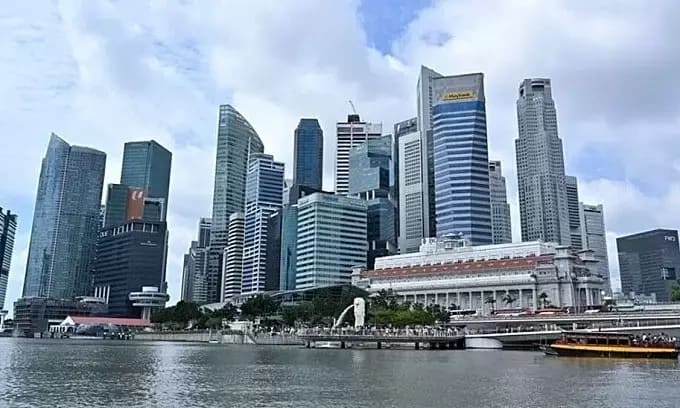
The city-state retained its position as Hanoi's top investment partner through July, channeling over a third of total foreign capital into Southeast Asia's manufacturing hub.
KEY TAKEAWAYS
- ·Singapore channeled $7.5 billion into Vietnam through July 2026, accounting for 35.6% of total foreign investment commitments and maintaining its position as the largest single source for the sixth consecutive year.
- ·Cumulative registered capital from Singapore now exceeds $97 billion across more than 4,500 active projects, making it Vietnam's second-largest foreign investor after South Korea.
- ·Bilateral trade reached $26 billion in the first seven months of 2026, up 43.1% year-on-year, with Singaporean imports from Vietnam surging 126.8% due to transshipment activity.
Capital Flows Surge Through Mid-Year
Vietnam recorded $7.5 billion in registered capital from Singapore through the first seven months of 2026, according to data from the Ministry of Foreign Affairs. That figure represents 35.6% of all foreign investment commitments during the period, maintaining the city-state's position as the largest single source of external capital for the sixth consecutive year.
The trajectory began in 2020, when Singaporean entities registered $8.994 billion in commitments. Annual figures climbed to $10.7 billion in 2021 before moderating to $6.455 billion in 2022 and $6.8 billion in 2023. The flow accelerated again to $10.2 billion in 2024, followed by $9.4 billion in 2025.
Cumulative registered capital from Singapore now stands at approximately $97 billion across more than 4,500 active projects, placing the city-state as Vietnam's second-largest foreign investor by total stock. South Korea holds the top position in cumulative terms. Singaporean capital spans manufacturing, logistics, finance, and technology sectors.
Industrial Parks Anchor Physical Presence
The Vietnam-Singapore Industrial Park network exemplifies the investment relationship. Twenty-eight VSIPs now operate nationwide, with Da Nang city approving the latest facility in July. That project covers nearly 250 hectares with registered capital of 3.73 trillion dong, equivalent to $138 million, under a 50-year operating license.
Beyond the VSIP platform, major Singaporean firms have expanded their footprint. Mapletree, Keppel Land, CapitaLand, Banyan Tree, Grab, Shopee, UOB, and KinderWorld maintain operations across multiple provinces and continue to deploy additional capital.
Trade Volumes Rise in Tandem
Bilateral trade reached nearly 33 billion Singapore dollars, or $26 billion, in the first seven months of 2026, marking a 43.1% increase year-on-year, according to Enterprise Singapore. Singaporean exports to Vietnam rose 9% to S$17.8 billion, while imports surged 126.8% to S$15.1 billion. The sharp import growth reflects transshipment and re-export activity through Singapore's port and logistics infrastructure.
Vietnam held the position of Singapore's 10th-largest trading partner during the period.
Regional Hub Effect Amplifies Inflows
Analysts attribute part of the capital surge to Singapore's role as a regional financial and logistics center. Numerous investment funds and multinational corporations base their regional headquarters in the city-state, channeling capital from third countries through Singaporean entities. This structure means some registered flows originate from international sources but appear in Vietnamese statistics as Singaporean investment.
Vo Tri Thanh, director of the Institute for Brand and Competitiveness Strategy, noted that both economies rank among ASEAN's most integrated, having negotiated and signed multiple bilateral and multilateral free trade agreements. That framework reduces friction for cross-border capital and goods movement.
A growing cohort of Singaporean small and medium enterprises and startups now enter Vietnam, often with higher average capital per project than the overall foreign direct investment average. These ventures create potential partnership opportunities for Vietnamese firms seeking technology transfer and management expertise.
Diplomatic Ties Deepen
Political engagement has intensified alongside economic flows. Vietnam and Singapore established diplomatic relations in 1973, formed a Strategic Partnership in 2000, and upgraded to a Comprehensive Strategic Partnership in March 2025. General Secretary and President To Lam visited Singapore twice in 2025 and 2026, while Prime Minister Lawrence Wong traveled to Hanoi in 2025.
Politburo member Tran Cam Tu visited Singapore from August 24 to 25 at the invitation of the People's Action Party, co-chairing the inaugural Vietnam-Singapore Strategic Dialogue. Deputy Minister of Foreign Affairs Nguyen Manh Cuong said the visit aims to advance strategic coordination between the two parties, enhance technological connectivity, and expand personnel training cooperation.
The sustained capital inflows and rising trade volumes suggest the Comprehensive Strategic Partnership framework is translating political alignment into measurable economic activity. With Singapore maintaining its lead as Vietnam's largest annual investor for six years running, the relationship has become a structural feature of Vietnam's foreign capital landscape rather than a cyclical phenomenon.
RELATED STORIES
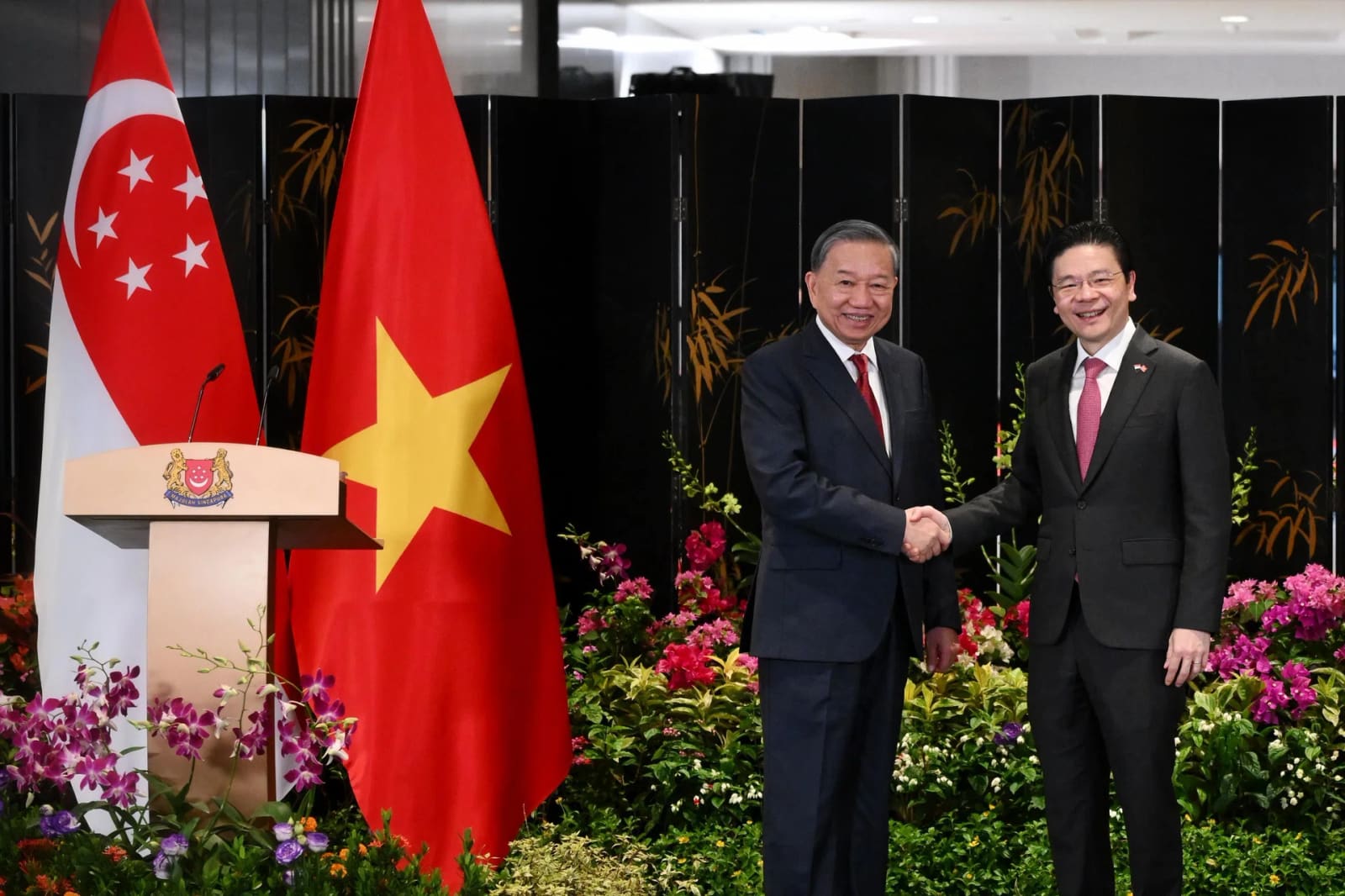
Singapore and Vietnam Launch Strategic Dialogue on Talent and Technology
Priyanka V. Rao · 3 min
Southeast Asian Factories Adopt Proximity Planning to Retain Workers and Investors
Lim Hui Ying · 3 min
Southeast Asian Firms Race to Raise Green Debt as Region Falls Behind on Renewables
Priyanka V. Rao · 3 min
Singapore Eyes Global Investment Court as UN Talks Near Final Stage
Priyanka V. Rao · 3 min
Spot something wrong? Email editor@briefasia.com. We log every correction publicly.