Sustainability · Climate
Southeast Asian Firms Race to Raise Green Debt as Region Falls Behind on Renewables
Two-thirds of surveyed companies plan to issue sustainability-linked instruments as ASEAN confronts a $400 billion annual gap in climate investment
KEY TAKEAWAYS
- ·Two-thirds of surveyed ASEAN corporates plan to issue green or sustainability-linked debt, with all respondents having already raised sustainable finance at lower costs than traditional instruments.
- ·Solar and wind generated only 4% of ASEAN electricity in 2024, compared to nearly 30% in the EU and Australia, while the region requires $400 billion annually to meet net-zero goals.
- ·High upfront costs and inadequate grid capacity remain primary barriers, with only 13% of companies viewing long-term emissions targets as extremely likely to be achieved.
Capital Shift Accelerates
Corporate treasurers across Southeast Asia are pivoting toward green and sustainability-linked financing instruments, with two-thirds of companies surveyed planning to tap these markets for future capital needs. The shift comes as the region grapples with an estimated $400 billion annual investment requirement to meet net-zero commitments and scale renewable infrastructure, according to Standard Chartered.
All 15 companies polled by the bank had already raised sustainable finance and intend to return to the market. The survey focused on energy, utilities, and materials firms across the ASEAN bloc. A majority reported that these instruments delivered lower funding costs than conventional bank loans or corporate bonds, while 40% said the process opened banking relationships they previously lacked.
More than half of respondents also expect to use blended finance structures that combine public, development bank, or philanthropic capital with private investment. These arrangements are designed to de-risk projects that commercial investors would otherwise avoid due to uncertain returns or long payback periods.
The Renewables Gap
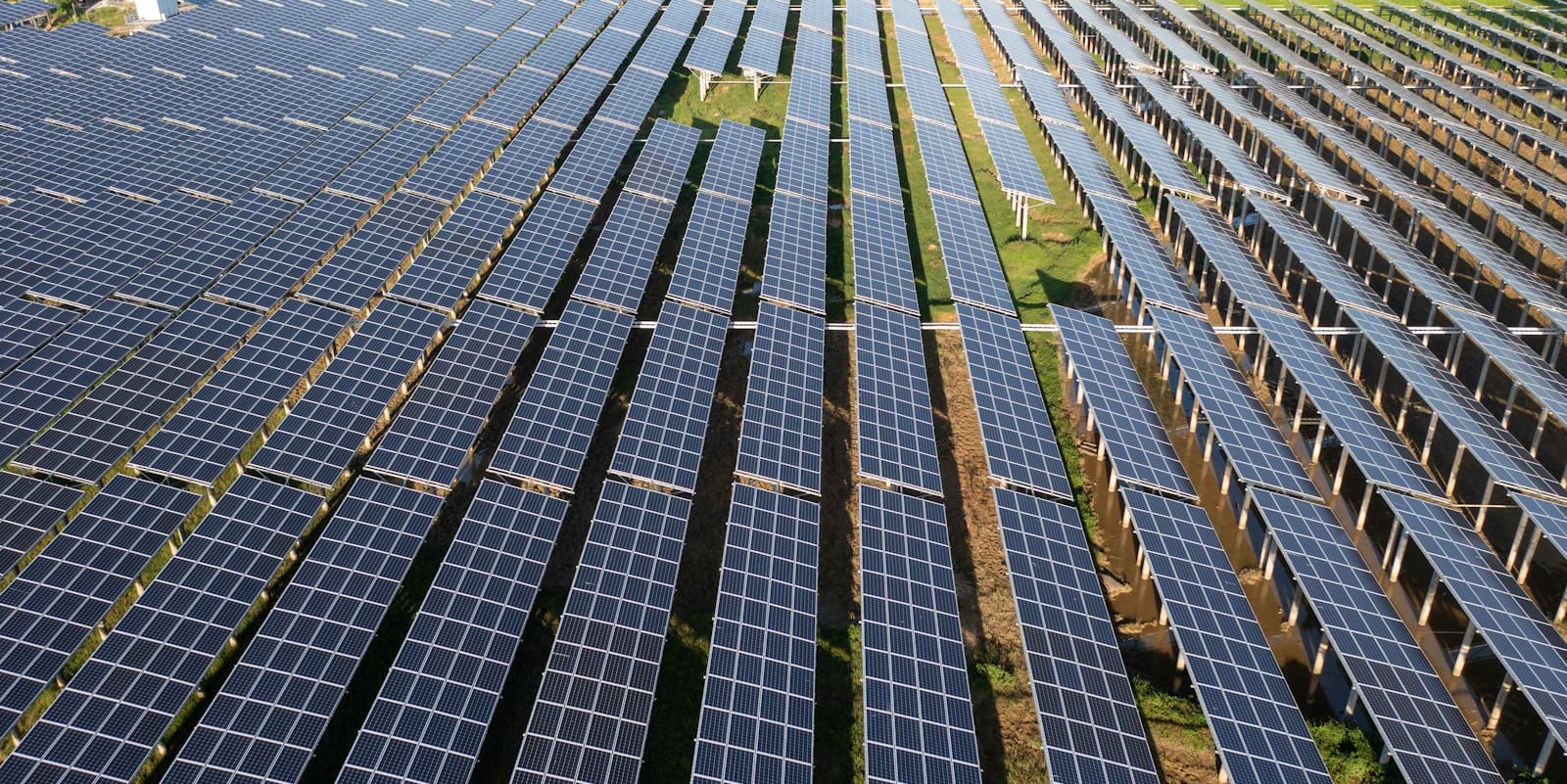
The financing urgency stems from ASEAN's lagging position in clean energy deployment. Solar and wind accounted for just 4% of electricity generation across the region in 2024, far below the 11% share in India, 18% in China, and nearly 30% in the European Union and Australia, data from Standard Chartered show.
Low-carbon energy investment in ASEAN reached $32 billion in 2023, underscoring the scale of the shortfall. Yet 74% of survey participants said the transition would improve their company's commercial outlook, suggesting executives see business opportunities alongside climate and energy security gains.
Solar remains the most widely adopted technology, with nearly nine in ten companies already engaged with photovoltaic projects. Adoption of deeper decarbonization tools, including carbon capture, storage, and hydrogen, remains limited, particularly among industrial and commercial real estate players.
Barriers and Bottlenecks
High upfront costs and limited economies of scale were cited as the primary obstacles to investment. Respondents also pointed to inadequate grid capacity, insufficient battery storage, and sparse electric vehicle charging infrastructure as constraints on broader electrification efforts.
Standard Chartered's analysis suggests that sustainable bonds and loans are best suited to finance mature technologies such as solar and energy efficiency, while blended finance can help unlock capital-intensive or early-stage projects, including grid upgrades and storage systems.
The survey revealed a confidence gap around long-term targets. Around 70% of respondents said their emissions goals were "somewhat likely" to be met, but only 13% considered them "extremely likely" to be achieved. The disparity points to persistent uncertainty over policy support, technology costs, and execution risk.
Policy and Execution Ahead
The findings arrive at a moment when ASEAN governments are calibrating climate ambitions against industrial growth and energy access priorities. The region's renewable share lags behind its economic peers, and the capital required to close the gap dwarfs current investment flows.
Standard Chartered noted that the finance sector can leverage early success stories to engage companies that have not yet accessed sustainable debt markets. Expanding the pool of issuers and diversifying project types will be essential to meeting the region's $400 billion annual need.
For now, corporate appetite for green finance appears robust, driven by cost savings, investor demand, and expectations of commercial upside. Whether that appetite translates into the pace and scale of deployment required to meet ASEAN's climate commitments will depend on policy clarity, infrastructure build-out, and the ability of blended finance to unlock projects that remain on the drawing board.
RELATED STORIES
Southeast Asian Factories Adopt Proximity Planning to Retain Workers and Investors
Lim Hui Ying · 3 min

Singapore Captures Two-Thirds of Southeast Asian EV Startup Capital
Priyanka V. Rao · 3 min
Singapore and Vietnam Launch Strategic Dialogue on Talent and Technology
Priyanka V. Rao · 3 min

Southeast Asian Exchanges Chase Tech Listings in AI Era
Cheng Wei-Lun · 3 min
Spot something wrong? Email editor@briefasia.com. We log every correction publicly.