Asia · Business
Southeast Asian Factories Adopt Proximity Planning to Retain Workers and Investors
A growing cohort of industrial zones now benchmark infrastructure, housing and services against a 45-minute accessibility threshold, mirroring urban planning principles in production environments.
KEY TAKEAWAYS
- ·Southeast Asian industrial zones are adopting a 45-minute accessibility standard for worker housing, community services and logistics to reduce turnover and attract investment.
- ·Singapore's Land Transport Master Plan 2040 and AMATA City Rayong in Thailand exemplify the model by integrating parks with regional transport, labour and supplier networks.
- ·Governments are beginning to tie zone approvals to transport and housing commitments, following Vietnam's Decree 35 and Indonesia's inter-ministerial coordination frameworks.
From Enclosed Compounds to Connected Districts
Factory zones have traditionally competed on tax holidays and cheap land. Increasingly, though, the decisive factor is how quickly a shift worker can get to a childcare centre, or how long a supplier's truck spends crawling through traffic. A handful of Southeast Asian sites are now building around a proximity rule: keep commutes, community services and logistics nodes within a 45-minute radius. The approach borrows from urban liveability frameworks and scales them to industrial settings, treating factories as anchors in regional networks rather than isolated enclaves.
Singapore's Land Transport Master Plan 2040 formalises the concept, promising 45-minute access to any major employment hub via public transit. AMATA City Rayong in Thailand's Eastern Economic Corridor applies similar logic, drawing on surrounding towns for housing and schools while the park itself focuses on production. The result is a division of labour: the zone handles manufacturing, and the wider region supplies everything else.
Efficiency Through Proximity
The logic rests on collective efficiency. When firms cluster, they share infrastructure no single company could afford alone, from steam networks to wastewater treatment. UNIDO's Global Eco-Industrial Park Programme, active in a dozen countries, tracks how industrial symbiosis lowers costs and carbon footprints. Vietnam's DEEP C and Nam Cau Kien parks exchange steel by-products; Thailand's Map Ta Phut and Singapore's Jurong Island circulate waste heat and feedstock.
China's 200-plus national development zones accounted for roughly 12 per cent of GDP in 2022, demonstrating the model's productive capacity. Yet many zones remain underused because they were dropped onto empty land without transport links or a clear industrial strategy. The parks that succeed treat proximity as infrastructure: housing close enough to cut commute stress, suppliers near enough to enable just-in-time delivery, and ports or airports within a predictable freight window.
Three Dimensions of Access
Planners are applying the 45-minute test to three constituencies. For workers, it means housing and transport that keep the home-to-gate trip under 45 minutes, replacing dormitory blocks with genuine townships. For families, it means schools, clinics and markets within the same range, so the park becomes part of a town rather than a walled compound beside one. For production, it means suppliers, freight hubs and export gateways close enough to support lean inventories and rapid turnaround.
Long commutes and poor amenities drive the turnover and absenteeism that plague many zones. The most valuable synergies, such as circular waste streams and shared utilities, only work when the industrial site and the surrounding city are planned together. Suzhou Industrial Park, a China-Singapore joint venture, was designed from the start to integrate production, residential and ecological functions. Three decades on, it has evolved into an innovation district with free-trade-zone status.
Models Across the Region
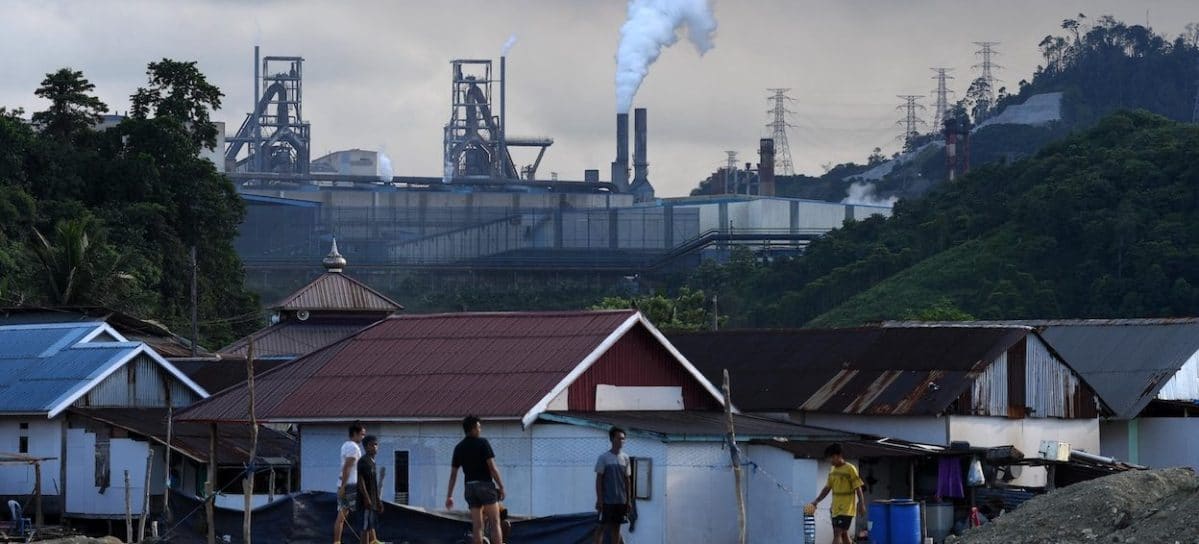
Indonesia Morowali Industrial Park in Central Sulawesi spans 5,000 hectares and employs more than 90,000 people, anchoring the country's nickel processing ambitions. It has its own port and airstrip, demonstrating the pull of integrated infrastructure. The challenge now is to mature its urban and community dimensions so the model can be replicated elsewhere.
AMATA City Rayong offers a different template. Rather than seeking self-sufficiency behind a fence, it embeds itself in Thailand's Eastern Economic Corridor, relying on regional labour markets, supplier networks and shared port and airport access. The park specialises; the region provides the rest.
The principle extends beyond Southeast Asia. Business parks near Edinburgh, zones tracked by Mexico's AMPIP and Dubai Industrial City near Jebel Ali Port all cluster within similar accessibility ranges, moving away from enclosed production spaces toward designs coordinated with city planning and public services.
Policy Levers
Governments can hardwire the standard into zone approvals by weighting transport, housing and service commitments alongside investment pledges. Vietnam's Decree 35 eco-industrial certification and Indonesia's inter-ministerial forum already integrate community and environmental performance into park regulation. Local governments need the mandate to coordinate park and city planning, while operators should gain the capacity to provide commuting, training and shared facilities, leaving core infrastructure to the public sector.
The next wave of industrial competition in Southeast Asia will favour sites that treat factories as part of a city system, not apart from it. Zones that meet the 45-minute threshold for workers, families and freight stand a better chance of retaining both talent and capital in an era when both are mobile.
RELATED STORIES
Indonesian Petrochemical Giant Chandra Asri Expands Into Singapore, Malaysia Auto Markets
Priyanka V. Rao · 4 min
Chandra Asri Acquires Jardine's Singapore and Malaysia Dealerships for $265 Million
Priyanka V. Rao · 3 min
Singapore and Vietnam Launch Strategic Dialogue on Talent and Technology
Priyanka V. Rao · 3 min

Singapore Eyes Undersea Tunnels to Link Mainland with Pulau Tekong
Lim Hui Ying · 2 min
Spot something wrong? Email editor@briefasia.com. We log every correction publicly.