Asia · Trade
Singapore Economists Lift 2026 Export Forecasts as Electronics Demand Holds
Analysts revise full-year NODX projections upward following five consecutive months of double-digit growth driven by AI-related semiconductor shipments
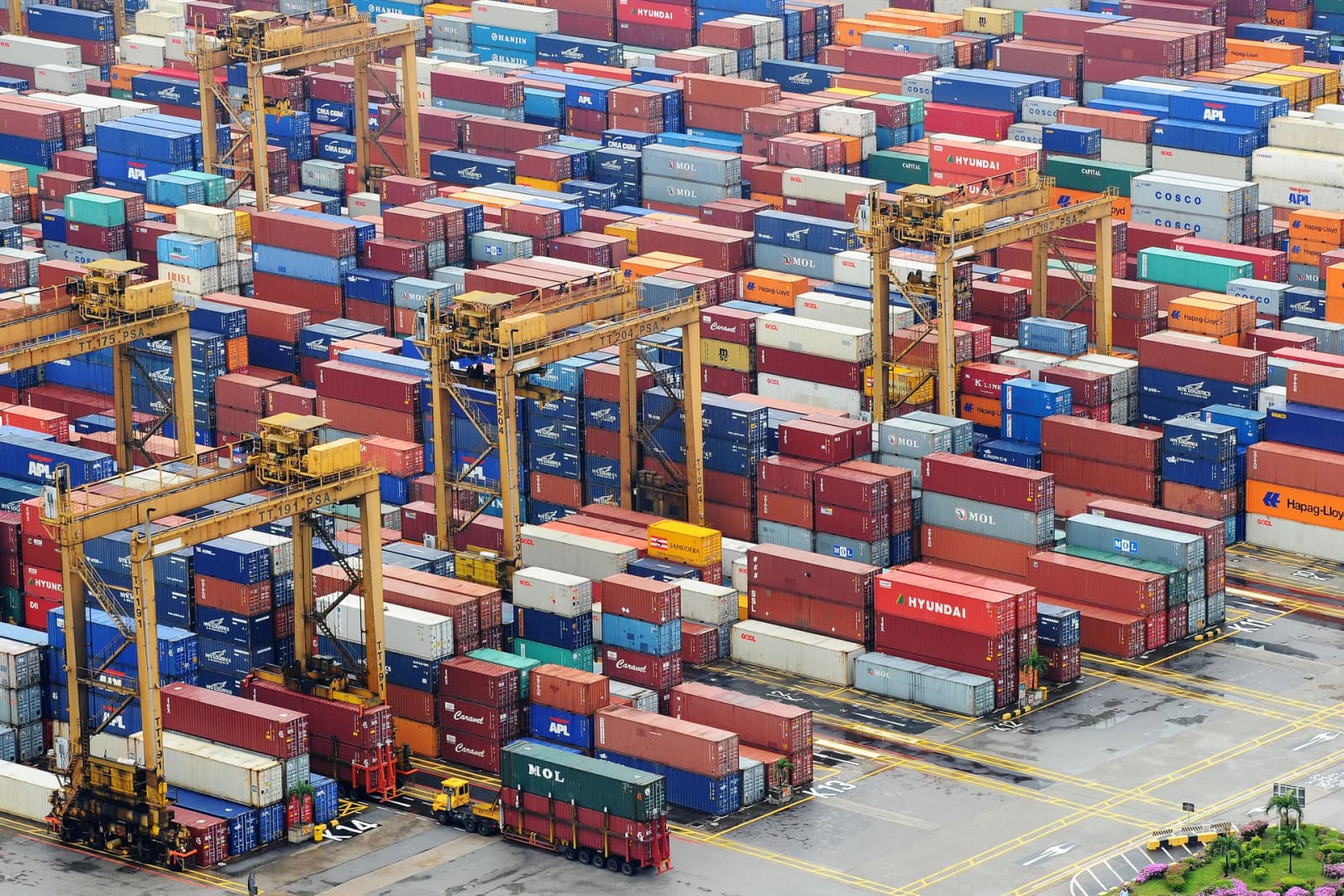
KEY TAKEAWAYS
- ·Singapore's non-oil domestic exports rose 24.2 percent year on year in July, the fifth straight month of double-digit growth, prompting economists to raise full-year forecasts to 14 to 16 percent.
- ·Electronics shipments, particularly semiconductors for AI data centres, account for roughly 40 percent of NODX and remain supported by firm order visibility through the fourth quarter.
- ·The outlook hinges on sustained AI chip demand and remains vulnerable to US export controls and tariff escalation affecting regional supply chains.
Five-Month Streak Prompts Revision
Economists covering Singapore have revised their 2026 forecasts for non-oil domestic exports upward, even as July's headline figure missed analyst estimates. The shift reflects growing confidence that semiconductor demand tied to artificial intelligence infrastructure will sustain momentum through the second half.
NODX expanded 24.2 percent year on year in July, according to Enterprise Singapore. The reading extended June's 20.8 percent rise and marked the fifth consecutive month of double-digit expansion. While the July pace fell short of some sell-side projections, the cumulative first-half performance has prompted forecasters to lift full-year targets.
Enterprise Singapore raised its official 2026 NODX growth forecast to a range of 14 to 16 percent, up from an earlier 3 to 5 percent band. The agency cited stronger-than-anticipated electronics shipments in the first two quarters, particularly in integrated circuits and memory modules destined for data centre construction across North America and Europe.
Electronics Sector Drives Revision
The upgrade hinges on the electronics sector, which accounts for roughly 40 percent of Singapore's total NODX by value. Shipments of semiconductors and related components have climbed sharply since the start of the year, buoyed by hyperscaler orders for graphics processing units and high-bandwidth memory used in large language model training.
Analysts note that order visibility for foundries and packaging houses in the region remains firm through the fourth quarter. Taiwan Semiconductor Manufacturing Company and Samsung Electronics have both signalled capacity constraints in advanced nodes, a dynamic that has lifted utilisation rates at Singapore-based assembly and test facilities.
Non-electronics NODX has been more mixed. Pharmaceutical exports posted modest gains in July, while petrochemical shipments declined on softer demand from China. Precious metal re-exports, a category that includes gold and platinum, also fell as trading activity in Hong Kong and Dubai slowed.
Regional Context and Trade Flows
Singapore's export performance sits within a broader recovery in regional trade. South Korea reported a 16.8 percent year-on-year rise in July exports, driven by semiconductors and rechargeable batteries. Taiwan's July export orders climbed 13.4 percent, with electronics and information technology products leading the gain.
The city-state's position as a trans-shipment hub amplifies its exposure to global technology cycles. Roughly 30 percent of Singapore's NODX comprises re-exported goods, many of which originate in Malaysia, Thailand, and Indonesia before final shipment to end markets. This structure means Singapore's trade data often serves as an early indicator for manufacturing activity across Southeast Asia.
Economists caution that the outlook remains sensitive to shifts in US trade policy. Washington has extended export controls on advanced semiconductor manufacturing equipment to additional Chinese entities, complicating supply chain planning for firms with operations in both markets. Any escalation in tariffs or technology restrictions could dampen order flows in the second half.
Currency and Inflation Implications
The sustained export strength has supported the Singapore dollar, which has appreciated 2.1 percent against the US dollar year to date. The Monetary Authority of Singapore operates an exchange-rate-based monetary policy framework, using the trade-weighted nominal effective exchange rate to manage inflation.
A stronger currency helps contain imported inflation but can weigh on price competitiveness for exporters. So far, the volume gains in electronics have offset any margin pressure from currency appreciation. Consumer price inflation stood at 2.3 percent in June, within the central bank's comfort zone.
Looking ahead, economists expect NODX growth to moderate in the fourth quarter as base effects from 2025's weak second half fade. Full-year growth in the mid-teens would represent the strongest performance since 2021, when post-pandemic inventory restocking drove a 30 percent surge in shipments.
What to Watch
Market participants will monitor August trade data, due in mid-September, for signs that electronics demand is holding. Any deceleration in semiconductor shipments would raise questions about the sustainability of current forecast ranges.
Enterprise Singapore's next official revision is scheduled for November, when third-quarter GDP figures are released. Until then, the interplay between AI-driven chip demand and geopolitical trade friction will shape sentiment around Singapore's export trajectory for the remainder of 2026.
RELATED STORIES
Singapore Chips and Property Markets Signal Broader Tech Supply Crunch
Lim Hui Ying · 4 min
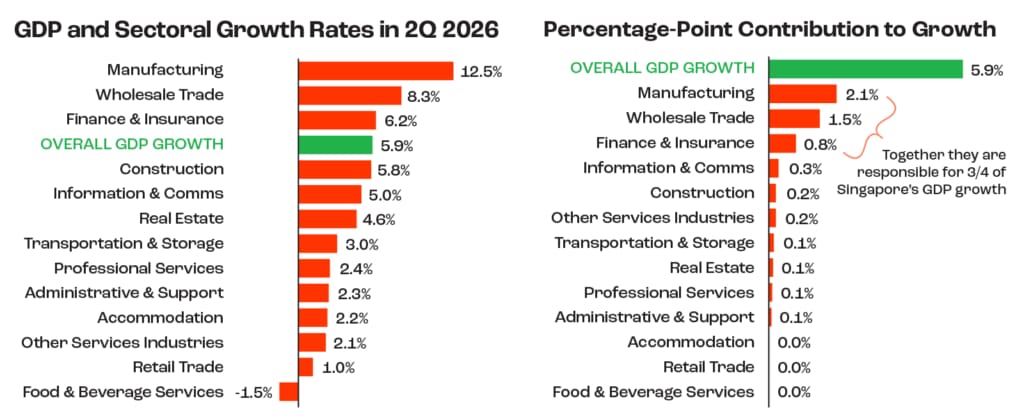
Singapore's GDP Surge Masks a Widening Productivity Divide
Lim Hui Ying · 3 min
Singapore Electronics Exports Surge 112% on AI Chip Demand
Cheng Wei-Lun · 3 min
Singapore Food Tenant Sues OG Over Taste Orchard Eviction
Lim Hui Ying · 3 min
Spot something wrong? Email editor@briefasia.com. We log every correction publicly.