Asia · Trade
Singapore Electronics Exports Surge 112% on AI Chip Demand
The city-state's July shipments rose 24.2% year-on-year, driven by semiconductors and disk media, though growth trailed economist forecasts as non-electronics declined
KEY TAKEAWAYS
- ·Singapore's non-oil domestic exports grew 24.2% year-on-year in July, with electronics shipments surging 112% on AI-driven demand for integrated circuits and disk media.
- ·Nine of the city-state's top ten export markets posted gains, led by the US at 62.8%, South Korea at 53.3%, and China at 37.6%, while EU shipments fell 35.5%.
- ·Non-electronics contracted 2.3% as pharmaceuticals dropped 56.7% and petrochemicals declined 22.5%, signaling sector-specific headwinds despite the electronics boom.
Electronics Shipments Triple on Semiconductor Demand
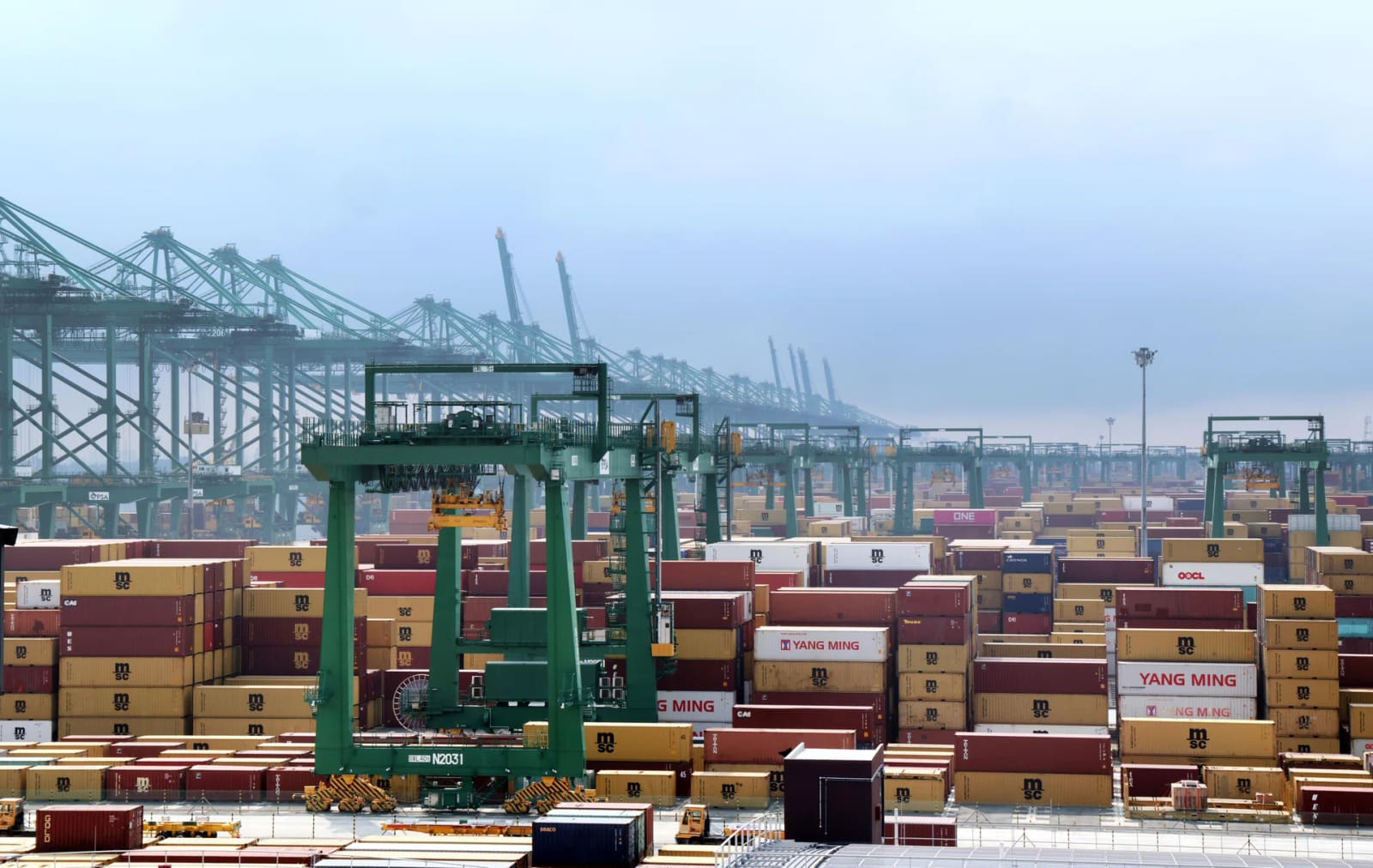
Singapore's non-oil domestic exports rose 24.2% year-on-year in July, according to Enterprise Singapore data released Monday. The expansion extended June's 20.8% increase but fell short of the 26.8% median estimate in a Bloomberg survey of private-sector economists.
Electronics drove the headline figure, surging 112% in July compared with 105.1% growth the previous month. Disk media products led the category with a 339.1% jump, followed by integrated circuits at 84.5% and personal computers at 120.8%. The three segments accounted for the bulk of the electronics advance, reflecting continued buildout of data center infrastructure across Asia and North America.
The Republic has emerged as a critical node in the global AI supply chain over the past eighteen months. Fab capacity expansions by multinational chipmakers in Singapore, combined with the city-state's role as a regional logistics hub for high-value components, have amplified the impact of generative AI adoption on trade flows.
Non-Electronics Slip on Pharma, Petrochemicals
Non-electronics shipments contracted 2.3% in July, a marginal improvement from June's 2.8% decline. Pharmaceuticals fell 56.7%, petrochemicals dropped 22.5%, and food preparations declined 17.9%, offsetting gains in other categories.
The pharmaceutical downturn reflects both base effects from a strong July 2025 and inventory adjustments among contract manufacturers serving global biotech clients. Petrochemical weakness tracks softer refining margins and feedstock cost pressures across Southeast Asia.
Total merchandise trade expanded 38.6% year-on-year in July, down from June's 49.3% pace, as both exports and imports climbed. The moderation suggests some normalization after the sharp acceleration earlier in the second quarter.
Geographic Split: US and Northeast Asia Power Growth
Nine of Singapore's top ten export markets posted growth in July. The United States led with a 62.8% increase, followed by South Korea at 53.3% and China at 37.6%. Hong Kong, Taiwan, and Malaysia recorded gains of 36.4%, 32.4%, and 23.4%, respectively. Thailand, India, and Indonesia rounded out the list with advances of 18%, 13%, and 12.4%.
The EU 27 was the sole decliner, with shipments falling 35.5% after a 20.8% rise in June. The reversal likely reflects weaker industrial activity in Germany and inventory destocking among European electronics distributors.
The US and South Korea figures underscore the concentration of AI-related demand. Hyperscale cloud operators in the US continue to order semiconductors and storage hardware at elevated rates, while South Korean tech conglomerates are ramping fab investments and server production. China's 37.6% gain, despite ongoing US export controls, points to sustained appetite for non-restricted chip categories and legacy-node components used in consumer electronics and automotive applications.
Outlook: Volatility Expected as Base Effects Shift
July's 24.2% headline growth marks the fourteenth consecutive month of year-on-year expansion for Singapore's non-oil domestic exports. Yet the miss against consensus highlights the difficulty of forecasting a trade profile heavily tilted toward electronics, where order patterns can swing month to month.
Base effects will turn less favorable in the second half as the comparison period includes the initial wave of AI server deployments in mid-2025. Economists expect electronics growth rates to moderate toward the fourth quarter, though absolute shipment levels should remain elevated.
Non-electronics face a mixed outlook. Pharmaceutical exports may stabilize if contract manufacturing pipelines refill, but petrochemical weakness could persist given the regional oversupply in refining capacity. Food and commodities will track global agricultural prices and demand from China and India.
For now, Singapore's export engine remains firmly in the hands of the semiconductor cycle. As long as data center construction and AI model training demand hold up in the US and Northeast Asia, the city-state's logistics and manufacturing base will continue to capture a disproportionate share of the associated trade flows.
RELATED STORIES
Singapore Electronics Exports Surge 112% on AI Hardware Demand
Priyanka V. Rao · 3 min
Lam Research Plans 200 Singapore Hires as AI Chip Demand Accelerates
Cheng Wei-Lun · 3 min
Singapore Chips and Property Markets Signal Broader Tech Supply Crunch
Lim Hui Ying · 4 min
Singapore Export Growth Slows to 24% as AI Chip Boom Fails to Meet Expectations
Priyanka V. Rao · 4 min
Spot something wrong? Email editor@briefasia.com. We log every correction publicly.