Asia · Trade
Singapore Export Growth Slows to 24% as AI Chip Boom Fails to Meet Expectations
Electronics shipments more than doubled in July, but overall trade performance fell short of economist forecasts amid pharmaceutical sector weakness
KEY TAKEAWAYS
- ·Singapore's non-oil domestic exports grew 24.2 percent in July, missing the 26.5 percent economist forecast despite a 112 percent surge in electronics.
- ·Disk media products jumped 339 percent and integrated circuits rose 84.5 percent, driven by AI data-center buildouts, while pharmaceuticals collapsed 56.7 percent.
- ·Shipments to the US, China, and Taiwan expanded, but EU exports contracted, highlighting geographic divergence in demand for Singapore's technology and industrial products.
Trade Momentum Cools Despite Electronics Surge
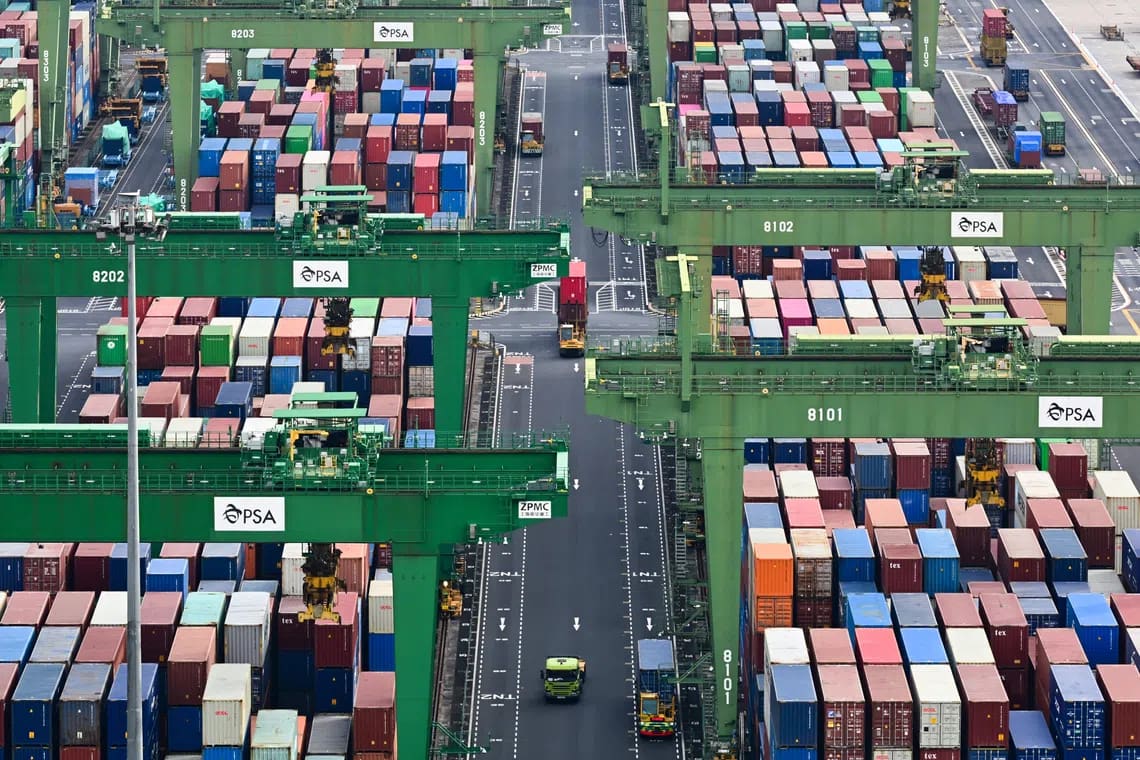
Singapore's non-oil domestic shipments expanded 24.2 percent year-on-year in July, according to data released by Enterprise Singapore on 17 August. The figure marked a deceleration from June's 20.8 percent climb and came in below the 26.5 percent median estimate in a Bloomberg survey of economists.
The miss underscores a divergence taking shape across the city-state's export base. While electronics continue to ride artificial intelligence infrastructure buildouts, traditional manufacturing categories are posting sharp declines that are dragging on headline growth. For investors tracking Asia's semiconductor supply chains, the data offers a mixed signal: demand for chips and storage remains white-hot, yet broader industrial momentum is fragile.
Electronics Triple on Data-Center Demand
Electronic exports surged 112 percent, the standout driver behind July's overall expansion. Disk media products, which include hard drives and storage components critical to cloud and AI data centers, rocketed 339.1 percent. Personal computer shipments jumped 120.8 percent, while integrated circuit exports grew 84.5 percent.
The triple-digit gains reflect sustained investment by hyperscale cloud operators and enterprise customers building out generative AI infrastructure. Singapore functions as a key assembly and distribution node for semiconductor products destined for regional markets, particularly as manufacturers diversify supply routes beyond traditional hubs in Taiwan and South Korea.
Yet the scale of the electronics rebound also raises questions about sustainability. A 339 percent increase in any category typically signals either a low base effect or inventory restocking that may not persist at the same pace in coming months. Analysts will be watching August figures closely to determine whether the spike represents durable demand or a one-time bulge tied to specific project timelines.
Non-Electronics Drag Widens
Outside the electronics sector, Singapore's export picture deteriorated. Non-electronic shipments fell 2.3 percent, pulled down by a 56.7 percent collapse in pharmaceutical exports. Petrochemicals dropped 22.5 percent, and food preparation products declined 17.9 percent.
The pharmaceutical contraction is particularly notable given that biomedical manufacturing has been a strategic pillar of Singapore's industrial policy for two decades. The sector's volatility often reflects lumpy production schedules for biologics and vaccines rather than structural weakness, but the magnitude of July's decline suggests either order timing or competitive pressures from lower-cost manufacturing bases in India and China.
Petrochemical weakness aligns with softer refining margins across Asia as crude differentials narrow and regional demand for plastics and intermediates cools. Food preparation exports, meanwhile, face headwinds from rising input costs and slower consumer spending in key Southeast Asian markets.
Geographic Mix Shifts Toward US and Taiwan
Shipments to the United States, China, and Taiwan led expansion among Singapore's top ten export destinations. The European Union 27, by contrast, recorded a contraction, reflecting the bloc's sluggish industrial activity and inventory adjustments in the automotive and machinery sectors.
The strength in US-bound shipments aligns with Washington's push to secure semiconductor supply chains and build domestic AI compute capacity. Taiwan's role as both a manufacturing partner and a re-export hub for chips means bilateral trade flows are tightly correlated with global electronics cycles.
China's inclusion in the expansion group is more nuanced. While Beijing's AI ambitions remain constrained by US export controls on advanced chips, demand for lower-node semiconductors, storage products, and assembly services continues to grow. Singapore benefits from its position as a neutral intermediary in a fragmenting technology landscape, able to serve both Western and Chinese customers within the bounds of multilateral controls.
Policy Implications and Outlook Adjustments
Singapore's government upgraded its full-year NODX forecast earlier in 2026, citing the AI-powered surge in electronics. The July miss, however, suggests that maintaining momentum will require more than chip demand alone. Diversification into higher-margin segments such as precision engineering, advanced materials, and green technology components will be critical to offsetting volatility in pharmaceuticals and petrochemicals.
The city-state's GDP growth forecast for 2026 was also revised upward to a range of 4.5 to 5.5 percent, reflecting confidence in the electronics upswing. Yet the underlying fragility in non-electronic categories points to risks if the AI investment cycle peaks sooner than expected or if global trade conditions worsen.
What Comes Next
August data will clarify whether July's electronics boom represents a new plateau or a temporary spike. Investors should watch for signs of order normalization in disk media and storage products, as well as any stabilization in pharmaceutical exports. The trajectory of US and Chinese demand will remain the primary variables, with Taiwan's production schedules serving as a leading indicator for regional supply-chain activity.
For now, Singapore's export engine is firing on one cylinder, electronics, while others sputter. The challenge for policymakers and executives alike is ensuring that the AI tailwind translates into broader industrial resilience rather than a narrow, cyclical bounce.
RELATED STORIES
Singapore Export Growth Cools to 20.7% as Electronics Boom Offsets Non-Electronics Slide
Cheng Wei-Lun · 3 min
Singapore Electronics Exports Surge 112% on AI Hardware Demand
Priyanka V. Rao · 3 min
Singapore Chips and Property Markets Signal Broader Tech Supply Crunch
Lim Hui Ying · 4 min

Cosco Shipping Targets Three Southeast Asian Markets in Regional Push
Cheng Wei-Lun · 3 min
Spot something wrong? Email editor@briefasia.com. We log every correction publicly.