Technology · AI
Rakuten Partners With German AI Firm Helsing on Military Drone Tests in Japan
The collaboration marks Japan's growing interest in autonomous defense systems as regional security concerns intensify across East Asia.
KEY TAKEAWAYS
- ·Rakuten is collaborating with German AI defense startup Helsing to test HX-2 AI strike drones in Japan, marking the e-commerce giant's entry into military technology.
- ·The partnership aligns with Japan's accelerated defense modernization efforts and increased spending on autonomous systems amid regional security pressures.
- ·Success in Japan could open the Indo-Pacific market for Helsing and signal broader opportunities for non-traditional defense firms in Asia's growing military tech sector.
An Unlikely Defense Partnership
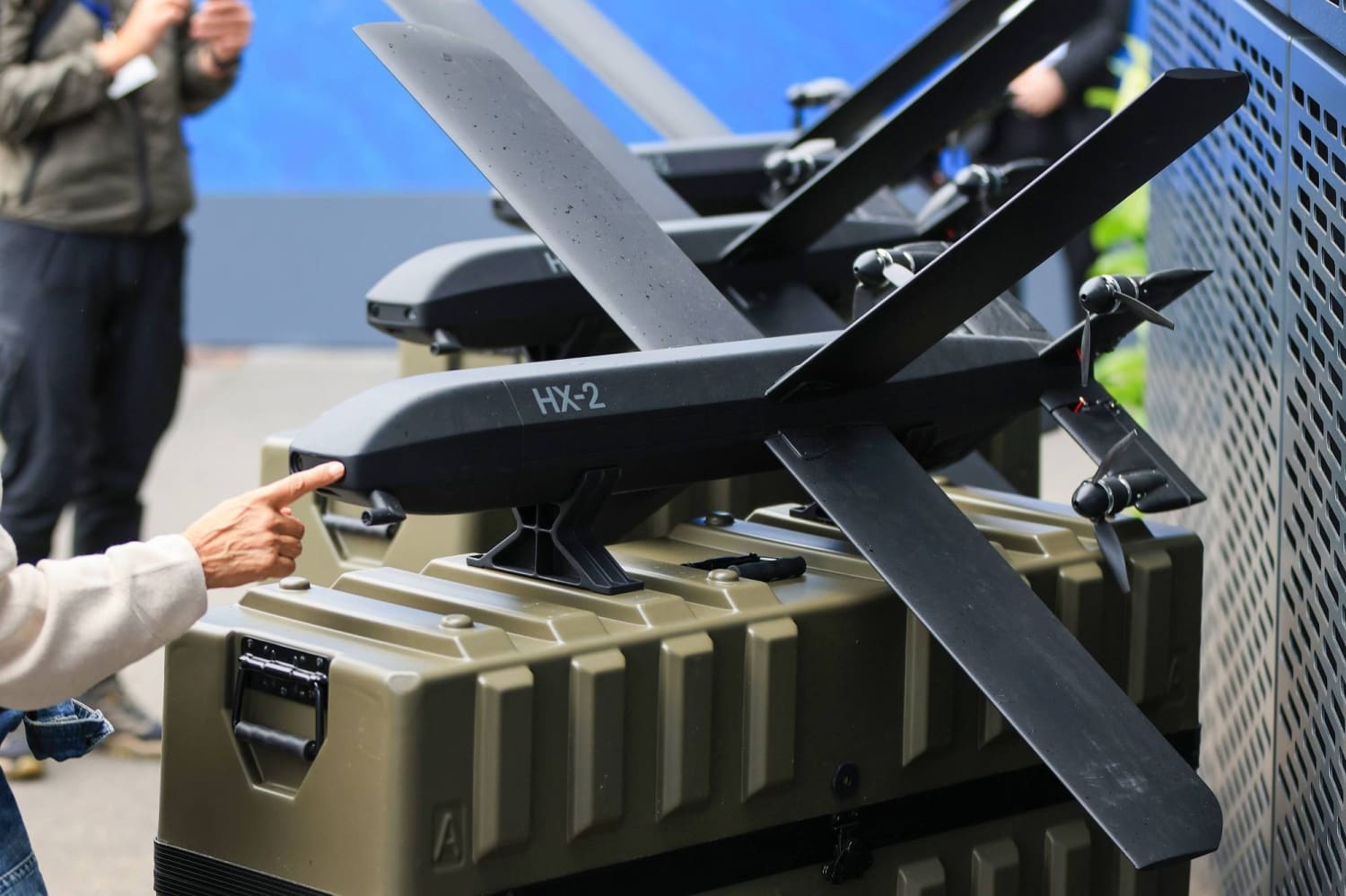
Rakuten, the Tokyo-based e-commerce and telecommunications conglomerate, has entered the defense technology space through a collaboration with Helsing, a German artificial intelligence startup focused on military applications. The partnership centers on testing demonstration models of Helsing's HX-2 AI strike drones within Japan, according to company announcements.
The move represents a notable expansion for Rakuten beyond its traditional consumer-facing businesses into defense technology, an area experiencing rapid growth across Asia as governments modernize their military capabilities. For Helsing, the collaboration offers a pathway into the Japanese defense market at a time when Tokyo is actively seeking to bolster its autonomous systems capabilities.
The Technology Under Evaluation
Helsing's HX-2 platform integrates artificial intelligence into strike drone operations, designed to enhance targeting accuracy and autonomous decision-making in contested environments. The system is part of a broader wave of AI-enabled military hardware being developed by European defense tech startups, many of which have gained traction by positioning themselves as alternatives to legacy defense contractors.
The demonstration models being tested in Japan are intended to showcase the platform's capabilities under operational scenarios relevant to Japanese defense priorities. While specific technical parameters have not been disclosed, the HX-2 is understood to incorporate machine learning algorithms that process sensor data in real time, enabling rapid threat assessment and engagement.
Japan's Defense Modernization Context
Japan's interest in autonomous military systems has accelerated in recent years, driven by regional security dynamics and the need to offset demographic challenges that constrain personnel recruitment. The Japanese government has increased defense spending and signaled openness to next-generation technologies, including unmanned aerial systems and AI-powered platforms.
Tokyo's 2023 National Security Strategy explicitly called for enhancing capabilities in emerging domains, including autonomous systems and cyber operations. This policy shift has created opportunities for both domestic and international defense technology providers to engage with Japanese defense agencies and affiliated companies.
Rakuten's involvement suggests that non-traditional defense players in Japan are exploring opportunities in this expanding sector. The company has previously invested in telecommunications infrastructure, including a nationwide 4G and 5G network, which may provide complementary capabilities for secure communications in defense applications.
European Defense Tech in Asia
Helsing's entry into Japan follows a pattern of European defense startups seeking partnerships in Asia, where defense budgets are growing and governments are diversifying their supplier bases. The German company, founded in 2021, has raised significant venture capital and positioned itself as a developer of AI software for military use, emphasizing ethical frameworks and democratic oversight.
The collaboration also reflects broader trends in defense procurement, where governments are increasingly willing to engage with startups and tech firms outside the traditional defense industrial base. This shift has been particularly pronounced in software-defined systems and AI, where commercial technology companies often possess advanced capabilities.
What Comes Next
The testing phase will determine whether Helsing's technology meets Japanese operational requirements and regulatory standards. Japan's defense procurement process involves rigorous evaluation, and any path to formal adoption would require alignment with the country's defense doctrine and interoperability standards with allied forces, particularly the United States.
For Rakuten, the partnership may serve as an initial step into a sector that increasingly intersects with telecommunications, logistics, and data infrastructure. For Helsing, success in Japan could establish a foothold in a market that is expected to see substantial investment in autonomous systems over the next decade.
The outcome of these tests will be closely watched by other defense technology firms eyeing opportunities in Japan and across the broader Indo-Pacific region, where demand for advanced military capabilities continues to rise.
RELATED STORIES
Mitsubishi Electric Prepares Satellite Production Surge as Japan Accelerates Launch Cadence
Cheng Wei-Lun · 4 min
Akita Plans Major AI Data Center to Launch by 2030
Aiko Nakamura · 3 min
Tier IV Plans Open-Source AI Chip Design to Cut Automaker Costs
Aiko Nakamura · 3 min
Toppan Pushes for Higher FC-BGA Substrate Prices as Japan Capacity Doubles
Cheng Wei-Lun · 3 min
Spot something wrong? Email editor@briefasia.com. We log every correction publicly.