Finance · Markets
Seoul Stocks Climb on Chipmaker Shareholder Return Expectations
The KOSPI gained 0.88 percent as investors anticipate major capital distribution plans from Samsung Electronics and SK hynix
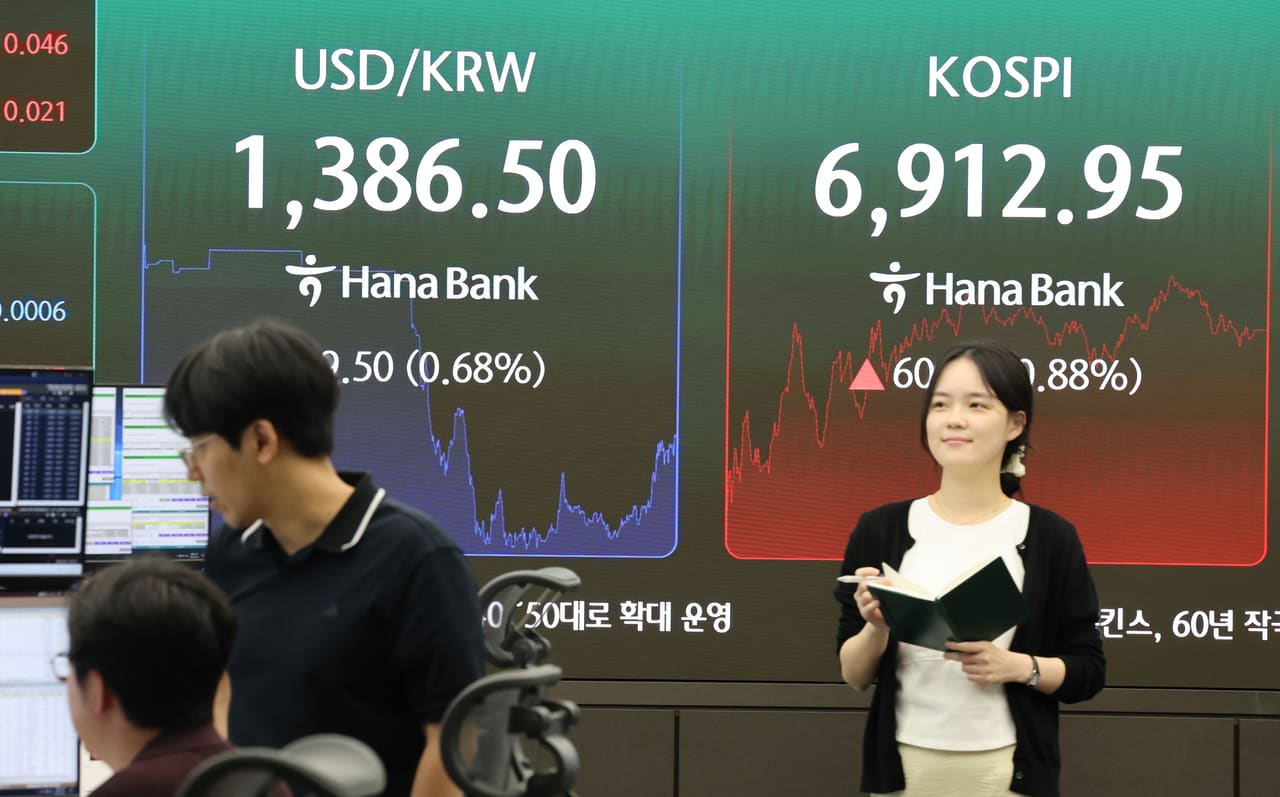
KEY TAKEAWAYS
- ·South Korea's KOSPI index gained 60.37 points to close at 6,912.95, a 0.88 percent advance, on Friday trading.
- ·Investor optimism centered on anticipated large-scale shareholder return plans from Samsung Electronics and SK hynix, the country's top chipmakers.
- ·Market breadth was negative with 681 declining stocks versus 193 advancers, indicating gains were concentrated in heavyweight semiconductor names.
Chip Rally Drives Market Higher
South Korea's equity market closed in positive territory Friday, driven by gains in semiconductor stocks as investors positioned ahead of expected shareholder return announcements from the country's two largest memory chip producers.
The Korea Composite Stock Price Index added 60.37 points to finish at 6,912.95, marking a 0.88 percent advance from the previous session. Intraday, the benchmark reached as high as 6,954.12 before settling lower. Trading activity remained moderate, with 404.5 million shares changing hands for a total value of 28.7 trillion won, equivalent to $20.7 billion.
Market internals told a different story than the headline index. Declining issues overwhelmed advancers by a ratio of more than three to one, with 681 stocks falling against 193 gainers. The disparity underscores how concentrated the rally was in heavyweight technology names, particularly those in the semiconductor sector.
Shareholder Return Speculation
The optimism centered on Samsung Electronics and SK hynix, South Korea's dominant players in the global memory chip market. Both companies have faced mounting pressure from shareholders to improve capital allocation and boost returns, particularly as the industry navigates cyclical swings in demand and pricing.
Investor expectations have been building for months around potential buyback programs, special dividends, or enhanced regular dividend policies. For Samsung, which accounts for a significant portion of the KOSPI's total market capitalization, any substantial shareholder return initiative would have outsized impact on both the index and investor sentiment toward Korean equities more broadly.
SK hynix, the world's second-largest memory chipmaker, has similarly been the subject of speculation regarding capital return plans. The company has benefited from recovering demand in high-bandwidth memory products used in artificial intelligence applications, strengthening its financial position and ability to reward shareholders.
Currency Movement
The Korean won appreciated against the dollar during Friday's session, reflecting improved risk appetite among currency traders. A stronger won can be a double-edged sword for South Korea's export-heavy economy, potentially pressuring profit margins for companies that earn significant revenue overseas while making imports cheaper.
For chipmakers specifically, currency fluctuations matter less than for some other export sectors, as semiconductor pricing is typically negotiated in dollars and margins are determined more by global supply-demand dynamics than exchange rate movements.
Regional Context
Seoul's advance comes as Asian equity markets grapple with mixed signals from the global economy. Semiconductor stocks across the region have been volatile, swinging between optimism over AI-driven demand and concerns about inventory corrections in traditional memory markets.
South Korea's chip sector remains critical to the country's economic health and its position in global technology supply chains. Samsung and SK hynix together control roughly 70 percent of the global DRAM market and hold significant share in NAND flash memory, making their capital allocation decisions closely watched by investors throughout Asia.
The concentrated nature of Friday's rally, evidenced by the negative breadth despite the index gain, suggests investors are selectively positioning in large-cap technology names rather than expressing broad confidence across the market. This pattern has become increasingly common in Seoul trading as global fund flows prioritize a narrow set of Korean equities with international exposure and strong balance sheets.
Whether the anticipated shareholder return plans materialize and meet investor expectations will likely determine how sustainable the recent chip-led gains prove to be.
RELATED STORIES
Samsung Announces Historic $65 Billion Shareholder Return Program
Cheng Wei-Lun · 4 min
SK Hynix Shifts Profit Bonuses to Equity, Links Pay to Loss Risk
Cheng Wei-Lun · 3 min
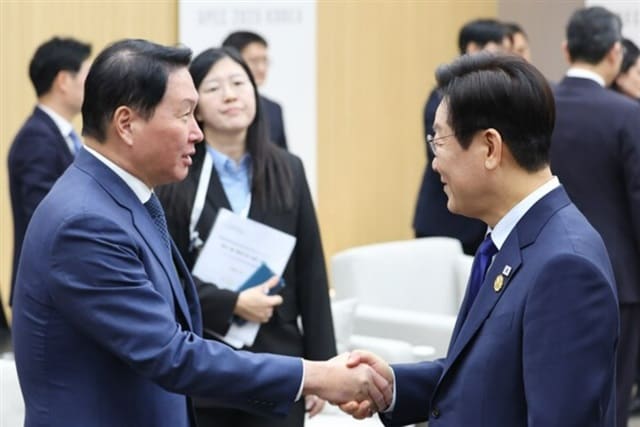
Seoul's New President Opens Business Talks with SK Chairman Amid Chip Investment Debate
Cheng Wei-Lun · 3 min
Kakao Splits Into Two Listed Companies in AI-Focused Restructure
Jun-ho Seo · 3 min
Spot something wrong? Email editor@briefasia.com. We log every correction publicly.