Finance · Deals
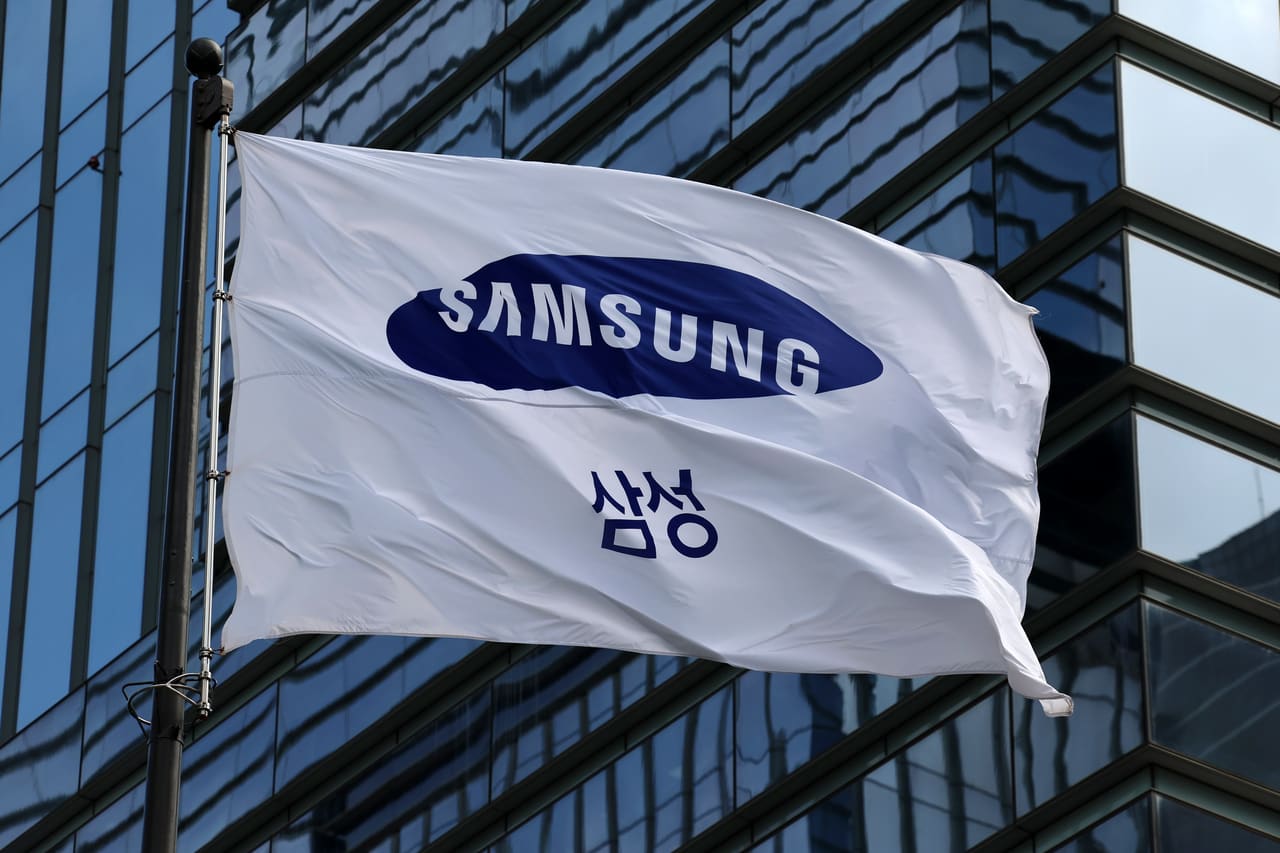
Samsung Announces Historic $65 Billion Shareholder Return Program
Seoul's tech giant unveils Korea's largest-ever capital distribution plan, quintupling its 2020 record as it seeks to reward investors amid shifting semiconductor dynamics
KEY TAKEAWAYS
- ·Samsung Electronics board approved a shareholder return program between 90 trillion and 110 trillion won, with the upper range five times its 2020 record of 20.3 trillion won.
- ·The initiative represents the largest capital distribution in Korean corporate history and arrives as Samsung faces margin pressure in memory chips and competition in AI-focused high-bandwidth memory.
- ·Execution details remain undisclosed, but the scale could trigger portfolio rebalancing in the KOSPI index and prompt competing chaebol to reassess their own shareholder policies.
Samsung Sets New Benchmark
Samsung Electronics approved a shareholder return framework valued between 90 trillion won and 110 trillion won ($65.2 billion to $79.7 billion) for the current fiscal year, according to a board decision finalized Friday. The upper boundary represents more than five times the company's previous distribution record of 20.3 trillion won set in 2020.
The magnitude positions Samsung's plan as the largest shareholder return initiative ever launched by a Korean corporation. For context, the 110 trillion won ceiling exceeds the annual GDP of several mid-sized Asian economies and reflects a fundamental recalibration of capital allocation priorities at one of the region's most valuable listed companies.
Samsung stated the program aims to channel the benefits of corporate growth directly to shareholders, a message that underscores mounting pressure on Asian tech conglomerates to improve shareholder returns after years of aggressive reinvestment cycles. The move arrives as the company navigates a turbulent period in global memory markets, where pricing volatility and geopolitical supply chain realignments have compressed margins across its core businesses.
Capital Allocation in Flux
The scale of the return program invites comparison with peer strategies across Asia's technology landscape. Taiwan Semiconductor Manufacturing Company, the world's largest contract chipmaker, has historically maintained a dividend payout ratio near 70 percent while simultaneously funding multi-billion-dollar fab expansions in Arizona and Japan. Samsung's approach differs: the announced range suggests a more flexible framework that could encompass dividends, buybacks, or hybrid structures, though the company has not yet disclosed the precise mechanics.
South Korea's corporate governance environment has evolved substantially over the past decade, with institutional investors and activist funds pressing for higher payouts and greater transparency. Samsung itself faced sustained pressure from Elliott Management in 2016, culminating in governance reforms and elevated dividend commitments. The current announcement can be read as an extension of that trajectory, amplified by sluggish revenue growth in key segments and the need to maintain investor confidence during a cyclical downturn.
The timing is notable. Samsung's semiconductor division, which historically generated the bulk of group profits, has weathered two consecutive quarters of operating losses in DRAM and NAND as oversupply and weakening PC and smartphone demand weigh on prices. At the same time, the company is racing to close a technology gap with SK hynix in high-bandwidth memory used for AI accelerators, a segment where Samsung's late entry has cost it market share with hyperscale customers including NVIDIA.
Regional Context and Competitive Dynamics
Across Asia, cash-rich technology firms are recalibrating shareholder return policies in response to slower growth and heightened investor scrutiny. In Japan, SoftBank Group has conducted episodic buyback programs funded by asset sales, while Sony has steadily increased its dividend payout ratio. Chinese tech giants, constrained by regulatory uncertainty and delisting risks, have largely eschewed aggressive returns in favor of liquidity preservation.
Samsung's decision to deploy up to 110 trillion won stands out in this landscape. It signals confidence in the company's ability to fund capital expenditures, research and development, and strategic acquisitions while still returning substantial sums to shareholders. Whether that confidence is warranted depends on the trajectory of memory chip pricing, the success of Samsung's foundry ambitions, and its ability to capture share in emerging categories such as AI inference chips and advanced packaging.
The announcement also carries implications for Seoul's broader equity market. Samsung Electronics accounts for roughly 30 percent of the KOSPI index by market capitalization, and a distribution of this magnitude will likely trigger portfolio rebalancing among domestic and foreign institutional investors. If executed through share buybacks, the program could materially reduce the free float and support the stock price, a dynamic that would benefit the founding Lee family, which holds a controlling stake through a complex cross-shareholding structure.
Execution and Market Reaction
Details of the return mechanism remain sparse. Samsung has indicated the board approved the framework, but the company has not yet published a breakdown of dividend versus buyback allocations, the timeline for execution, or conditions under which the lower or upper bounds of the range would apply. Investors will scrutinize quarterly disclosures for clarity on these points.
Market participants will also watch whether the program triggers a competitive response from other Korean conglomerates. SK hynix, Samsung's principal domestic rival in memory, has traditionally maintained a more conservative capital allocation posture, prioritizing balance sheet strength and technology investment. A Samsung-led escalation in shareholder returns could prompt SK and other chaebol to reconsider their own policies, particularly if activist investors sense an opening.
For Samsung, the program represents a calculated bet: that returning record sums to shareholders will reinforce confidence even as the company confronts structural challenges in its core businesses. The success of that bet will hinge on whether Samsung can stabilize profitability in memory, gain traction in foundry, and demonstrate that its capital allocation strategy serves long-term competitiveness rather than short-term appeasement.
RELATED STORIES
Seoul Stocks Climb on Chipmaker Shareholder Return Expectations
Cheng Wei-Lun · 2 min
UK Funds Exit Korean Equities as Foreign Sell-Off Hits $22.9 Billion in July
Cheng Wei-Lun · 3 min
SK Hynix Shifts Profit Bonuses to Equity, Links Pay to Loss Risk
Cheng Wei-Lun · 3 min
Samsung SDI Sells $3.2 Billion Display Unit Stake to Fund Battery Expansion
Jun-ho Seo · 3 min
Spot something wrong? Email editor@briefasia.com. We log every correction publicly.