Finance · Markets
UK Funds Exit Korean Equities as Foreign Sell-Off Hits $22.9 Billion in July
British investors drove the exodus from Seoul's Kospi while American funds bucked the trend, extending a seven-month capital flight from Asia's fourth-largest equity market
KEY TAKEAWAYS
- ·Foreign investors net sold 31.7 trillion won ($22.9 billion) of South Korean listed stocks in July, marking the seventh consecutive month of outflows, with UK funds leading the sell-off.
- ·The exodus concentrated on the Kospi exchange with 30.8 trillion won in net selling, while US-based investors bucked the trend by maintaining net buying positions during the same period.
- ·The divergence reflects differing risk assessments, with American funds prioritizing long-term semiconductor and AI supply chain exposure while British capital rotates toward markets offering better near-term returns.
British Capital Flight Accelerates
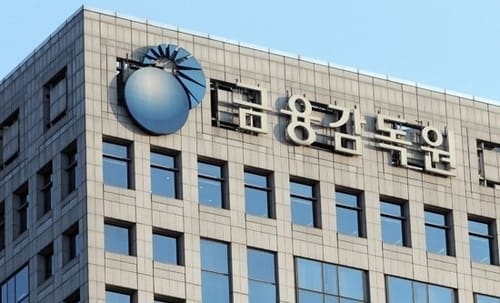
Foreign investors withdrew 31.7 trillion won ($22.9 billion) from South Korean listed equities in July, according to data from the Financial Supervisory Service. The figure marks the seventh consecutive month of net selling by international capital, with UK-based funds driving the bulk of the exodus.
The sell-off concentrated heavily on the Kospi, South Korea's main exchange, where foreign investors offloaded 30.8 trillion won in positions. The scale of July's outflows represents one of the steepest monthly withdrawals in recent years, underscoring growing caution among European asset managers toward Korean exposure.
British institutional investors emerged as the most aggressive sellers, though the regulatory data did not break down precise country-level figures. The pattern diverges sharply from US investment behavior during the same period.
American Funds Hold the Line
While UK and other European funds retreated, US-based investors maintained net buying positions in Korean equities throughout July. The divergence highlights a split in how Western capital views Seoul's market prospects amid global rate uncertainty and regional growth concerns.
American appetite for Korean technology stocks, particularly in semiconductor and battery sectors, has remained relatively stable despite broader market volatility. US funds have continued to accumulate positions in major exporters tied to artificial intelligence supply chains and electric vehicle production.
The contrasting strategies between US and UK investors suggest differing risk assessments. American managers appear to prioritize long-term exposure to Korea's technology manufacturing base, while British funds may be rotating capital toward markets perceived as offering better near-term returns or lower geopolitical risk.
Seven-Month Outflow Streak
The July sell-off extends a sustained period of foreign divestment that began in January. Over the seven months, cumulative net selling by international investors has drained liquidity from Korean equities and pressured valuations across the Kospi.
Korean stocks have struggled to attract foreign capital despite trading at relatively low price-to-earnings multiples compared to regional peers. Concerns over export demand, won volatility, and uncertainty around China's economic trajectory have weighed on sentiment.
Domestic institutional investors and retail traders have partially offset the foreign outflows, but not enough to stabilize index performance. The Kospi has underperformed other major Asian bourses year-to-date, trailing gains in Taiwan, India, and Japan.
Semiconductor Exposure Under Scrutiny
Korea's heavy weighting toward memory chip manufacturers and technology hardware producers makes its equity market particularly sensitive to shifts in global semiconductor demand. Recent inventory adjustments and softer pricing for DRAM and NAND chips have raised questions about earnings visibility for the country's largest exporters.
UK asset managers, facing pressure to demonstrate returns in a higher-rate environment, may view Korean tech exposure as offering insufficient growth prospects relative to alternatives in the US or emerging Southeast Asian markets. The concentration risk in a handful of mega-cap technology names also poses portfolio management challenges.
US investors, by contrast, appear more willing to absorb near-term volatility in exchange for strategic positioning in supply chains critical to AI infrastructure and next-generation computing. The difference in time horizons and mandate structures between American and British funds helps explain the divergent flows.
Policy Response Limited
South Korean financial authorities have refrained from direct intervention to stem foreign outflows, relying instead on market mechanisms and gradual corporate governance reforms to restore investor confidence. Efforts to improve shareholder returns, including proposed dividend mandates and share buyback incentives, have yet to reverse the capital flight.
The won's performance against the dollar and sterling has added another layer of complexity. Currency depreciation erodes returns for foreign investors, creating a feedback loop that can accelerate selling pressure during periods of broad risk-off sentiment.
Looking ahead, the trajectory of foreign flows will likely depend on global interest rate paths, export data from Korea's major trading partners, and any policy shifts from Seoul aimed at enhancing market attractiveness. For now, the divergence between US buying and UK selling underscores the fragmented nature of international sentiment toward one of Asia's most liquid equity markets.
RELATED STORIES
Seoul Stocks Edge Higher After Wall Street Rebound
Cheng Wei-Lun · 3 min
Samsung Announces Historic $65 Billion Shareholder Return Program
Cheng Wei-Lun · 4 min
Seoul Stocks Climb on Chipmaker Shareholder Return Expectations
Cheng Wei-Lun · 2 min
Seoul Stocks Slip as Treasury Yields Resume Climb
Cheng Wei-Lun · 2 min
Spot something wrong? Email editor@briefasia.com. We log every correction publicly.