Finance · Markets
Seoul Stocks Slip as Treasury Yields Resume Climb
Korean benchmark index opens sharply lower before recovering some ground amid rising US bond yields and elevated oil prices
KEY TAKEAWAYS
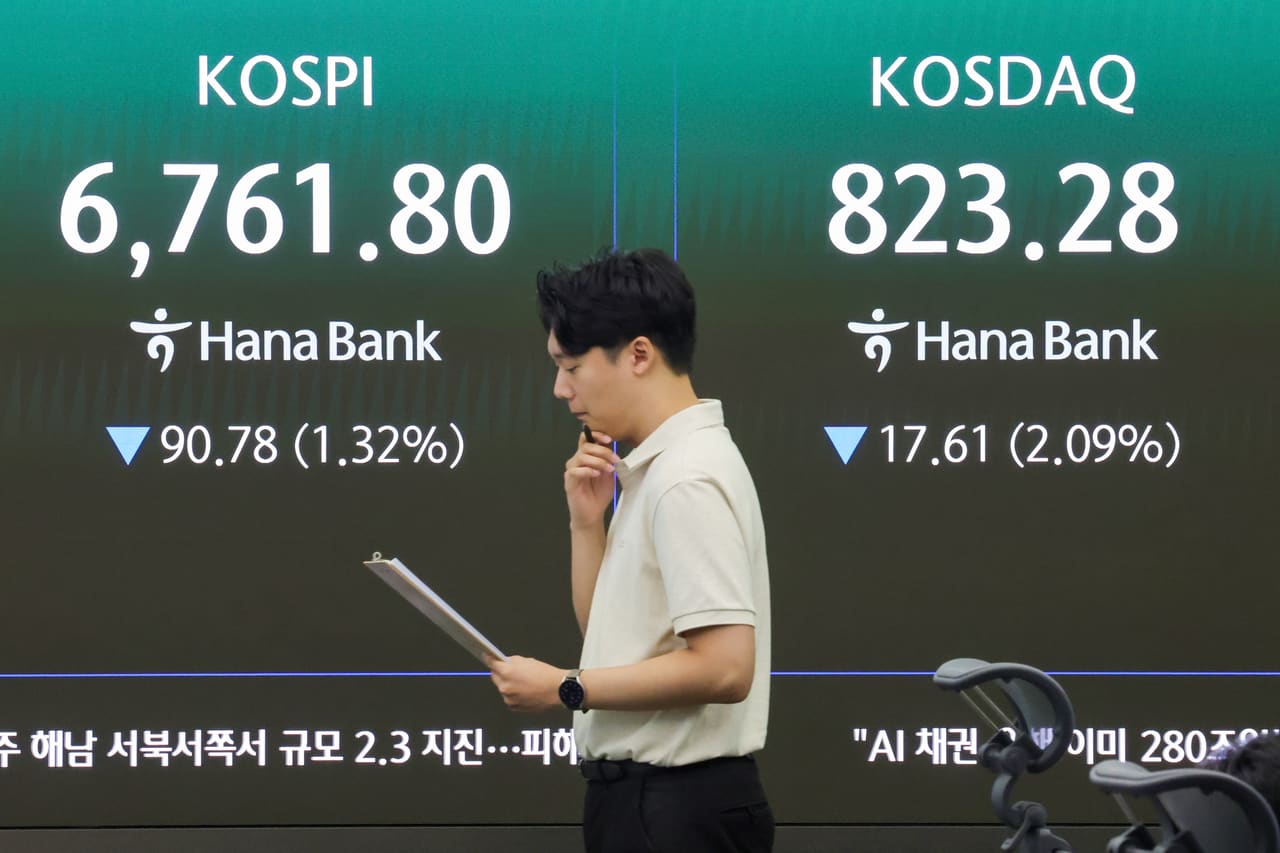
- ·The Korea Composite Stock Price Index fell 0.31 percent to 6,831.53 in early Friday trading after opening 1.35 percent lower.
- ·US Treasury yields resumed their upward trend following an expanded bond buyback announcement, drawing capital away from Asian equities.
- ·Higher oil prices and rising US rates create dual pressure on Korean manufacturers, particularly in petrochemicals and energy-intensive sectors.
Morning Losses Trimmed
South Korean equities began Friday trading with a sharp decline before paring losses in early session activity. The Korea Composite Stock Price Index fell 21.05 points, or 0.31 percent, to 6,831.53 as of 9:15 a.m. local time. The benchmark had opened 1.35 percent lower before recovering much of the initial drop.
The move follows overnight weakness on Wall Street, where equities faced pressure from renewed upward momentum in US government bond yields. Treasury rates resumed their ascent Thursday, erasing much of the decline recorded in the previous session. The shift came after the US Treasury Department announced an expansion of its bond buyback program, a development that recalibrated investor expectations around interest rate dynamics.
Rate Expectations Reshaping Asia Flows
Higher Treasury yields typically draw capital away from emerging and developed Asian equity markets, as investors rotate into safer, higher-yielding US fixed-income instruments. The phenomenon has been a recurring theme in 2026, with Seoul particularly sensitive to shifts in US monetary policy expectations given the export-heavy composition of the KOSPI and the won's correlation with global risk appetite.
Oil prices have added another layer of pressure. Elevated crude costs raise input expenses for Korean manufacturers, particularly in petrochemicals, transportation, and energy-intensive industries. The combination of tighter financial conditions and rising commodity costs creates a dual headwind for corporate margins, a concern that has kept institutional investors cautious in recent sessions.
Broader Regional Context
Seoul's weakness mirrors sentiment across the region. Tokyo, Hong Kong, and Taipei markets have all shown vulnerability to US rate volatility in recent weeks, as central banks in Asia navigate their own policy dilemmas. The Bank of Korea has maintained a steady stance, but market participants are closely watching for any signals that could indicate a shift in response to external financial conditions.
The bond buyback announcement from Washington has introduced fresh uncertainty. While buybacks can support liquidity in the Treasury market, they also complicate yield forecasts, making it harder for portfolio managers to position for the months ahead. For Asia-focused funds, that uncertainty translates into shorter holding periods and more frequent rebalancing, which can amplify intraday volatility in bourses like Seoul.
What Comes Next
Traders will be monitoring US economic data releases in the coming days for clues on the Federal Reserve's next moves. Any indication that inflation remains sticky or that growth is accelerating could push Treasury yields higher still, extending pressure on risk assets globally. Conversely, signs of cooling in the US economy might offer relief to Seoul and other Asian markets.
For now, Korean equities remain in a holding pattern, caught between domestic earnings momentum and the gravitational pull of US rates. The recovery from intraday lows suggests some buyers are willing to step in at current levels, but sustained gains will likely require a stabilization in Treasury yields or a catalyst from the corporate earnings front.
RELATED STORIES
Hong Kong Leveraged Fund Holds Maximum Exposure Despite Retail Losses
Cheng Wei-Lun · 4 min
Samsung Unveils $80 Billion Buyback in Bid to Restore Investor Confidence
Cheng Wei-Lun · 3 min
South Korea's Producer Prices Drop as Oil Costs Ease
Cheng Wei-Lun · 3 min
Kakao Splits Into Two Listed Companies in AI-Focused Restructure
Jun-ho Seo · 3 min
Spot something wrong? Email editor@briefasia.com. We log every correction publicly.