Asia · Politics
Nusantara Budget Cuts Signal Shifting Priorities Under Prabowo
Indonesia's president omitted the capital relocation from his State of the Nation address, while 2027 funding drops sharply from earlier years
KEY TAKEAWAYS
- ·President Prabowo did not mention Nusantara in his State of the Nation address, while the 2027 budget allocates Rp 6.7 trillion to the project, down from Rp 89 trillion spent from 2022 to 2024.
- ·Investors are holding back as the government has not accelerated civil servant relocation or channeled new capital through state fund Danantara, raising concerns about mounting operating costs.
- ·Analysts warn the partially built capital risks becoming a fiscal drain without clear timelines for ministry moves or updated construction schedules, complicating East Kalimantan's development plans.
Presidential Silence Raises Questions
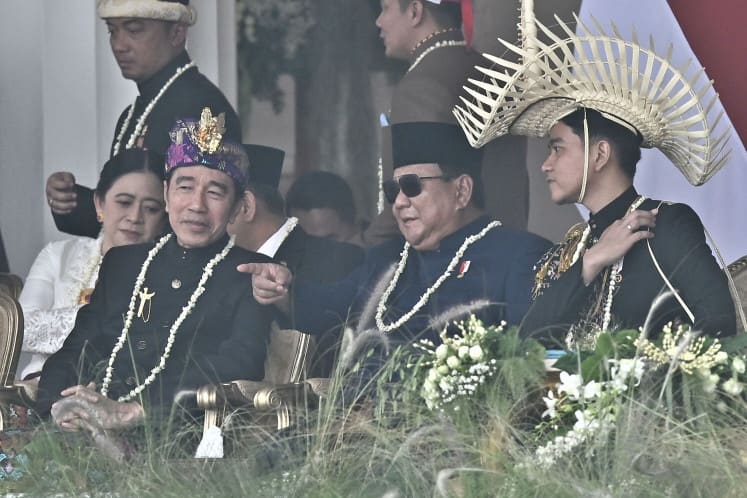
President Prabowo Subianto did not reference Indonesia's planned capital city in East Kalimantan during his State of the Nation address last Friday, nor when he presented the 2027 budget framework to legislators later that day. The omission has intensified uncertainty around the Rp 466 trillion Nusantara project, which his predecessor championed as a cornerstone of national development.
The 2027 state budget allocates Rp 6.7 trillion ($377 million) to the Nusantara Capital City Authority, a modest increase from Rp 6.3 trillion this year. Yet that figure represents less than eight percent of the Rp 89 trillion spent between 2022 and 2024 under former president Joko Widodo's administration. Of next year's allocation, Rp 5.3 trillion is earmarked for legislative and judicial buildings, with the remainder directed toward project management, the IKN Authority confirmed.
Investors Pause Amid Policy Drift
The funding retreat comes as commercial interest in the new capital stalls. Private investors are waiting for concrete signals that the government will follow through on relocating civil servants and economic activity from Jakarta to the forested site 1,200 kilometers northeast. Bhima Yudhistira, executive director at the Center of Economic and Law Studies, described the capital relocation as no longer appearing to be a priority for the current administration.
He noted that the government has not accelerated the transfer of public sector employees or channeled fresh capital through Danantara, the state asset management vehicle intended to co-finance infrastructure. Meanwhile, operating and maintenance expenses at Nusantara continue to accumulate, creating what Bhima characterized as a potential drain on fiscal resources if new investment fails to materialize.
Fiscal Reality Sets In
The shift in budget emphasis reflects a broader recalibration. Prabowo's administration inherited a partially built city with substantial debt obligations and limited revenue-generating capacity. Without a clear timeline for when government ministries will occupy the new facilities, or when residential and commercial districts will attract paying tenants, the project risks becoming what analysts term a sunk cost with ongoing liabilities.
The IKN Authority has yet to announce revised construction schedules or updated projections for when the executive, legislative, and judicial branches will complete their moves. Initial plans envisioned the capital functioning by 2024, a target that has already slipped by two years.
Regional Implications
Indonesia's capital relocation was designed to rebalance development away from Java, which accounts for roughly 58 percent of national GDP despite covering less than seven percent of the archipelago's land area. East Kalimantan, rich in natural resources but underdeveloped in infrastructure, was positioned to become a new growth pole, attracting investment in logistics, technology, and green industry.
The funding pullback and lack of high-level endorsement complicate that vision. Regional governments in Kalimantan had anticipated spillover benefits from the capital's construction, including upgraded ports, highways, and digital connectivity. A prolonged pause in momentum may force local administrations to reconsider development plans that hinged on federal commitment.
What Comes Next
The government has not formally announced a policy review or timeline adjustment for Nusantara. Officials at the IKN Authority continue to cite completion targets for specific buildings, but the absence of the project from presidential communications has fueled speculation that resource allocation may be redirected toward other priorities, including food security, energy transition, and downstream mineral processing.
Observers are watching whether the administration will use the upcoming mid-term budget revision to clarify its stance, or whether Nusantara will remain in a holding pattern as competing demands for infrastructure spending intensify. For now, the partial city in East Kalimantan stands as a test of Indonesia's ability to sustain multi-decade projects across political transitions.
RELATED STORIES
Indonesia's 6% Growth Target Raises Questions Over 2027 Budget Credibility
Priyanka V. Rao · 3 min
Indonesia's Economy Grows 5.29 Percent as Fiscal Spending Fuels Expansion
Siti Nuraini · 2 min
Nearly 10 Million Young Indonesians Are Neither Working Nor Studying
Siti Nuraini · 4 min
Indonesia's Rice Prices Climb Despite Self-Sufficiency Claims and High Government Stocks
Siti Nuraini · 3 min
Spot something wrong? Email editor@briefasia.com. We log every correction publicly.