Finance · Markets
Asian Equities Climb as Treasury Buyback Pledge Meets Market Skepticism
Seoul chipmakers lead regional gains while Wall Street questions whether Washington's bond intervention can contain borrowing costs long-term
KEY TAKEAWAYS
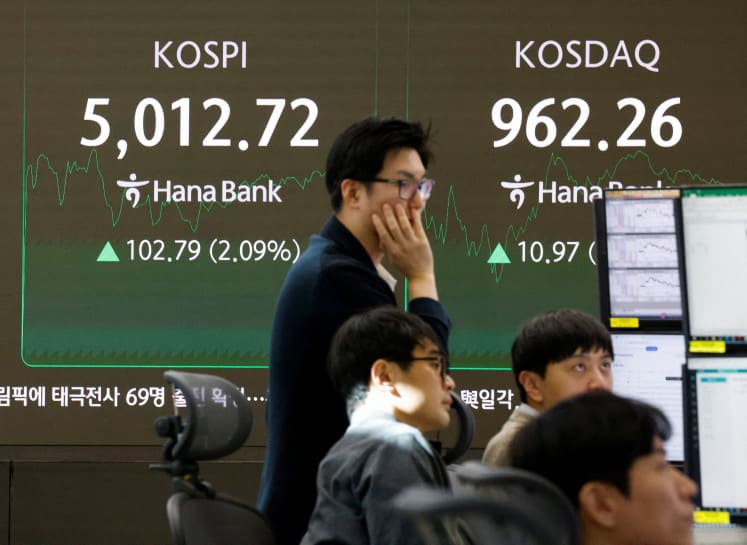
- ·Asian equities edged higher Friday with Seoul leading on SK hynix's 12 percent jump after a $29 billion buyback announcement, while Tokyo and Shanghai declined
- ·The US Treasury pledged to at least double bond buybacks after the 30-year yield hit 2007 levels, but Wall Street analysts call it a short-term fix amid persistent supply pressures
- ·Traders await Fed Chair Kevin Warsh's Jackson Hole speech next week for monetary policy clarity as oil prices climb on the unresolved US-Iran Strait of Hormuz standoff
Regional Bourses Diverge on Washington's Intervention
Asian equities posted modest gains Friday, led by Seoul's tech-heavy index, as investors parsed Treasury Secretary Scott Bessent's announcement that Washington would at least double sovereign bond buybacks to contain long-term borrowing costs. The 30-year Treasury yield had spiked to levels unseen since 2007 earlier in the week, prompting the emergency measure Wednesday.
Hong Kong, Singapore, Wellington and Taipei registered gains in morning trade. Tokyo, Sydney and Shanghai slipped. Seoul outperformed on a 12 percent surge in SK hynix shares following the chipmaker's $29 billion buyback announcement Thursday. Samsung, the index heavyweight, added to momentum on reports the firm is considering shareholder returns approaching $79 billion.
Wall Street showed less enthusiasm. All three major US indexes fell Thursday as technology stocks retreated, underscoring investor doubt that buybacks alone can stabilize rates. Mark Malek of Muriel Siebert & Co. characterized the Treasury move as "a housekeeping measure destined to be short-term, at best."
Bessent Promises More Tools, Markets Demand Specifics
The Treasury Secretary told CNBC Thursday that his department maintains a "big toolkit" to address yield movements it views as disconnected from underlying economic conditions. Potential measures include expanding bond purchases beyond the scale announced Wednesday.
Bessent attributed recent rate volatility to thin August trading and elevated corporate issuance rather than fundamental deterioration. He argued yields would retreat once the United States resolves its standoff with Iran over the Strait of Hormuz closure, which has pushed oil prices steadily higher over the past fortnight.
US inflation has exceeded the Federal Reserve's two percent target for more than five years. The Treasury chief suggested price pressures would ease when energy costs normalize.
Supply Glut Compounds Rate Pressure
Analysts point to multiple factors driving the yield surge. Governments on both sides of the Atlantic have signaled significant borrowing plans to fund spending commitments, flooding the market with sovereign debt. Corporate issuance has compounded the supply wave, with technology giants including Amazon, Alphabet and Meta planning to raise up to $500 billion for artificial intelligence infrastructure investments.
Michael Hewson of MCH Market Insights noted that some investors now prefer Big Tech corporate bonds over sovereign debt from heavily indebted governments, creating additional downward pressure on government bond prices and upward pressure on yields.
Fed Chair Kevin Warsh's refusal to provide forward guidance on monetary policy has amplified uncertainty. Traders will scrutinize his remarks at next week's annual central banking conference in Jackson Hole, Wyoming, for clarity on the rate path.
Currency and Commodity Moves
The yen strengthened against the dollar after Japanese inflation data showed prices accelerated last month, driven by higher energy costs. The uptick gives the Bank of Japan room to raise interest rates at its September meeting, according to observers.
Oil prices have climbed gradually over two weeks as the US-Iran impasse over Hormuz shipping lanes persists with no breakthrough in sight. The strait handles roughly one-fifth of global petroleum traffic, and its extended closure threatens to tighten supply further if the standoff continues into autumn.
What Comes Next
The Treasury's expanded buyback program offers temporary relief, but the structural dynamics pushing yields higher remain in place. Government borrowing needs, corporate debt issuance for AI spending, and the Fed's communication vacuum all continue to weigh on bond markets.
Whether Bessent's toolkit proves sufficient will depend on how quickly Washington can resolve geopolitical flashpoints and whether the Fed provides the policy clarity markets are demanding. For now, Asia's relative outperformance reflects regional investors taking a more measured view of US rate volatility than their Wall Street counterparts.
RELATED STORIES
Asian Stocks Rise Amid Doubts Over US Treasury Bond Buyback Plan
Priyanka V. Rao · 3 min
Japan Plans to Raise Assumed Bond Rate to 3.8% by Fiscal 2027
Aiko Nakamura · 3 min
Malaysia Expands Main Index to 50 Stocks, Reducing Bank Concentration
Priyanka V. Rao · 3 min

Samsung Unveils $80 Billion Buyback in Bid to Restore Investor Confidence
Cheng Wei-Lun · 3 min
Spot something wrong? Email editor@briefasia.com. We log every correction publicly.