Finance · Markets
Asian Stocks Rise Amid Doubts Over US Treasury Bond Buyback Plan
Tech-heavy markets in Seoul and Hong Kong climbed while Treasury yields rebounded, signaling investor skepticism about Washington's intervention
KEY TAKEAWAYS
- ·Asian stocks edged higher Friday with Hong Kong up 0.7 per cent and Seoul climbing on Samsung and SK hynix buyback announcements totaling over $100 billion.
- ·US Treasury yields rebounded after an initial drop despite plans to double bond buybacks, with analysts calling the move a short-term fix.
- ·Traders await Fed Chair Kevin Warsh's Jackson Hole speech next week for clarity on monetary policy amid persistent inflation above two per cent.
Markets Diverge on Treasury Intervention
Asian equity markets posted modest gains Friday as investors parsed the US Treasury's commitment to expand sovereign bond buybacks, though analysts questioned whether the move would deliver lasting relief to surging borrowing costs.
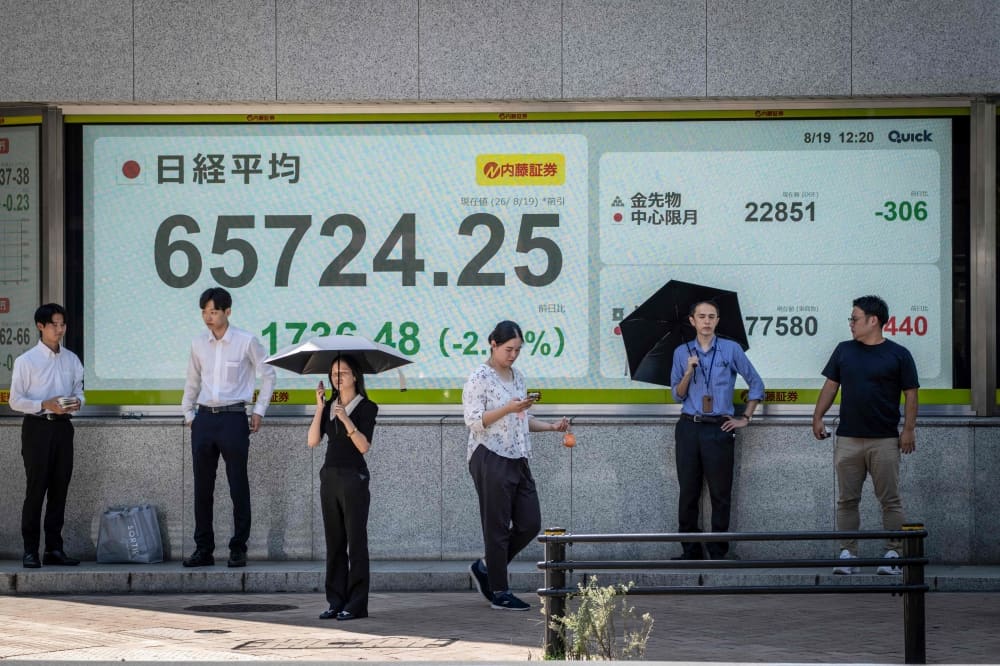
Hong Kong's Hang Seng Index rose 0.7 per cent to 25,882.03, while Seoul's tech-weighted benchmark climbed on the back of sharp gains in Samsung and SK hynix. Singapore, Wellington, and Taipei also advanced. Tokyo's Nikkei 225 slipped 0.7 per cent to 65,746.88, with Sydney and Shanghai posting small declines.
The Treasury announced Wednesday it would at least double its bond repurchase program after the 30-year yield spiked to levels unseen since 2007, just before the global financial crisis. Long-term rates initially tumbled on the news but reversed course Thursday, with the 30-year yield climbing back as Wall Street resumed selling.
Treasury Secretary Scott Bessent told CNBC his department holds a "big toolkit" to address yield movements it views as disconnected from underlying financial conditions. He attributed the recent spike to thin August trading and a wave of corporate bond issuance rather than economic fundamentals.
"We believe that the yields don't reflect the underlying fundamentals," Bessent said, adding that inflation would ease once tensions surrounding Iran subside and oil prices retreat.
Seoul Surges on Chipmaker Buybacks
South Korea's market outperformed Friday as semiconductor manufacturers announced major shareholder returns. SK hynix jumped more than 12 per cent Thursday after unveiling a $29 billion share buyback. Samsung is reportedly planning a return program worth as much as $79 billion, providing additional lift to the index.
The rally in Asian chipmakers contrasts with weakness in US technology stocks, which rely heavily on debt financing for infrastructure investments. All three major Wall Street indexes fell Thursday as rising yields pressured valuations in the sector.
Yield Surge Reflects Multiple Pressures
Market observers point to several factors driving the climb in Treasury yields beyond immediate supply dynamics.
Governments on both sides of the Atlantic face elevated borrowing needs this year due to expanded spending commitments, creating competition for investor capital. At the same time, technology giants including Amazon, Alphabet, and Meta are seeking to raise up to $500 billion through corporate bond issuance to fund artificial intelligence infrastructure.
"This excess in supply is also likely an additional factor serving to weigh on global sovereign debt markets with some investors preferring to invest in Big Tech as opposed to indebted sovereigns," according to MCH Market Insights.
Uncertainty over Federal Reserve policy has compounded trading floor anxiety. Fed Chair Kevin Warsh has declined to provide forward guidance on monetary policy decisions, leaving traders to speculate on the central bank's next moves. Market participants will scrutinize Warsh's speech at next week's annual gathering of central bankers and economists in Jackson Hole for clues on the Fed's trajectory.
Inflation has remained above the Federal Reserve's two per cent target for more than five years, complicating the policy outlook.
Energy and Currency Moves
Oil prices continued their gradual ascent, with Brent crude edging up 0.1 per cent to $93.89 per barrel and West Texas Intermediate holding flat at $87.83. The deadlock between the United States and Iran over reopening the Strait of Hormuz has kept energy markets on edge, with no breakthrough in sight after two weeks of elevated prices.
The yen strengthened against the dollar, trading at 158.97 from 159.11 Thursday, after Japanese inflation data showed price growth accelerated last month. Higher energy costs driven by the Middle East crisis pushed up the consumer price index, potentially giving the Bank of Japan room to raise interest rates when it meets in September.
Currency traders are watching whether Tokyo will move ahead with tightening despite global market volatility. The central bank has maintained ultra-loose policy for years but rising inflation may force a shift.
Short-Term Fix or Structural Response
Mark Malek of Muriel Siebert & Co characterized the Treasury's buyback expansion as "a housekeeping move destined to be short-term, at best," reflecting broader skepticism that administrative measures alone can address the structural drivers pushing yields higher.
The divergence between Asian and US market reactions underscores different regional sensitivities to borrowing costs. While Wall Street technology stocks face direct pressure from higher rates, Asian chipmakers benefited from company-specific catalysts that overshadowed macro concerns.
Whether the Treasury's toolkit proves sufficient to stabilize yields will depend on how quickly supply pressures ease and whether the Fed provides clearer policy signals. For now, traders in both regions remain divided on the durability of any intervention.
RELATED STORIES
US Treasury Bond Plan Lifts Asian Tech Stocks After Yield Spike
Cheng Wei-Lun · 3 min
Jardine C&C Exits Singapore and Malaysia Auto Markets in $208M Deal
Priyanka V. Rao · 3 min

Beijing's Tax Sweep Puts $1.2 Trillion in Offshore Wealth Under Pressure
Cheng Wei-Lun · 4 min

Fidelity International Eyes Exit From China Fund Business After Three Years
Cheng Wei-Lun · 3 min
Spot something wrong? Email editor@briefasia.com. We log every correction publicly.