Asia · Business
Philippines Turns to Private Sector for Major Infrastructure After Government Building Failures
Top officials cite decade-long delays and quality issues in state projects, pushing public-private partnerships as the primary delivery model for large-scale construction
KEY TAKEAWAYS
- ·Philippine Ombudsman Jesus Crispin Remulla and Public Works Secretary Vince Dizon have endorsed public-private partnerships as the primary mechanism for large infrastructure after the Bureau of Immigration building consumed over 8 billion pesos across 10 years without completion.
- ·A proposed 9-billion-peso cancer center for UP-Philippine General Hospital failed to attract bidders, while a Cebu flood control project saw its planned waterway width reduced from 63 meters to 25 meters during execution.
- ·The 10.74-billion-peso Civil Aviation and Immigration Security Services project, covering 11 international airports with AI and biometric systems financed by user fees, is being positioned as a model for future partnership arrangements.
The Shift Away from State-Led Construction
Two senior Philippine officials have declared public-private partnerships the preferred path for major infrastructure, citing a pattern of cost overruns and construction failures in government-led projects. Ombudsman Jesus Crispin Remulla and Public Works Secretary Vince Dizon pointed to a series of troubled builds that have stretched budgets and timelines far beyond original plans.
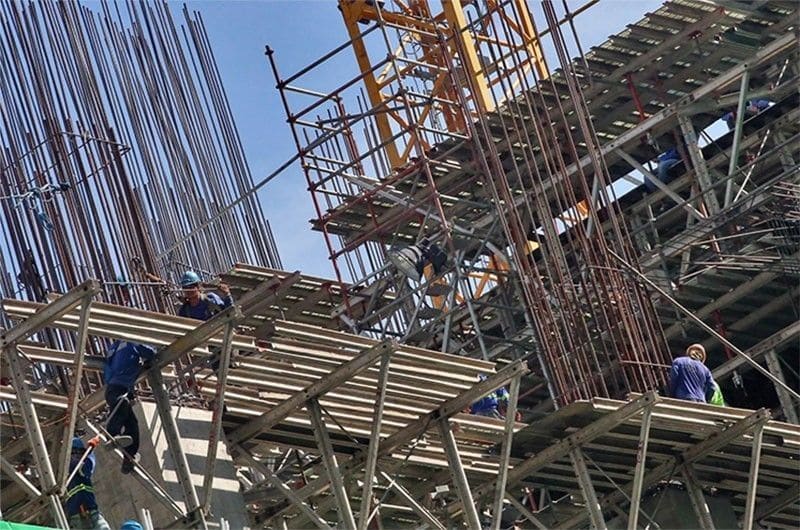
The Bureau of Immigration headquarters in Manila has become the most visible example. The facility has consumed more than 8 billion pesos (roughly $140 million) over a decade of construction, yet remains incomplete. Dizon expressed frustration over design flaws so severe that standard vehicles cannot navigate the building's driveway.
A separate cancer treatment center for the University of the Philippines-Philippine General Hospital, budgeted at 9 billion pesos, failed to attract any bidders, according to Remulla. He also cited a flood control project in Cebu where the planned waterway width was cut from 63 meters to 25 meters during execution.
Buying Over Building
Remulla suggested that purchasing existing private buildings may deliver better value than new government construction. Speaking on his radio program in mid-August, he advised the National Bureau of Investigation to acquire a ready-made facility rather than proceed with plans for a new headquarters through the public works department.
The Ombudsman argued that older commercial properties often surpass new government structures in both quality and cost-effectiveness. His comments reflect a broader skepticism about the capacity of state agencies to deliver infrastructure that meets private-sector standards.
Dizon echoed this assessment, calling for fundamental reform within the public works apparatus. He described current internal systems and organizational culture as inadequate for complex, large-scale projects and positioned public-private partnerships as the interim solution until those deficiencies are addressed.
The Case for Private Participation
Both officials framed their stance around comparative advantage. Government procurement processes, bound by rigid budgets and political cycles, struggle to match the speed and innovation typical in private construction. Dizon emphasized that partnerships can guarantee timeliness, quality, and cost efficiency, transferring financial and operational risk away from public accounts.
One project under discussion as a partnership model is the Civil Aviation and Immigration Security Services initiative, proposed by the Bureau of Immigration. The 10.74-billion-peso program would modernize border security systems at 11 international airports, including Manila, Clark, Cebu, Davao, and Boracay, using biometrics, artificial intelligence, and real-time data processing.
According to the Bureau of Immigration, the system would be financed through minimal user fees and include a guaranteed four-year technology refresh cycle, designed to prevent the obsolescence that often plagues government IT procurement. The project is structured to comply with International Civil Aviation Organization standards, the Montreal-based UN agency that sets global air navigation protocols.
Risk Transfer and Fiscal Relief
The partnership model allows the private sector to assume construction, operation, and maintenance obligations while the government retains policy oversight. For a country with substantial infrastructure needs but constrained fiscal space, this arrangement reduces pressure on the national budget and accelerates project delivery.
Dizon confirmed that the public works department is willing to discontinue the current NBI building project to allow the agency to explore alternative approaches. He said he would speak directly with NBI Director Melvin Matibag about more practical options for the headquarters.
The push for private involvement comes as the Philippines grapples with a backlog of unfinished or poorly executed projects. Remulla and Dizon's public criticism of the public works department signals a shift in how senior officials view the state's role in infrastructure delivery, particularly for technically complex or high-value builds.
What Comes Next
The debate over partnership structures is likely to intensify as more agencies confront delays and budget pressures. The success or failure of projects like the aviation security initiative will shape policy decisions on how the Philippines finances and executes its infrastructure pipeline in the years ahead.
For now, the message from two of the government's most senior voices is unambiguous: when it comes to large, complex construction, the private sector is better equipped to deliver.
RELATED STORIES

Sembcorp Eyes Clark Industrial Park as Singapore Model Expands to Philippines
Priyanka V. Rao · 3 min
Philippines Cuts Poverty Rate to Single Digits for First Time
Priyanka V. Rao · 3 min
Philippines Regulator Tightens Oversight of Power Spot Market
Priyanka V. Rao · 3 min

Philippines Moves to Restrict Sugar Imports as Industry Faces Pest Crisis
Mariel D. Santos · 3 min
Spot something wrong? Email editor@briefasia.com. We log every correction publicly.