Asia · Politics
Tokyo Holds Fire After Putin's Island Visit Amid US Policy Uncertainty
Japan's government has issued no countermeasures more than a week after the Russian leader's provocative trip to contested territory
KEY TAKEAWAYS
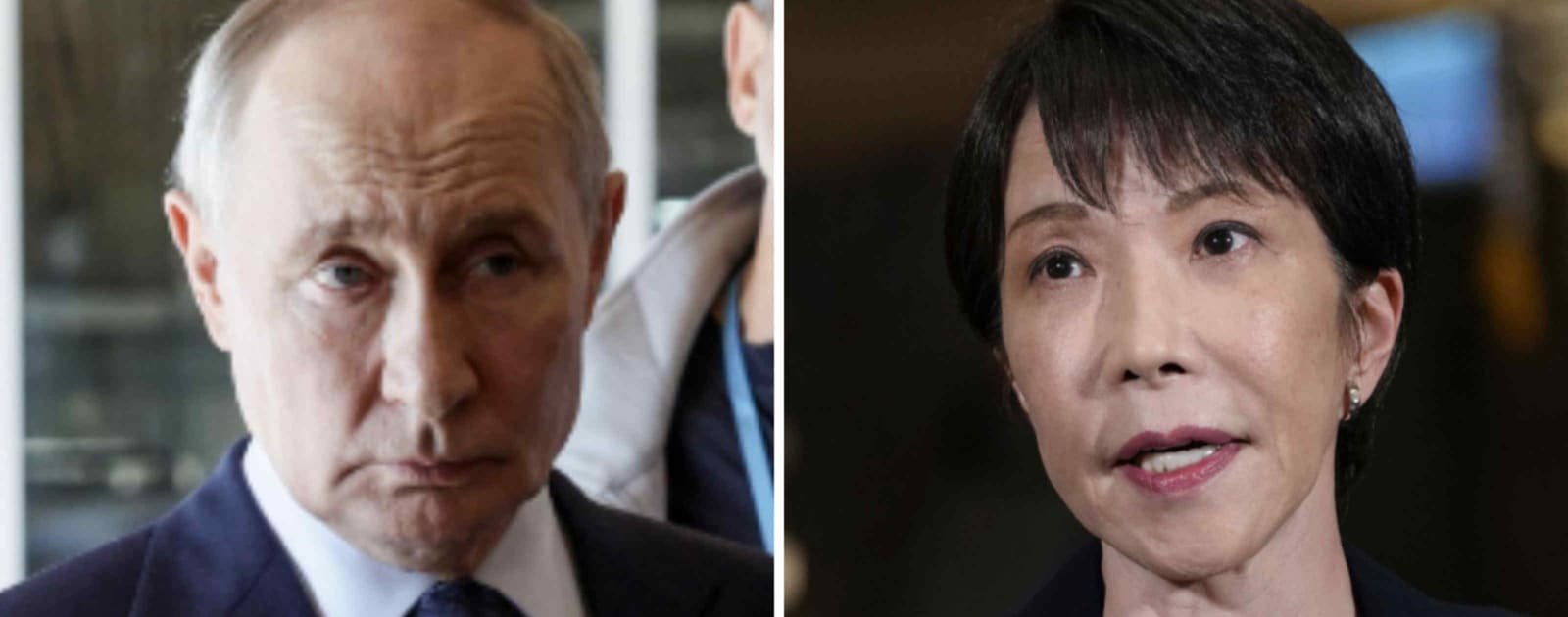
- ·Russian President Vladimir Putin visited the disputed southern Kuril Islands on August 13, drawing protest from Japanese Prime Minister Sanae Takaichi but no concrete countermeasures over a week later.
- ·Tokyo's restraint reflects uncertainty about US intentions toward Moscow and fears that retaliation could deepen Russia's military cooperation with China and North Korea.
- ·Japan faces competing domestic pressures from conservative lawmakers demanding action and business groups wary of further damage to economic ties with Russia.
Diplomatic Silence
More than a week has passed since Russian President Vladimir Putin set foot on the southern Kuril Islands, yet Tokyo has announced no diplomatic or economic countermeasures. The August 13 visit to territory Japan claims as its Northern Territories drew an initial protest from Prime Minister Sanae Takaichi, but concrete action has not followed.
The restraint reflects a Japanese government caught between competing pressures. Officials remain uncertain about Washington's evolving approach to Moscow, making unilateral moves risky. At the same time, Tokyo fears that aggressive retaliation could push Russia deeper into military coordination with China and North Korea, a trilateral alignment that already poses mounting security challenges across Northeast Asia.
Strategic Calculus
Japan's hesitation marks a departure from its historically firm stance on the territorial dispute. The four islands at the southern end of the Kuril chain have been administered by Russia since the final days of World War II, but Japan maintains they are inherently Japanese territory. Previous visits by Russian officials have typically prompted swift diplomatic responses, including the recall of ambassadors and suspension of bilateral talks.
This time, Takaichi's government has issued verbal objections but stopped short of tangible measures. The caution stems partly from the broader geopolitical landscape. With the United States signaling potential shifts in its Russia policy, Japanese officials worry that acting alone could undermine coordination with their primary security ally.
Regional Security Concerns
The timing of Putin's visit compounds Tokyo's dilemma. Russia has expanded joint military exercises with China in the Pacific, exposing gaps in Japan's maritime defense posture. Meanwhile, Moscow's deepening ties with Pyongyang have raised alarms about technology transfers that could enhance North Korea's missile and nuclear capabilities.
Japanese defense planners view the Russia-China-North Korea axis as a direct threat to regional stability. Any punitive measures against Moscow risk accelerating that convergence, potentially leaving Japan more isolated. The calculation is particularly delicate given ongoing tensions in the East China Sea and the Taiwan Strait, where Japan's security interests are directly engaged.
Washington's Shadow
The lack of clarity from Washington has left Tokyo in a holding pattern. US policy toward Russia has been subject to internal debate, with competing factions advocating for continued containment versus selective engagement. Without a clear signal on how the White House intends to manage the relationship, Japanese officials are reluctant to commit to a course that might diverge from American strategy.
This dynamic underscores the limits of Japanese autonomy in Northeast Asian security affairs. While Takaichi has sought to chart a more independent diplomatic path on certain issues, the government remains fundamentally constrained by the US-Japan alliance framework. On Russia, that dependence is especially pronounced given the military balance in the region.
Domestic Pressure
The muted response has not gone unnoticed domestically. Conservative lawmakers and advocacy groups focused on the territorial issue have criticized the government's inaction, arguing that silence emboldens further Russian provocations. Public opinion polls consistently show strong support for Japan's territorial claims, making the issue politically sensitive.
Yet Takaichi faces competing domestic pressures as well. Business groups with interests in energy and trade are wary of measures that could further damage economic ties with Russia, already strained by previous sanctions. The government must balance nationalist sentiment with pragmatic economic considerations, all while navigating an uncertain international environment.
Path Forward
Japan's next moves will likely hinge on developments in Washington and Moscow. If the United States adopts a harder line, Tokyo may find space to impose its own measures without fear of isolation. Conversely, any US overture toward Russia could require Japan to recalibrate its approach, potentially accepting a more ambiguous status quo on the islands.
For now, the Japanese government appears to be buying time, hoping that clearer signals from its allies and adversaries will emerge. That strategy carries risks of its own. Prolonged inaction may be interpreted as weakness, inviting further tests from Moscow. At the same time, premature escalation could lock Japan into a confrontational posture at a moment when regional security dynamics remain fluid.
The Putin visit has exposed the structural constraints on Japanese diplomacy in an era of great-power competition. Caught between alliance obligations, regional security threats, and domestic political demands, Tokyo's room for maneuver is narrower than its leaders might prefer.
RELATED STORIES
Japan's Finance Ministry Pushes to Fold Supplementary Spending Into Main Budget
Aiko Nakamura · 2 min
Japan's Factory Orders Jump to Eight-Year High on Chip and AI Demand
Aiko Nakamura · 3 min
Japan's Factory Orders Hit Seven-Year High as Chip Demand Surges
Cheng Wei-Lun · 2 min
Japan Scrambles to Fund $63 Billion Budget Gap From Food Tax Cut and Defense Push
Cheng Wei-Lun · 3 min
Spot something wrong? Email editor@briefasia.com. We log every correction publicly.