Finance · Deals
Samsung Unveils $80 Billion Buyback in Bid to Restore Investor Confidence
South Korea's chip giant launches the country's largest-ever shareholder return plan as memory makers scramble to stabilize valuations after summer selloff
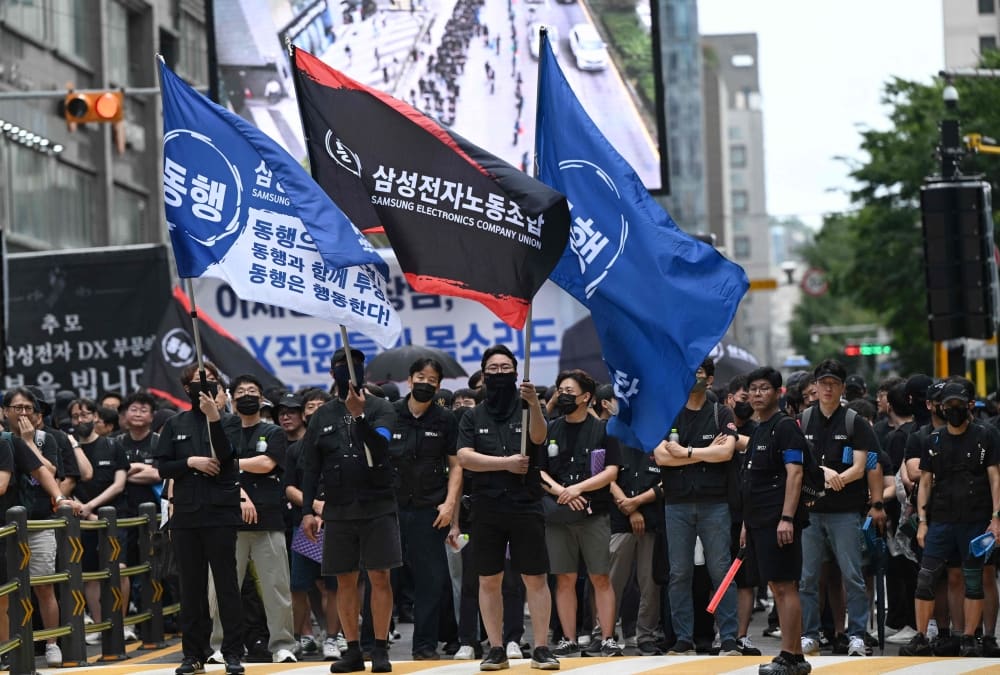
KEY TAKEAWAYS
- ·Samsung Electronics approved a shareholder return plan worth up to $80 billion, the largest in South Korean history, following a board meeting Friday.
- ·The announcement comes two days after rival SK hynix unveiled a $28.9 billion buyback, sending its shares up 12 percent as memory chip makers address investor concerns.
- ·Samsung shares remain 25 percent below their June peak of 370,000 won despite Friday's 3.9 percent gain on the buyback news.
Korea's Largest Shareholder Commitment
Samsung Electronics approved a shareholder return plan valued between 90 trillion and 110 trillion won, equivalent to approximately $80 billion, the company announced Friday following a board meeting in Seoul. The program marks the largest shareholder return initiative in South Korean corporate history.
The plan includes an initial cash dividend of roughly 30 trillion won scheduled for the third quarter, with final terms to be determined at an October board meeting. Samsung framed the decision as ensuring its growth translates into concrete benefits for shareholders, a constituency that has expanded to around 8 million minority holders, nearly one-fifth of South Korea's adult population according to the firm's semi-annual report.
Samsung shares closed 3.9 percent higher Friday on anticipation of the announcement, though the stock remains well below its mid-June peak of 370,000 won. Shares traded around 279,000 won before the close, reflecting a roughly 25 percent decline from summer highs.
Competitive Pressure from SK hynix
The timing follows a similar move by domestic rival SK hynix, which announced a $28.9 billion buyback Wednesday. That disclosure sent SK hynix shares up 12 percent the following session, underscoring investor appetite for capital return commitments in the memory sector.
Both companies saw valuations surge through early summer on optimism surrounding artificial intelligence infrastructure demand for advanced memory chips. Samsung and SK hynix shares peaked in June as South Korea's benchmark Kospi index climbed above 9,000 points for the first time. A subsequent tech selloff, driven by profit-taking and concerns over AI spending sustainability, erased much of those gains.
Samsung reported operating profit growth exceeding 1,800 percent year-over-year in the second quarter, propelled by strong demand for high-bandwidth memory used in AI accelerators. Despite the operational performance, investor sentiment soured as global technology stocks retreated from elevated valuations.
Regional Capital Allocation Shift
The scale of Samsung's commitment signals a broader shift in how Asia's technology leaders allocate capital amid volatile equity markets. South Korean conglomerates have historically favored investment in capacity expansion and R&D over direct shareholder returns, but mounting pressure from institutional investors and retail participation has reshaped priorities.
The memory chip cycle remains a key variable. While AI-related demand has sustained pricing power for high-end products, concerns linger about inventory correction in consumer electronics and enterprise servers. Samsung's willingness to deploy this magnitude of capital toward buybacks and dividends suggests management confidence in sustained cash generation even as the industry navigates uncertain demand signals from China and softer smartphone volumes.
For regional investors, the Samsung and SK hynix announcements represent a test case for whether shareholder-friendly policies can stabilize valuations during periods of sector rotation. The Kospi's retreat from June highs reflects broader anxiety about Korea's tech-heavy index, but also creates an opportunity for companies to demonstrate commitment to returning value when growth narratives face skepticism.
What Comes Next
Execution details will matter. Samsung's phased approach, beginning with dividends in the third quarter and further buyback mechanics to be clarified in October, leaves room for adjustment based on market conditions and operational results. The company's ability to maintain both capital returns and the investment intensity required to compete in advanced node logic chips and next-generation memory will be closely watched.
Minority shareholders, who now represent a substantial portion of Samsung's register, stand to benefit directly from the plan. Whether the initiative stabilizes the stock and restores momentum to Korea's technology sector depends on sustaining the AI demand narrative and avoiding further macroeconomic shocks that could derail semiconductor spending.
RELATED STORIES
SK hynix Unveils $28.7 Billion Share Buyback as Memory Sector Braces for Volatility
Cheng Wei-Lun · 3 min
Samsung Secures Pricing Leverage as 4nm Foundry Capacity Books Through 2027
Cheng Wei-Lun · 4 min
Samsung Breaks Ground on $4.3 Billion HBM Packaging Plant in South Korea
Cheng Wei-Lun · 4 min
Homeplus Pushes Break-Even Target to 2029 in Restructuring Setback
Jun-ho Seo · 2 min
Spot something wrong? Email editor@briefasia.com. We log every correction publicly.