Asia · Politics
Indonesia's 6% Growth Target Raises Questions Over 2027 Budget Credibility
Analysts warn that the government's ambitious GDP forecast may undermine an otherwise conservative fiscal plan as revenue projections hinge on unprecedented expansion.
KEY TAKEAWAYS
- ·Indonesia's draft 2027 budget projects 8.6 percent revenue growth and 6.6 percent spending growth, both contingent on achieving six percent GDP expansion.
- ·The six percent growth target exceeds Indonesia's 15-year average of roughly five percent and has rarely been surpassed in recent years.
- ·Economists warn that missing the growth target could force spending cuts or widen the deficit, as tax revenue is highly sensitive to economic performance.
A Conservative Budget Built on an Optimistic Assumption
Indonesia's draft 2027 budget appears disciplined at first glance. State revenue is projected to grow 8.6 percent year-on-year, while spending is set to rise 6.6 percent. Both figures suggest restraint, especially compared to the fiscal activism that marked earlier years of the Prabowo Subianto administration.
But the foundation of those targets rests on a single, ambitious number: six percent GDP growth. That rate has eluded Indonesia for most of the past decade and a half. The economy has rarely breached 5.5 percent in recent years, making the new forecast more aspirational than empirical.
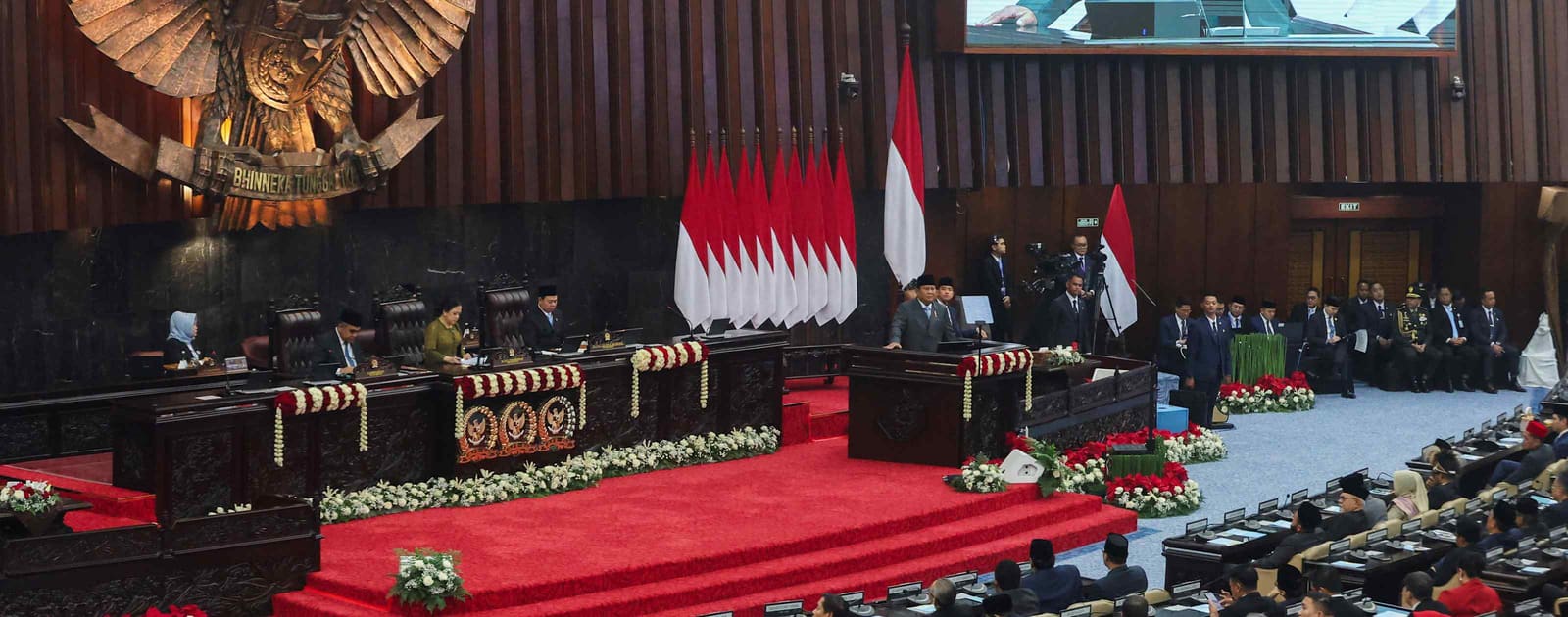
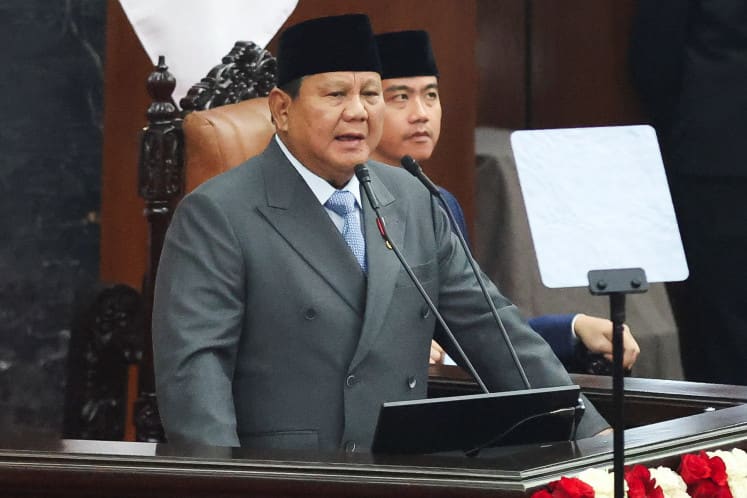
President Prabowo unveiled the macroeconomic assumptions during his Financial Notes address, the traditional curtain-raiser for budget deliberations. The speech, delivered the working day before Independence Day, sets the stage for negotiations between the executive and the House of Representatives through August and September. Once approved, the budget becomes the blueprint for policy execution in 2027.
The Revenue Side Depends on Sustained Expansion
Tay Qi Hang, an Asia analyst at the Economist Intelligence Unit, noted that the fiscal targets appear reasonable in isolation. An 8.6 percent rise in state revenue and 6.6 percent spending growth would keep the deficit contained and signal fiscal prudence to investors and rating agencies.
Yet the credibility of the entire revenue side depends on whether the economy can deliver six percent expansion. Over the past 15 years, Indonesia's GDP growth has averaged around five percent. Reaching six percent would require a combination of stronger consumption, accelerated investment, and a benign external environment. None of those factors is guaranteed.
If growth falls short, revenue will undershoot projections. Tax collection, which accounts for the bulk of state income, is highly sensitive to economic activity. A miss of even half a percentage point in GDP could translate into billions of dollars in lost receipts, forcing either spending cuts or a wider deficit.
Political Ambition Versus Economic Reality
The six percent target carries political weight. It signals confidence and ambition, qualities the administration wants to project as it pursues infrastructure expansion, social programs, and industrial policy. But it also introduces risk.
Tay described the growth assumption as resembling political ambition more than empirical projection. That distinction matters. Budgets are meant to be realistic planning documents, not aspirational statements. When the gap between target and outcome widens, it erodes trust in fiscal forecasts and complicates policy adjustments mid-year.
Indonesia's recent growth record underscores the challenge. Even during periods of commodity price strength and robust global demand, the economy has struggled to sustain momentum above 5.5 percent. Structural constraints, including infrastructure bottlenecks, regulatory complexity, and uneven human capital development, continue to weigh on potential output.
What Comes Next in Budget Deliberations
The draft budget now enters a two-month negotiation phase. Lawmakers will scrutinize the macroeconomic assumptions, revenue forecasts, and spending priorities. They may push back on the growth target, demand greater detail on revenue sources, or seek adjustments to spending allocations.
If consensus emerges that six percent is unrealistic, the government will face a choice: revise the growth assumption downward and accept lower revenue projections, or defend the target and risk a credibility gap if the economy underperforms.
The outcome will shape not just the 2027 budget, but also investor perceptions of Indonesia's fiscal management. A budget built on shaky assumptions can spook markets, widen bond spreads, and complicate debt issuance. A more conservative approach, while less politically appealing, would offer greater predictability and stability.
For now, the government is holding the line. The six percent target remains in place, and the budget plan proceeds on that basis. Whether reality will cooperate is the question that will define Indonesia's fiscal trajectory over the next 18 months.
RELATED STORIES
Indonesia's Economy Grows 5.29 Percent as Fiscal Spending Fuels Expansion
Siti Nuraini · 2 min
Indonesia Sets 6% Growth Target as Prabowo Unveils 2027 Fiscal Blueprint
Priyanka V. Rao · 3 min
Indonesia Plans to Slash State Enterprises to 300, Launch Probe Into Three Decades of Directors
Siti Nuraini · 4 min
Indonesia Targets 2.4% Deficit in 2027 Budget as Prabowo Pushes Fiscal Restraint
Siti Nuraini · 3 min
Spot something wrong? Email editor@briefasia.com. We log every correction publicly.