Asia · Trade
Pacific Patrol Intercepts Four Fishing Boats in Regional Crackdown
Authorities in Kiribati, Palau, and Papua New Guinea detain vessels during two-week operation covering 28 million square kilometers of ocean
KEY TAKEAWAYS
- ·Authorities in Kiribati, Palau, and Papua New Guinea detained four vessels from China and Indonesia during a two-week operation that boarded more than 100 boats across 28 million square kilometers.
- ·Pacific tuna fisheries generate $1.7 billion annually for island states through license fees and exports, yet only 15 percent of the catch is processed locally.
- ·Pacific leaders will convene in Palau on August 30 to discuss new strategies for protecting fishing rights and increasing revenue as climate change threatens stocks.
Coordinated Sweep Across 28 Million Square Kilometers
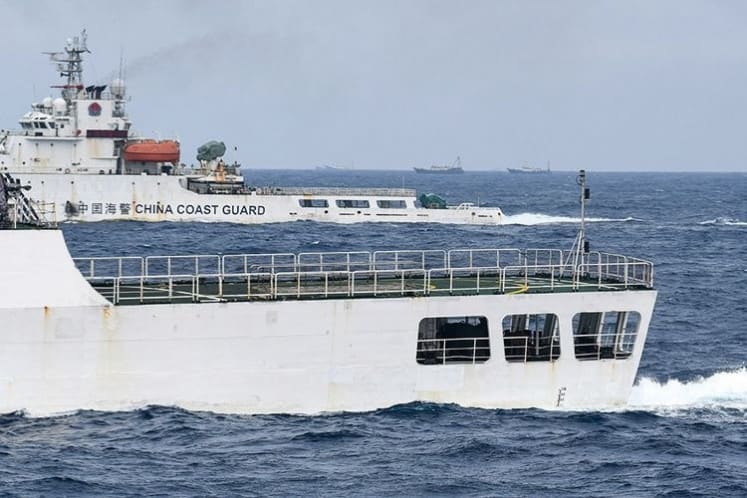
Authorities in Kiribati, Palau, and Papua New Guinea detained four fishing vessels during a two-week surveillance operation this month, according to the Pacific Islands Forum Fisheries Agency. The boats, which included vessels from China and Indonesia, were held for illegal fishing or violations of fishing license terms.
Operation Island Chief ran from August 3 to 14 and involved 11 Pacific island nations coordinating patrols across an oceanic expanse roughly the size of North America. Inspection teams boarded more than 100 vessels during the sweep, which deployed an Australian military surveillance aircraft, a U.S. Coast Guard cutter, and maritime police from participating island states.
The FFA identified an additional 16 vessels as requiring further investigation but declined to release specifics on those cases. Neither Palau nor Papua New Guinea authorities responded to inquiries about the detained boats, while Kiribati maritime police did not comment on operational details.
A $1.7 Billion Fishery Under Pressure
The western and central Pacific produces half the world's tuna supply, generating roughly $500 million in license fees and $1.2 billion in export revenue for island nations each year, the FFA said. Yet only 15 percent of the catch is processed locally; the rest is shipped to Asian markets by long-distance fleets that purchase access to the exclusive economic zones of small island states.
Fishing supports the livelihoods of approximately one-third of Pacific households, making enforcement a matter of both economic security and food sovereignty for nations with limited alternative revenue streams.
Pacific leaders are scheduled to convene in Palau on August 30 for their annual summit, where a new strategy to protect fishing rights and increase revenue is expected to top the agenda. Climate change is already affecting tuna migration patterns, adding urgency to the push for stronger oversight and higher returns from foreign fleets.
Repeat Offender Patterns
Between 2008 and 2026, inspectors working under the Western and Central Pacific Fisheries Commission issued 278 penalty notices to vessels flagged to China, the second-highest tally after Taiwan's 319 infractions. The figures underscore a persistent enforcement challenge in a region where Chinese companies operate extensive fleets and maintain joint-venture partnerships with several island governments.
Last month, Tuvalu authorities arrested a vessel caught fishing illegally while broadcasting a false GPS location. The boat was fined and released after 24 days in detention, according to Peter Hammarstedt, captain of the conservation ship Sea Shepherd, which provided transport for Tuvalu police during the patrol. Tuvalu maintains diplomatic relations with Taipei rather than Beijing, a factor that can complicate regional fisheries diplomacy.
Naming specific vessels or companies involved in illegal activity remains politically sensitive across the Pacific, where Chinese investment and fisheries agreements carry significant weight in small economies.
What Comes Next
The detentions mark the latest chapter in a years-long effort by Pacific island states to assert control over their maritime resources. Improved satellite monitoring, combined with intermittent patrols supported by Australia and the United States, has increased detection rates, but enforcement remains uneven given the vastness of the region and limited patrol assets.
Island leaders are weighing proposals to raise license fees, expand onshore processing requirements, and establish stronger penalties for repeat violators. Whether those measures gain traction will depend in part on balancing economic dependence on foreign fleets with the need to preserve fish stocks for future generations.
RELATED STORIES

WeRide Eyes Regional Push Across Australia and Asia-Pacific Markets
Cheng Wei-Lun · 2 min
Indonesia Pushes for EU Trade Deal Signing Ahead of Year-End Tariff Cliff
Priyanka V. Rao · 3 min
Indonesia Cuts EV Motorcycle Subsidy by More Than Half
Siti Nuraini · 3 min

Nusantara Budget Cuts Signal Shifting Priorities Under Prabowo
Siti Nuraini · 3 min
Spot something wrong? Email editor@briefasia.com. We log every correction publicly.